
Landlord Communication With Tenants: Best Practices for Clear, Consistent Management

What if a clear communication routine could prevent a small maintenance question from becoming a dispute? Tenants need to know where to report an issue, when to expect a response, and how important decisions will be documented. Applying landlord communication with tenants best practices helps set those expectations early and reduces avoidable confusion for both sides.
Consistent communication isn’t just about replying quickly. It means choosing a channel that fits the situation, acknowledging requests, following up when plans change, and keeping a reliable record of maintenance and lease-related exchanges. For sensitive conversations, calm, factual wording helps keep attention on the issue and the next step rather than escalating tension.
This guide explains how to set expectations from move-in, distinguish routine messages from urgent or sensitive matters, and maintain useful tenant records. It also offers practical ways to handle response expectations and follow-up. For rental owners in Petoskey, Boyne City, Indian River, Gaylord, Traverse City, and Grand Rapids, a repeatable process can make communication and maintenance coordination easier to manage consistently.
Key Takeaways
- Set communication expectations at move-in, including how tenants can submit requests and what follow-up they can expect.
- Apply landlord communication with tenants best practices by matching the channel to the urgency, complexity, and recordkeeping needs of each issue.
- For significant decisions, keep a written record and make sure notices follow the lease and applicable local requirements.
- Handle maintenance concerns and sensitive conversations with care: acknowledge the issue, explain the next step, and share updates when circumstances change.
- Use a repeatable system to assign responsibility, track messages, and follow up. Consider management support as property responsibilities grow.
Why landlord communication with tenants sets the tone for a rental
Renting a home involves ongoing questions, requests, and decisions, so communication shapes how those interactions unfold. Effective landlord-tenant communication is timely, understandable, respectful, and documented in a way that suits the subject. These landlord communication with tenants best practices give both parties a clearer sense of what happens next, whether a tenant is asking about rent or reporting a property concern.
Clear expectations can prevent avoidable confusion, but they can’t guarantee that disagreements will never arise. The goal is to make routine interactions predictable and keep important information easy to understand and find later. A rent question, maintenance report, urgent concern, and sensitive lease discussion may each need a different response. Treating every message alike can leave tenants unsure whether a request was received or what action to take.
- Routine questions can use the usual contact method and response expectations established at move-in.
- Maintenance reports should include enough detail to identify the issue and decide on a next step.
- Urgent concerns should go through the designated urgent contact route, not sit in a routine message queue.
- Sensitive conversations benefit from a calm, direct exchange and a written record of important points.
Communication practices support the relationship, but they don’t replace the lease or applicable law. Landlord-tenant law provides an overview of the legal framework, while the rules and procedures for a specific rental depend on its jurisdiction and circumstances. This section covers practical communication habits, not legal advice. Handle notices, deadlines, and required delivery methods according to the lease and applicable requirements.
What tenants need to know from the start
At move-in, explain which contact methods to use for routine matters, what response window tenants can generally expect, and how to report maintenance concerns. Ask tenants to include the affected room or fixture, what is happening, when it began, and whether it has changed. Identify a separate route for urgent issues and explain when to use it. Procedures should reflect the property and lease rather than assume one emergency process applies everywhere.
How clarity supports a professional landlord-tenant relationship
Use neutral, specific wording that describes the issue and next step instead of assigning blame or guessing at someone’s motives. If a verbal conversation covers a decision, responsibility, or follow-up, send a concise written summary so both parties can refer to the same understanding. State what was discussed, what action is planned, who is responsible for it, and whether another update is expected.
Effective communication pairs clear expectations with reliable follow-through. Acknowledge the message, choose an appropriate channel, record significant details, and close the loop when there’s an outcome or meaningful update. These habits create a steadier process without promising that every issue will be resolved immediately or without disagreement.
Build a consistent communication process from move-in onward
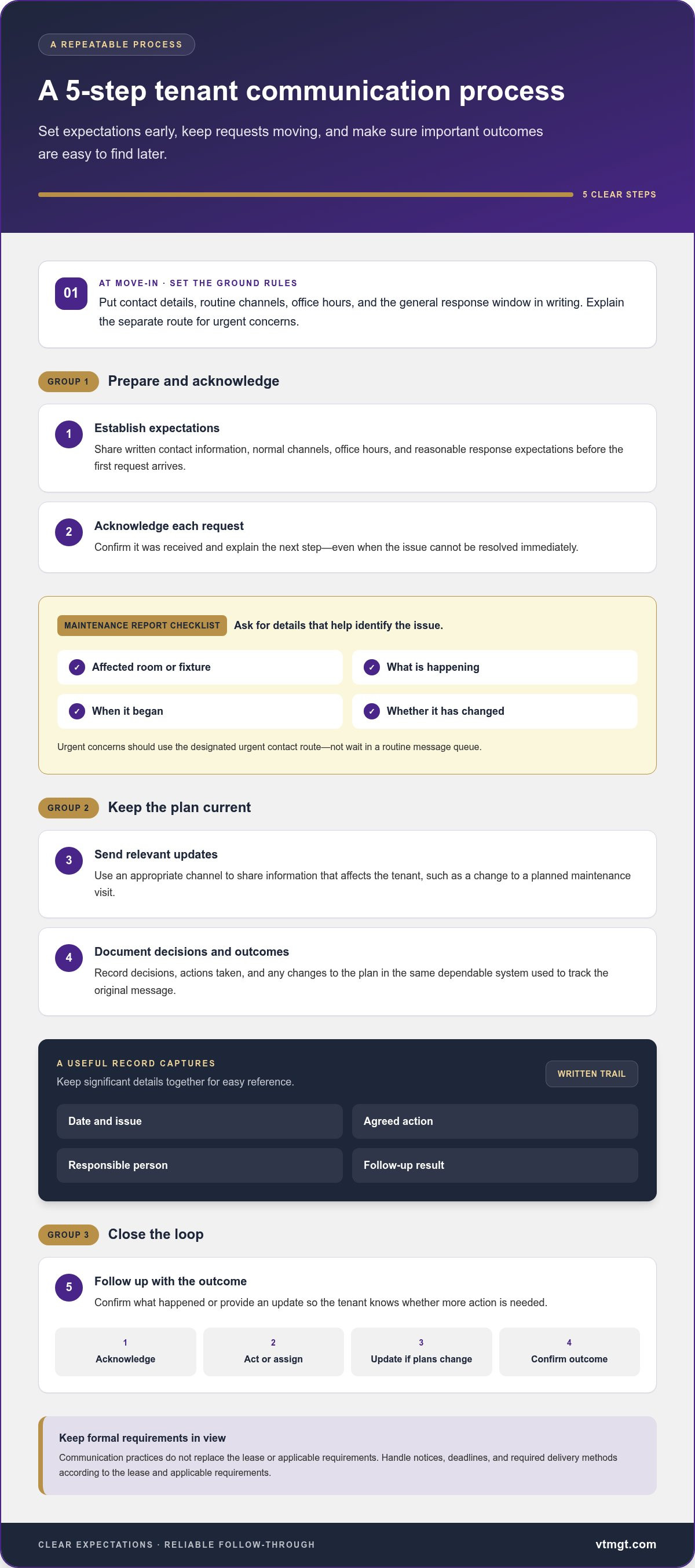
A repeatable process turns good intentions into reliable practice. Set expectations before the first request arrives, acknowledge messages consistently, and record decisions and outcomes in one dependable place. This gives landlords and tenants a shared reference, especially when a maintenance issue or lease question takes more than one exchange to resolve. These landlord communication with tenants best practices work best when every step has a clear owner and purpose.
- Establish expectations. Provide contact details, normal communication channels, office hours, and reasonable response windows in writing at move-in.
- Send relevant updates. Tell tenants about information that affects them, such as a change to a planned maintenance visit, through an appropriate channel.
- Acknowledge requests. Confirm receipt and explain the next step, even if the issue can’t be resolved immediately.
- Document outcomes. Record decisions, actions taken, and changes to the plan in the same system used to track the original message.
- Follow up. Confirm the outcome or provide an update so tenants know what happened and whether more action is needed.
Set contact expectations at move-in
Give tenants a written guide to routine contact methods, office hours, and the response window they can generally expect. Explain what information to include in a maintenance report, such as the location, when the issue began, and whether it is getting worse. Distinguish routine questions from urgent property concerns and state which route to use for urgent matters. Keep these instructions consistent with the lease and applicable requirements. An internal communication process does not replace formal notice procedures.
Close the loop on questions and requests
A complete communication loop has four steps: acknowledge the message, take or assign the next action, update the tenant if circumstances change, and confirm the outcome. A useful record captures the date, issue, agreed action, responsible person, and follow-up result. If a maintenance visit needs to be rescheduled, for example, record the change and notify the tenant through the established channel.
Keep messages, requests, decisions, and completion updates in one reliable record instead of relying on scattered texts, inboxes, or personal reminders. A shared log or property management system can preserve continuity when more than one person handles tenant communication. Review open items regularly so requests aren’t overlooked and records reflect the current status.
The lease and applicable law govern notices, deadlines, and required delivery methods. A routine update or request log doesn’t replace a formal notice where one is required. For broader context on state-specific requirements, consult this Michigan landlord laws guide. Cornell Law School’s overview of landlord-tenant law also describes the legal framework behind rental relationships.
Rental owners who want communication and maintenance follow-through handled through established systems can use professional residential property management for structured support.
Choose the right tenant communication channel for each situation
The right channel depends on what needs to be communicated, how quickly a response may be needed, and whether the exchange should be easy to retrieve later. A brief scheduling note and a detailed account of a recurring maintenance issue have different recordkeeping needs. Agree on routine channels in advance, then match the method to the message instead of defaulting to whichever is easiest in the moment.
When to use calls, email, text, or a resident portal
Use a call when timing matters and a direct conversation can clarify the issue. Choose email or a resident portal for detailed requests and updates that benefit from an organized record. Text works for short coordination when it fits the communication practices agreed with the tenant. After a significant decision made by phone, send a neutral written summary of the discussion and next steps.
A text, email, or portal message isn’t automatically legally sufficient notice. The lease and applicable law determine whether a particular method meets notice requirements, including any required delivery method or deadline. Keep informal coordination distinct from formal notices, and use the prescribed process for matters that require one.
Keep records without overwhelming tenants
Save relevant correspondence in a consistent property record, following applicable privacy practices. Record objective details, such as when a request arrived, what action followed, and when an update was sent. Separate those facts from personal opinions or speculation, and share only information relevant to the tenant, issue, and next action. A concise record supports continuity without sending tenants repeated or unnecessary messages.
Apply the same channel logic across the rental operation. A consistent system for tenant messages and maintenance coordination helps keep exchanges organized. Professional management can add structure as those responsibilities grow.
Handle maintenance, conflict, and sensitive conversations with care
A maintenance report or disagreement can feel personal, especially when the tenant is dealing with disruption at home. A steady response keeps attention on the concern and the next practical step. Acknowledge what the tenant reported, clarify relevant details, explain what will happen next, and provide an update if plans change. This approach supports landlord communication with tenants best practices without promising a repair date or assuming every concern has the same cause.
For example, instead of replying, “You should have reported this sooner,” confirm the issue and ask when it began or whether it has changed. A useful response might say: “Thanks for letting us know. We’ve recorded the leak near the kitchen sink and are coordinating the next step. We’ll update you if the scheduling plan changes.” The wording is direct, respectful, and focused on action.
Communicate about maintenance and access
Ask tenants for a clear description of the issue, its location, when it started, and relevant supporting details, such as a photo if appropriate. Explain the next coordination step and tell them if an appointment or other plan changes. Keep the tenant informed about status without guaranteeing a repair timeline. For maintenance workflow considerations specific to the region, consult this Northern Michigan rental maintenance guide.
Access requires care, too. Follow the lease and applicable law for entry, notice, and coordination, and explain the purpose of a planned visit. Don’t treat a routine scheduling message as a substitute for any notice required by the lease or local rules. A reliable record of the report, coordination steps, access communications, and completion status helps keep everyone aligned.
De-escalate conflict and protect privacy
If a tenant’s message is angry or accusatory, respond to the substance rather than matching its tone. Acknowledge the stated concern, separate confirmed facts from assumptions, and explain the next step in neutral language. For complex or sensitive matters, move the exchange to a direct conversation when appropriate, then document the relevant outcome in writing. Keep the record factual, concise, and limited to people who need the information.
Privacy matters during disputes, too. Don’t disclose another tenant’s personal information or discuss unrelated resident matters to explain a decision. If a tenant raises a concern involving a neighbor, address the reported impact and the process for handling it without sharing private details about anyone else. Refer to relevant lease terms and applicable requirements, and avoid threats or statements that could be read as retaliation.
Coordinating maintenance and following up consistently take time, particularly when several properties or open requests need attention. Explore residential property management support for a structured approach to tenant communication and maintenance coordination.
Create a reliable communication system, or delegate it
A dependable communication process shouldn’t rely on one person remembering every message or searching through separate inboxes for the latest update. A simple checklist can make tenant communication more consistent and show where requests are waiting for action. As properties, tenants, and maintenance responsibilities grow, review whether each request has a clear owner and a documented outcome.
A practical landlord communication checklist
Keep contact details and property-specific instructions current, including the appropriate channel for routine questions and urgent concerns. Assign responsibility for acknowledging incoming requests, tracking progress, and following up. Review open items regularly, record completed actions, and note any outstanding next step. This makes handoffs clearer when another person needs to pick up an issue.
- Contact information: Store current tenant details and instructions for each property in an organized, accessible record.
- Request ownership: Identify who acknowledges messages, assigns next steps, and communicates status.
- Open-item review: Check unresolved questions and maintenance requests on a regular schedule.
- Completion record: Note the outcome and any follow-up still needed before closing an item.
Choose a recordkeeping method that fits the operation, whether that’s a structured log or a property management system. The essential point is consistency: messages should be traceable from receipt through outcome, without relying on memory. Keep records factual and relevant, and apply appropriate privacy practices when storing tenant information.
When professional residential management can support consistency
Self-management may become harder to sustain as tenant requests, property needs, and coordination tasks multiply. A standardized management process can organize recurring communication so requests have a clear path, updates are tracked, and follow-up doesn’t depend on one person’s availability. Delegation can help owners maintain a defined process while focusing on other responsibilities.
Van Treese Management provides residential property management that includes tenant communication, rent collection, maintenance coordination, and emergency response coordination. Coordinated maintenance communication connects the status of a request with its next step, while established management systems support consistent property oversight. The process still needs to reflect the lease and applicable requirements, but tracking and communication can be handled as part of broader property management.
Van Treese Management serves rental owners in Petoskey, Boyne City, Indian River, Gaylord, Traverse City, and Grand Rapids. If your current process is becoming difficult to maintain, consider whether professional support would help organize tenant communication and property coordination.
Make your next tenant interaction more intentional
Use your next tenant exchange as a practical test of your communication process. Is it clear who owns the response, what the tenant should expect next, and where the outcome will be recorded? A brief review after an interaction can reveal small gaps before they become recurring friction. Choose one adjustment to put into practice, such as clarifying a contact instruction or assigning responsibility for follow-up.
Strong landlord communication with tenants best practices depend on consistency over time, not on finding a perfect script for every situation. If maintaining that consistency competes with other property responsibilities, professional management can provide a structured way to support your rental operation. Van Treese Management provides residential property management for owners managing tenant relationships and property needs.
Explore residential property management with Van Treese Management and consider how an organized approach could fit your rental goals. One clear next step can help you build a steadier process from here.
Frequently Asked Questions
What is the best way for a landlord to communicate with tenants?
Agree on preferred channels and realistic response expectations early, then match the method to the situation. A written message can preserve details about a repair request or planned visit, while a call may be more useful for a time-sensitive discussion that needs clarification. After an important verbal decision, send a brief confirmation. Use neutral wording and keep records that align with the lease and applicable requirements.
Should landlords communicate with tenants by text or email?
Neither text nor email is best for every exchange. Text can work for brief coordination, such as confirming an agreed appointment window, if both parties use it for that purpose. Email or a resident portal may better organize a detailed request or a series of status updates. Don’t assume any message counts as formal notice. The lease and applicable law determine whether that delivery method is acceptable.
How quickly should a landlord respond to a tenant?
There isn’t one response time that fits every message or jurisdiction. Set a realistic expectation for routine questions, and explain how tenants should raise urgent property concerns so they aren’t mistaken for ordinary requests. Follow the lease and applicable law for time-sensitive responsibilities. If a repair needs coordination or a response will take longer than expected, acknowledge the request and share a status update rather than leaving the tenant uncertain.
What should a landlord do if a tenant reports a maintenance problem?
Acknowledge the report, gather details that help clarify the issue, and explain the next coordination step. For example, ask which fixture or room is affected and whether the problem has changed since it began. If scheduling changes, update the tenant and record the revised plan. For urgent concerns, follow the lease, applicable law, and established emergency procedures. Avoid promising a repair time before arrangements are confirmed.
How should landlords document communication with tenants?
Keep relevant emails, portal messages, request details, decisions, and follow-up outcomes together in a consistent property record. Date each entry and describe observable facts, such as the issue reported and the action taken, rather than adding assumptions about a tenant’s motives. Limit notes to information relevant to the matter, protect personal information, and follow applicable privacy requirements. An organized history helps another staff member understand an open request.
Can a landlord ask a property manager to handle tenant communication?
Yes. Residential property management can include tenant communication as part of ongoing oversight, with responsibilities shaped by the management arrangement. Van Treese Management also coordinates rent collection, maintenance, and emergency response, connecting tenant messages with relevant property operations. Owners should define who handles each type of inquiry and how updates are shared. This can support rentals in Petoskey, Boyne City, Indian River, Gaylord, Traverse City, and Grand Rapids.