
Rental Property Maintenance in Northern Michigan: The 2026 Landlord’s Guide
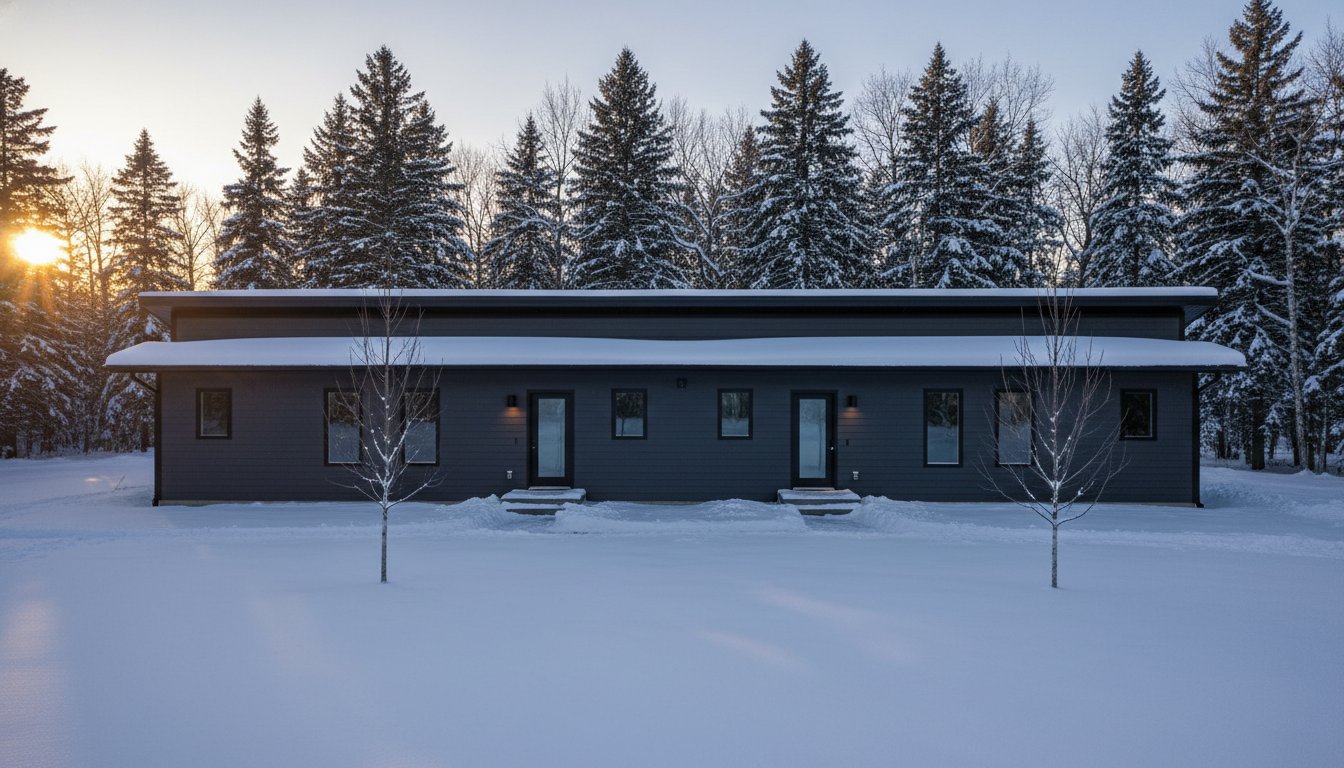
On January 14, 2024, a property owner in Traverse City faced a $15,000 restoration bill after a single ice dam caused extensive water infiltration in a lakeside rental. You understand that maintaining a high-yield portfolio in rural regions requires more than reactive repairs; it demands a disciplined, technical approach to combat the 140 inches of average annual snowfall recorded in areas like Leelanau County. Implementing a structured system for rental property maintenance Northern Michigan is the only way to ensure your assets remain resilient against the harsh Great Lakes climate.
This guide establishes a professional framework to help you protect your investment and maintain strict compliance with the Michigan Truth in Renting Act through 2026. We'll provide a standardized maintenance schedule, professional contractor sourcing protocols, and specific winterization strategies. Our objective is to ensure your property remains stable and profitable, even when managing operations from a distance. By applying these engineering-grade standards to your portfolio, you can reduce long-term costs and maximize your return on investment.
Key Takeaways
- Understand how the extreme temperature swings of the 45th parallel impact building envelopes and why climate-driven repairs require a specialized engineering approach.
- Transition from a reactive "break-fix" model to a systematized preventive strategy that utilizes precise documentation to extend the lifecycle of your property assets.
- Implement a high-precision approach to rental property maintenance Northern Michigan by using seasonal checklists designed to mitigate winter damage and prepare for summer humidity.
- Navigate the intersection of Michigan Landlord Laws and maintenance obligations to ensure your vendor vetting process meets strict insurance and licensing standards.
- Discover how integrating 24/7 emergency response technology with professional coordination transforms maintenance from a logistical burden into a value-driven asset.
The Northern Michigan Climate: A Unique Challenge for Rental Maintenance
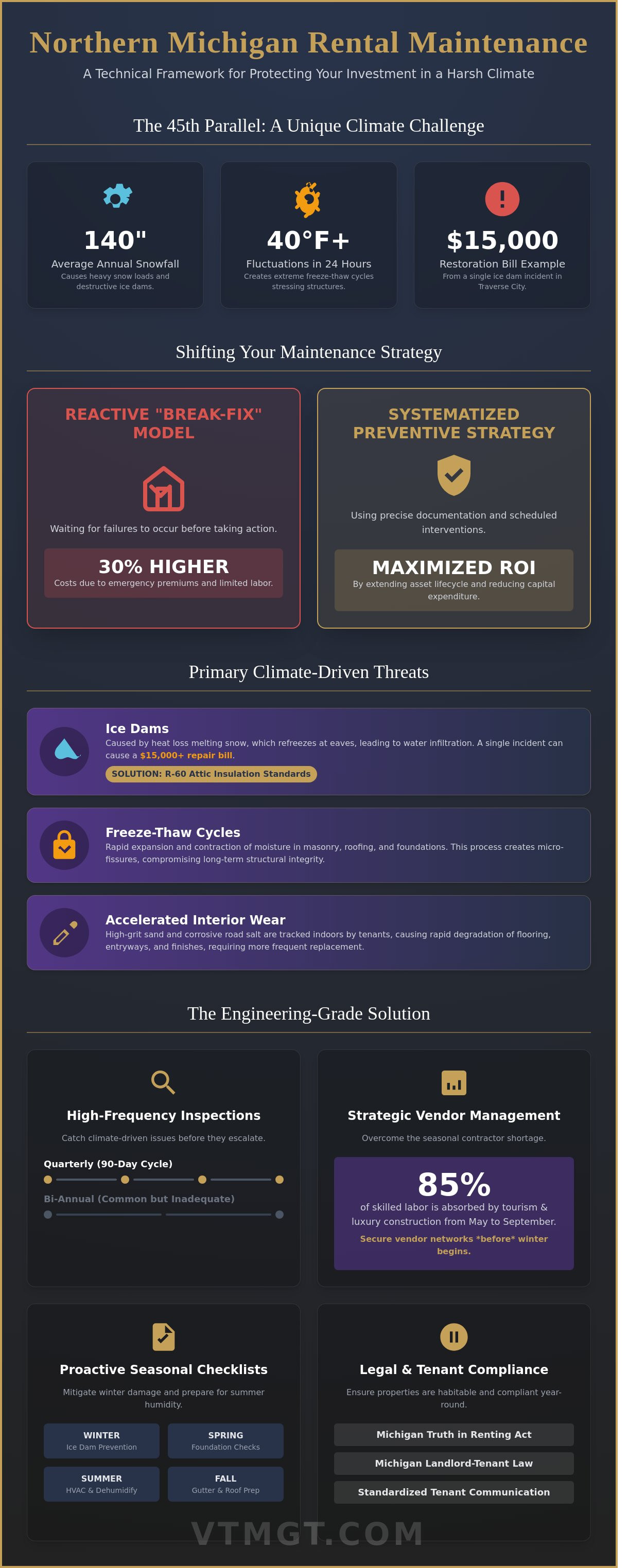
Managing property maintenance in Northern Michigan requires a fundamental shift from standard wear-and-tear models to climate-contingent strategies. The region sits along the 45th parallel, creating a volatile environment where temperature fluctuations of 40 degrees within a single 24-hour period occur frequently during transition months. These shifts place immense stress on building envelopes, demanding high-precision technical oversight. Landlords in Petoskey or Indian River face logistical constraints that differ significantly from those in Grand Rapids. While urban centers benefit from a high density of service providers, Northern Michigan relies on a fragmented network of specialists. Reactive maintenance in this seasonal economy often results in costs 30% higher than scheduled interventions due to emergency premiums and limited labor availability during peak tourism months.
Effective rental property maintenance Northern Michigan strategies prioritize the building's exterior integrity to prevent moisture ingress. The maintenance landscape is defined by two distinct categories:
- Weather-driven repairs: Addressing structural stress caused by heavy snow loads, ice damming, and thermal expansion.
- Wear-driven repairs: Managing the accelerated degradation of flooring and entryways caused by road salt and high-grit sand tracked in by tenants.
Freeze-Thaw Cycles and Structural Integrity
In Traverse City, the frequent oscillation between freezing and thawing causes rapid expansion and contraction in masonry, roofing, and foundation systems. This process creates micro-fissures that compromise structural integrity. Ice dams represent a specific mechanical failure; they occur when heat loss through inadequate attic insulation melts snow on the roof, which then refreezes at the eaves. 2026 standards suggest R-60 insulation values to mitigate this risk. The Northern Michigan Maintenance Gap is the disparity between standard upkeep and climate-required intervention.
Logistical Barriers in Emmet and Charlevoix Counties
The seasonal contractor shortage in Emmet and Charlevoix Counties peaks between May and September when tourism and luxury construction projects absorb 85% of available skilled labor. Emergency response times in rural corridors often exceed 4 hours without established service contracts. For rental property maintenance Northern Michigan to remain cost-effective, landlords must secure vendor networks before the winter season begins. Reliability depends on long-term partnerships with firms that understand the specific mechanical requirements of high-latitude buildings and can provide 24/7 coverage despite the rural geography.
Implementing a Systematized Preventive Maintenance Strategy
Transitioning from a reactive "break-fix" mentality to a standardized oversight model is the only way to protect assets in 2026. This engineering-grade approach prioritizes documentation, frequency, and technical precision over improvised repairs. Utilizing professional maintenance coordination in Petoskey allows owners to reduce long-term capital expenditure by identifying component wear before it triggers a system failure. This level of rigor aligns with the legal framework established by Michigan landlord-tenant law, ensuring properties remain habitable and compliant throughout the year. Standardizing tenant communication is a critical component of this strategy. When tenants understand how to report minor issues through a structured portal, they act as the first line of defense against structural failures.
The Anatomy of a Standardized Inspection
Quarterly walkthroughs represent the benchmark for rental property maintenance Northern Michigan. While bi-annual visits are common, they often miss the rapid environmental shifts that occur during 60-degree temperature swings in the spring and fall. A 90-day inspection cycle ensures that HVAC filtration is replaced regularly, preventing blower motor strain. Specific focus areas must include sump pump testing, especially before the spring thaw, and exterior drainage clearing to prevent foundation seepage. Digital reporting provides transparent property owner oversight. These reports should include high-resolution photography and timestamped checklists, creating a verifiable maintenance log that preserves the property's resale value. Owners who implement these protocols often see a 20% reduction in emergency service calls.
Budgeting for Precision: The 1% Rule and Beyond
Calculating maintenance reserves requires more than simple estimation. The traditional 1% rule serves as a baseline, but Northern Michigan climate factors demand a more granular analysis. Properties equipped with complex systems like hydronic boilers, metal roofs, or deep-well pumps require dedicated sinking funds. Standardized systems prevent "budget shock," which typically occurs when emergency repairs cost 3.5 times more than scheduled maintenance. For example, a well pump that's monitored for electrical draw might be replaced during a scheduled vacancy for a predictable fee, whereas an emergency failure in mid-January involves premium labor rates and potential pipe bursts. By allocating funds based on the specific lifecycle of high-impact systems, you can maintain a stable cash flow. If you're looking to stabilize your portfolio's performance, you might consider how integrated management systems can streamline these financial projections. This disciplined approach to rental property maintenance Northern Michigan ensures that 2026 remains a year of growth rather than one of constant financial recovery.
Seasonal Maintenance Requirements: From Traverse City to Grand Rapids
Effective rental property maintenance Northern Michigan requires a disciplined, calendar-driven strategy that accounts for the region's extreme climate shifts. From the 140-inch average annual snowfall in Gaylord to the high-humidity lake effects in Traverse City, property owners must move beyond reactive repairs. Utilizing a structured seasonal maintenance checklist for Petoskey or Grand Rapids ensures that structural integrity is maintained throughout the year. Spring inspections focus on identifying foundation shifts or roof shingle loss occurring during the thaw. By May 1, landlords should prioritize gutter clearing and dehumidifier deployment in basements to mitigate the 70% average summer humidity levels found near the lakeshore.
Fall represents the highest-stakes period for asset preservation. Between September 15 and October 31, every rental unit requires a comprehensive winterization audit. Failure to address small vulnerabilities before the first hard freeze often results in emergency service calls that cost three times the rate of scheduled maintenance. Winter management then shifts toward liability control, specifically regarding snow removal and the continuous operation of heating systems during sub-zero polar vortex events.
Winterization and Thermal Defense
Technical precision during the winterization process prevents catastrophic plumbing failures. Standardized procedures include the physical disconnection of all exterior hoses and the shutdown of dedicated outdoor water lines. HVAC systems require "Stress Tests" by certified technicians before the first Gaylord snowstorm hits; this includes checking heat exchangers for cracks and replacing filters to ensure airflow efficiency. Landlords must clearly define expectations in the lease regarding thermostat minimums, typically 55 or 60 degrees Fahrenheit, to prevent pipe bursts during tenant absences. Under Michigan landlord-tenant laws, maintaining a functional heating system is a non-negotiable requirement for habitability. Clear communication about snow removal zones and salt application responsibilities reduces slip-and-fall liability on icy walkways.
Summer Upkeep and Exterior Preservation
Maintaining curb appeal in competitive markets like Grand Rapids or Petoskey requires rigorous exterior management. This includes ensuring the grounds are free of debris and non-functional vehicles; if you need to clear space quickly, you can learn more about Cash For Junk Cars Michigan to handle removal efficiently. Lawn care and irrigation systems must be calibrated to local water ordinances while ensuring the property remains attractive to high-quality applicants. June is the optimal time for inspecting decks and siding. Northern Michigan's moisture levels can lead to rapid rot or pest intrusion, such as carpenter ants, if wood-to-earth contact isn't addressed. The "Charlevoix Summer" brings a surge in occupancy and foot traffic. Properties often experience a 25% increase in wear and tear during these peak months. Landlords should schedule mid-summer walkthroughs to check for appliance strain and plumbing leaks, ensuring the property remains in peak condition for the high-demand season.
Vendor Management and Legal Compliance in Northern Michigan
Effective rental property maintenance Northern Michigan requires a structured approach to legal obligations and technical execution. Under the Michigan Landlord Laws, specifically MCL 554.139, owners are legally bound to keep premises in reasonable repair and fit for their intended use. This statutory duty remains non-negotiable. Even if a lease suggests otherwise, the landlord is responsible for the structural integrity and safety of the unit. Failure to maintain these standards often leads to rent escrow actions or "repair and deduct" scenarios that disrupt professional cash flow management. Standardizing work orders transforms maintenance from a reactive chore into an audit-ready data set. Every entry must include the timestamp of the request, specific diagnostic findings, materials utilized, and the final sign-off from the tenant. This level of detail is crucial during 2026 legal proceedings or when justifying deductions from a security deposit. A clear paper trail proves that the landlord acted with due diligence and professional care.Risk Mitigation and Liability
The "Habitability Standard" in Michigan dictates that essential services like heat, water, and electricity must remain functional. When managing emergency repairs in Charlevoix rentals, landlords must act within a 24 to 48-hour window for critical failures. Documenting every maintenance request serves as a primary defense against negligence claims. Our team ensures all vendors meet rigorous safety and insurance protocols, requiring verified general liability coverage and active workers' compensation. This precision protects the property owner's equity and legal standing.Building a Reliable Vendor Network
There's a critical technical difference between "handyman" services and licensed trade professionals. While a handyman handles minor cosmetic fixes, Michigan law requires licensed master plumbers or electricians for system-level work. Standardized vendor agreements are essential to prevent construction liens, which can cloud a property title if a contractor isn't paid correctly. We prioritize vendors who understand the specific climate challenges of the region, ensuring that rental property maintenance Northern Michigan is performed with the correct materials for sub-zero temperatures. In high-demand markets like Traverse City, localized vendor relationships are vital for operational stability. By leveraging volume-based partnerships, we secure priority service windows that individual owners cannot access. This systematic approach ensures that repairs are completed quickly, maintaining tenant satisfaction and reducing vacancy risks.The Van Treese Management Standard: Precision Maintenance Coordination
Van Treese Management Group (VTMG) approaches property care with the same rigor found in industrial engineering. We don't just fix broken pipes; we manage the structural integrity of your investment. Effective rental property maintenance Northern Michigan requires a shift from reactive repairs to proactive asset preservation. Our 24/7 emergency response system uses a hybrid model of advanced dispatch technology and human decision-making. This ensures that a critical failure at 3:00 AM in January is handled within 120 minutes, preventing catastrophic pipe bursts or heating loss. Owners maintain 100% visibility through our digital portal. Every work order, invoice, and photo documentation is uploaded in real-time. This level of transparency eliminates the information gap that often leads to budget overruns.
Professional oversight is the primary driver of long-term property value. When maintenance is systematized, it ceases to be an unpredictable expense and becomes a manageable asset. Our team monitors the lifecycle of every major system, from HVAC units to roofing membranes. This data-driven approach allows us to forecast capital expenditures years in advance. By maintaining a disciplined schedule of preventative inspections, we reduce the frequency of emergency calls by 22% on average. This precision protects your cash flow and ensures the property remains a competitive product in the regional market.
Our Standardized Maintenance Systems
The VTMG workflow follows a strict protocol. It begins with a tenant request through our centralized platform. Our team then dispatches vetted vendors who meet our specific insurance and quality benchmarks. We perform site audits on 15% of all non-emergency repairs to verify material costs and workmanship. By integrating 2026 market research, we advise owners on high-ROI improvements. For instance, upgrading to smart thermostats can reduce utility overhead by 12% in multi-unit buildings. We treat every repair as a data point to assess the long-term viability of the property's infrastructure.
Partnering with VTMG for Long-Term Stability
Standardized management is the foundation of stable local communities across Northern Michigan. When properties are maintained to a high standard, tenant retention increases and local property values remain resilient. VTMG provides more than just a service; we offer a partnership focused on technical excellence and financial performance. Our maintenance analysis identifies potential risks before they become liabilities. We invite you to Schedule a consultation with our maintenance experts today.
Our commitment to rental property maintenance Northern Michigan is reflected in our local vendor partnerships. We prioritize contractors who demonstrate consistent reliability and transparent pricing structures. This ecosystem of trusted professionals allows us to scale our operations without compromising on quality. Whether you manage a single-family home or a large multi-family complex, our coordination ensures your property operates at peak efficiency.
Securing Your Northern Michigan Portfolio for 2026 and Beyond
Success in the regional market demands a transition from reactive repairs to a disciplined, engineering-led strategy. The intense climate across the corridor from Traverse City to Grand Rapids necessitates seasonal protocols that protect structural integrity long before the first frost arrives. Effective rental property maintenance Northern Michigan relies on these standardized systems to mitigate the risks associated with extreme weather and aging infrastructure. By prioritizing preventive coordination, landlords can stabilize operational costs and maintain high occupancy rates throughout the 2026 season.
Our approach is built on the Van Treese Management Standard, a framework established in 2018 to bring industrial-grade precision to residential assets. We provide a vetted network of licensed Northern Michigan contractors and a standardized 24/7 emergency response system that ensures issues are resolved with technical accuracy. You don't have to manage the complexities of vendor compliance or seasonal transitions alone. Professional systems turn maintenance into a predictable component of your investment's growth. Protect your Northern Michigan investment with VTMG’s precision maintenance systems.
Your property deserves a maintenance strategy that is as resilient as the Northern Michigan landscape itself.
Frequently Asked Questions
What are the most common maintenance issues for rentals in Northern Michigan?
Frozen pipes and ice dams represent the most frequent technical challenges for properties in this region. Data from regional insurance providers indicates that 1 in 5 property damage claims during winter months stems from water intrusion caused by ice buildup on rooflines. We prioritize proactive insulation and heat tape installation to mitigate these risks before temperatures drop below 32 degrees Fahrenheit.
Is a landlord responsible for snow removal in Petoskey or Traverse City?
Landlords are generally responsible for snow removal unless the lease agreement explicitly delegates this task to the tenant. In Petoskey and Traverse City, local ordinances require sidewalks to be cleared within 24 to 48 hours of snowfall to ensure public safety. Failure to comply results in municipal fines. Our protocols ensure that professional plowing services are dispatched immediately after 2 inches of accumulation to maintain site safety.
How often should I inspect my rental property in Northern Michigan?
We recommend performing comprehensive inspections at least twice per year during the spring and fall seasonal transitions. These assessments focus on structural integrity and mechanical system performance. A 2025 study on rental property maintenance Northern Michigan showed that biannual checks reduce emergency repair costs by 15 percent compared to annual reviews. This structured approach allows for the identification of wear before it reaches a critical failure point.
What constitutes an "emergency repair" under Michigan law?
Michigan law defines an emergency repair as any condition that renders the premises uninhabitable or poses an immediate threat to life and safety. This includes a total loss of heat during winter, lack of running water, or major electrical faults. Under the Michigan Truth in Renting Act, landlords must address these critical failures within 24 to 72 hours to maintain compliance with health and safety codes.
How much should I budget for annual maintenance in Northern Michigan?
A standard technical benchmark for maintenance budgeting is 1 percent of the property's total market value annually. For a home valued at $350,000, this equates to a $3,500 reserve fund. Industry data suggests that older structures in this climate may require up to 1.5 percent to account for the accelerated wear caused by extreme thermal cycling and high humidity levels during the summer months.
Do I need to be present for maintenance repairs if I live out of state?
Out-of-state owners don't need to be physically present for repairs if they have established a reliable network of licensed contractors. We utilize digital documentation and real-time reporting to provide owners with visual verification of completed work. This system ensures that technical standards are met without requiring the owner to travel. It's a standard practice for approximately 40 percent of regional investors who reside outside of Michigan.
Can I charge my tenant for maintenance repairs they caused?
You can charge tenants for repairs that exceed normal wear and tear, provided the damage results from negligence or intentional misuse. Michigan's Landlord-Tenant Relationship Act of 1972 stipulates that landlords must provide an itemized list of damages within 30 days of the tenant moving out. We document the property condition with high-resolution photography before and after every lease term to ensure precise cost recovery for our clients.
What is the benefit of using a property management firm for maintenance coordination?
The primary benefit of a property management firm is the systematic coordination of rental property maintenance Northern Michigan through a vetted vendor network. Professional firms leverage volume-based relationships with contractors to ensure priority service during peak winter months. This approach minimizes downtime for mechanical systems and ensures that all repairs meet professional quality benchmarks. It transforms reactive maintenance into a controlled, predictable process.