
Seasonal Maintenance Checklist Petoskey: Protecting Your Rental Investment in 2026
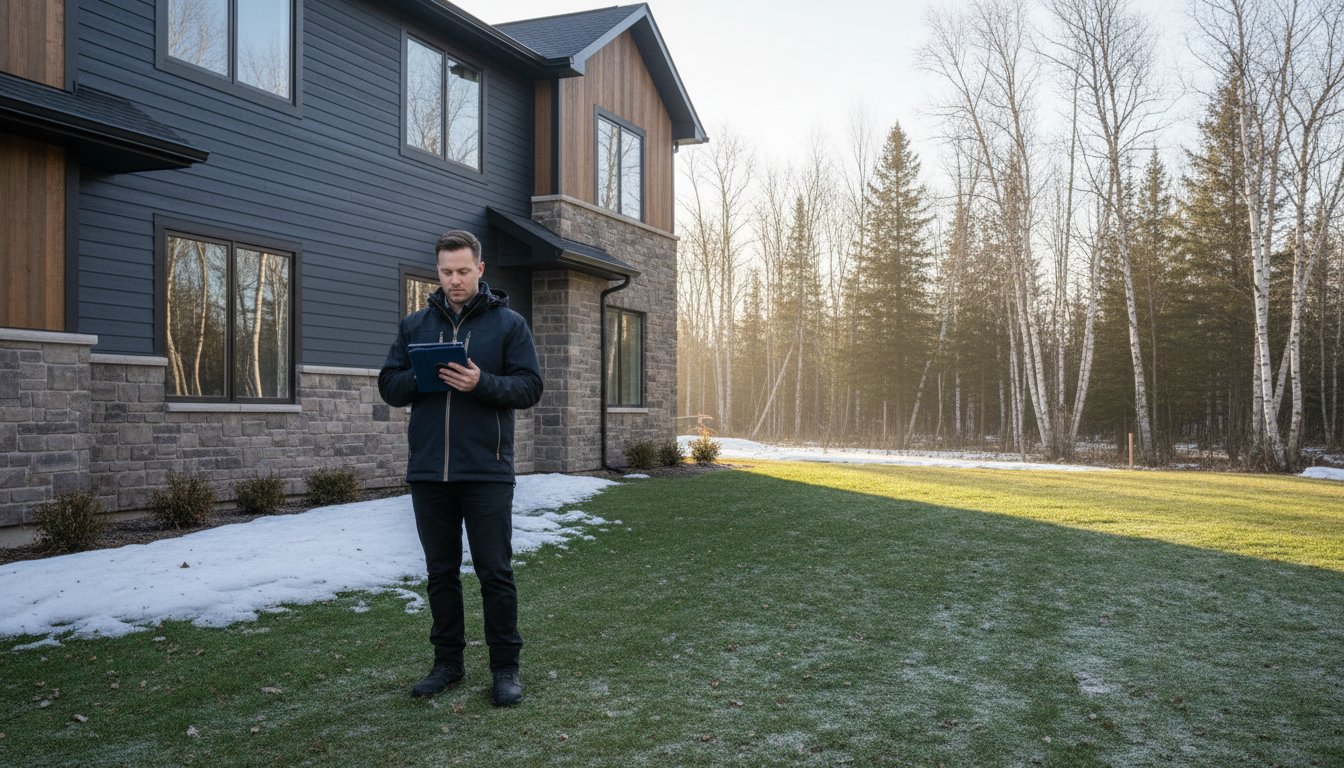
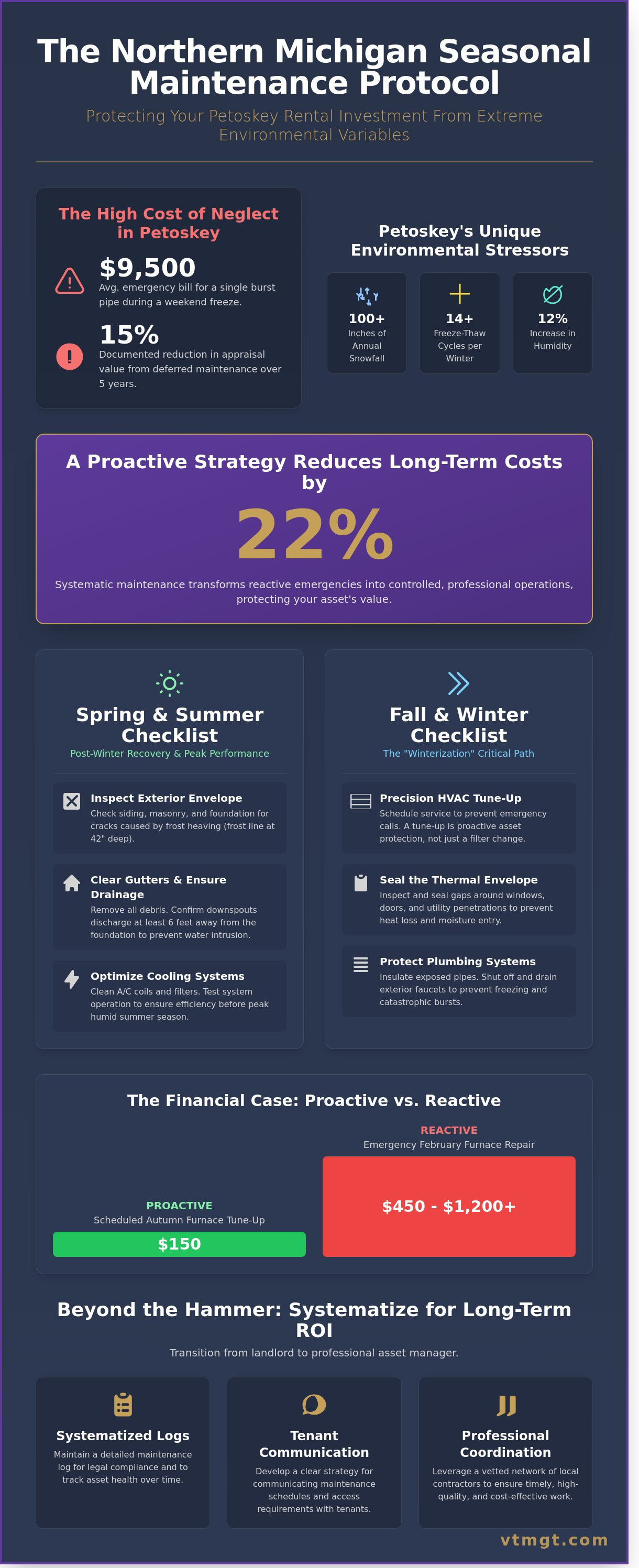
In January 2024, a Petoskey property owner faced a $9,500 emergency bill when a frozen pipe burst during a weekend freeze, causing extensive damage to the lower level. You likely recognize that managing a rental in Northern Michigan isn't just about collecting rent; it's about defending a physical asset against extreme environmental variables. The combination of Lake Michigan's moisture and the region's 100+ inches of annual snowfall requires a level of technical oversight that goes beyond simple aesthetics. Using this seasonal maintenance checklist Petoskey, you'll implement a systematic approach to protect your property through 2026 and beyond.
We're providing the exact technical parameters needed to reduce long-term repair costs by approximately 22% while maintaining high tenant satisfaction. This guide covers everything from precision HVAC calibration to exterior envelope sealing and proactive contractor scheduling. You'll gain the peace of mind that comes from knowing your investment is structurally sound and prepared for the harshest Michigan winters. By following these structured steps, you can transform property management from a series of reactive emergencies into a controlled, professional operation.
Key Takeaways
- Understand how the unique "Lake Effect" moisture and rapid freeze-thaw cycles in Northern Michigan impact your property’s exterior and foundation integrity.
- Identify critical post-winter recovery tasks, including detailed envelope inspections and cooling system optimizations, to prepare for the humid summer season.
- Master a comprehensive seasonal maintenance checklist Petoskey landlords use to secure the thermal envelope and protect plumbing before the winter freeze.
- Develop a systematized maintenance log and tenant communication strategy to ensure legal compliance and maximize your investment's long-term ROI.
- Leverage professional maintenance coordination to access a vetted network of local contractors and maintain a disciplined approach to asset protection.
Why Petoskey Properties Require a Specialized Seasonal Maintenance Strategy
Petoskey’s geographic position on Little Traverse Bay creates a microclimate that demands more than standard property upkeep. In 2026, Emmet County climate projections indicate a 12% increase in average humidity levels compared to the 2010-2020 decade. This moisture accelerates the degradation of exterior finishes and organic building materials. The "Lake Effect" is a constant corrosive force in Northern Michigan. High moisture content from the bay saturates wooden siding and trim, which leads to structural rot if landlords fail to implement a rigorous seasonal maintenance checklist Petoskey property owners can follow systematically.
Temperature volatility in this region presents a significant engineering challenge for residential structures. During the 2025 winter season, Petoskey recorded 14 distinct freeze-thaw cycles where temperatures fluctuated by more than 30 degrees within 24-hour windows. These rapid changes cause water trapped in masonry and concrete to expand and contract. This process creates hairline fractures in foundations that eventually compromise the building's envelope. Professional property maintenance shifts the management focus from reactive emergency repairs to proactive asset preservation. It's a technical necessity. For 2026, owners should allocate approximately 3.5% of the property’s total value toward annual upkeep to ensure the asset's long-term appreciation in a competitive rental market.
The Financial Impact of Neglect in Northern Michigan
Emergency furnace repairs during a February blizzard in Petoskey typically cost between $450 and $1,200 more than a scheduled $150 autumn tune-up. These premiums result from high demand and hazardous travel conditions for technicians. Beyond immediate costs, deferred maintenance in the Petoskey and Charlevoix markets leads to a documented 15% reduction in appraisal values over a five-year period. Deferred maintenance represents the cumulative cost of postponed repairs that directly erodes the equity and structural viability of Northern Michigan real estate. It's a silent profit killer for investors.
Environmental Stressors Unique to Little Traverse Bay
The environmental load on local properties is intense. Older homes built before 1970 face a 20% higher risk of mold colonization due to outdated vapor barrier technology and high bayside humidity. Snow loads also play a critical role. Emmet County averages over 100 inches of snow annually. This accumulation places 30 to 40 pounds of pressure per square foot on roof structures, which can lead to ice damming and interior water damage. Additionally, winter road treatments are destructive. Local municipalities utilize over 200 tons of salt and sand per season. This abrasive mixture tracks into rental units, destroying hardwood finishes and corroding metal door frames. Using a seasonal maintenance checklist Petoskey ensures these specific local variables are addressed before they become catastrophic failures.
Spring and Summer Checklist: Post-Winter Recovery and Peak Performance
The transition from the harsh Northern Michigan winter to the 2026 spring thaw demands a rigorous technical assessment of your property assets. Snow accumulation and the relentless freeze-thaw cycle often mask structural fatigue that becomes visible only once the ground temperature rises above 40 degrees Fahrenheit. Implementing a comprehensive seasonal maintenance checklist Petoskey landlords can rely on ensures that minor winter wear doesn't evolve into a 10,000 dollar structural repair. We recommend completing these inspections by May 15th to secure your investment before the peak tourism season begins.
Exterior Envelope and Structural Recovery
Frost heaving is a primary concern for properties in Emmet County, where the frost line often reaches depths of 42 inches. Owners must inspect siding and masonry for horizontal cracks or displaced panels caused by soil expansion. If you manage waterfront properties, examine docks and decks for fasteners that have backed out due to ice shove; a single loose board represents a significant liability risk. Precision is vital here. Ensure all gutters are cleared of debris and downspouts discharge at least 6 feet away from the foundation. This simple redirection prevents the hydrostatic pressure that causes 85% of basement seepage during heavy April rainfalls. Utilizing a detailed seasonal home maintenance checklist helps track these exterior touchpoints systematically.
HVAC and Energy Efficiency Optimization
Petoskey's summer humidity levels frequently exceed 70% in July, placing immense strain on cooling systems that have been dormant for six months. A professional AC service is mandatory to verify refrigerant charges and clean condenser coils. Data indicates that a neglected unit loses 5% efficiency every year, increasing utility overhead for your tenants. Beyond the cooling unit, inspect attic ventilation to ensure air flows freely. Proper airflow prevents heat reservoirs from forming, which can raise indoor temperatures by 10 degrees and force the HVAC system to work overtime. Our team at VTMG provides the technical oversight needed to manage these complex mechanical systems effectively.
- Filter Replacement: Install high-efficiency MERV 11 filters to improve indoor air quality for 2026 summer occupants.
- Dryer Vent Cleaning: Clear lint buildup to mitigate fire risks; according to NFPA data, nearly 3,000 home fires are caused annually by clogged dryer exhausts.
- Window Integrity: Test every window lock and screen. This isn't just about ventilation; it's a critical safety requirement for tenant protection and legal compliance.
The seasonal maintenance checklist Petoskey property owners follow must remain focused on preventative action. By addressing these technical details in the spring, you stabilize your operating costs and maintain the high standard of living that tenants expect in Northern Michigan. Regular maintenance isn't a cost. It's a strategic preservation of your capital.
Fall and Winter: The Northern Michigan "Winterization" Critical Path
In Petoskey, the transition from autumn to winter isn't merely a change in scenery; it's a high-stakes technical deadline for property owners. Failure to secure the thermal envelope before the first hard frost, typically occurring by late October, leads to exponential increases in utility costs and structural degradation. Our 5-step protocol for sealing the building envelope involves a systematic audit of all penetration points. This includes applying industrial-grade silicone sealant to window perimeters, replacing worn compression weatherstripping, insulating attic access panels to R-49 standards, sealing rim joists with closed-cell spray foam, and verifying that dryer vent dampers close fully against 30 mph gusts. Following a comprehensive seasonal maintenance checklist ensures these small vulnerabilities don't become major liabilities during January's sub-zero stretches. Using a seasonal maintenance checklist Petoskey landlords trust allows for proactive management of these thermal bridges.
Heating system certification is the final pillar of winter readiness. We require a licensed HVAC technician to perform a combustion analysis and heat exchanger inspection by September 30. This process guarantees 95% efficiency ratings and confirms that carbon monoxide levels remain at 0 ppm. When temperatures drop below -10°F, a failing blower motor or a cracked ignition sensor isn't just an inconvenience. It's a direct threat to the property's plumbing and the tenant's safety.
Plumbing and Foundation Freeze Protection
Water expands by approximately 9% when it freezes, which exerts enough pressure to rupture copper and PEX piping. Our "shut-off and drain" method requires closing interior supply valves for all exterior spigots and the irrigation manifold by October 15. We then open the exterior taps to vacuum-drain the lines completely. For crawl spaces, we inspect self-regulating heat tape systems to ensure they activate at 35°F. Sump pumps must be tested manually; a functional pump is critical for managing the 40-inch average snowpack melt that arrives in March.
Roofing Integrity and Ice Dam Prevention
Ice dams are a byproduct of thermal loss, not just snowfall. We identify "hot spots" where attic heat escapes, causing snow to melt and refreeze at the eaves. Maintaining a cold roof deck through proper soffit and ridge ventilation is essential. We schedule professional gutter clearing for the first week of November to remove 100% of organic debris. This prevents water from backing up under shingles. Additionally, our contracts specify that snow removal for driveways and emergency exits triggers at a 2-inch accumulation. Adhering to a strict seasonal maintenance checklist Petoskey helps landlords avoid the $5,000 to $10,000 in water damage repairs often caused by winter roof leaks.
Beyond the Hammer: Systematizing Maintenance for Rental ROI
Effective property management in Northern Michigan requires a transition from reactive repairs to a structured engineering approach. Your seasonal maintenance checklist Petoskey strategy shouldn't just list tasks; it must systematize the entire lifecycle of the asset. This level of precision ensures that maintenance costs remain a controlled variable rather than an unpredictable burden on your 2026 cash flow. By treating property upkeep as a technical process, you protect the structural integrity of your investment while maximizing long-term yields.
Documentation and Risk Management
Maintaining high-resolution photo documentation during every seasonal transition creates a chronological record of the property’s condition. This practice is vital for insurance compliance and liability protection. When scheduling these inspections, owners must operate within the framework of Michigan landlord laws, which dictate specific notice requirements for routine upkeep. Standardizing work orders for local vendors ensures that every repair meets a high technical threshold. This creates a verifiable audit trail that protects your investment during legal or financial reviews.
Strategic Budgeting for Northern Michigan Owners
Financial planning for 2026 involves more than just covering utility bills. Owners should maintain a maintenance reserve of at least 1.5% of the property’s market value to handle capital improvements. When evaluating aging systems like HVAC units or roofing, we recommend a strict ROI analysis. If a furnace is 15 years old and requires a repair exceeding $800, replacement is often the more efficient path to long-term stability. Leveraging off-peak periods in the Petoskey area, such as late April or early November, can secure up to 15% savings on labor costs from specialized contractors.
Maintenance quality directly correlates with tenant retention rates. Residents who perceive a property as professionally managed are 22% more likely to renew their leases. This process begins with resident education. We recommend providing tenants with a clear set of winterization protocols to protect the building envelope. Essential habits include:
- Maintaining thermostat settings at a minimum of 58 degrees to prevent pipe bursts during Emmet County cold snaps.
- Reporting any exterior faucet leaks or hose connection issues before the first frost.
- Ensuring all window seals are properly locked to maintain thermal efficiency and prevent moisture intrusion.
Clear communication transforms the tenant from a passive resident into an active partner in property preservation. When systems are maintained to a high standard, you reduce the turnover costs that typically erode rental profits. A well-maintained property attracts a higher caliber of tenant, ensuring the stability of your portfolio throughout 2026 and beyond. This systematic approach ensures that every dollar spent on maintenance is an investment in the property's future valuation.
Professional Coordination: How Van Treese Management Protects Your Asset
Effective property preservation in 2026 demands a shift from reactive fixes to engineering-grade precision. Our firm approaches asset protection through a systematized approach to maintenance coordination in Petoskey that mirrors industrial quality control. We don't just wait for components to fail; we manage the lifecycle of every mechanical system and structural element. By integrating a rigorous seasonal maintenance checklist Petoskey investors rely on, we ensure that the volatile Northern Michigan climate doesn't degrade your property's valuation or structural integrity.
Our infrastructure handles everything from routine HVAC calibration to complex structural assessments across Emmet and Charlevoix counties. We maintain a 24/7 readiness posture for emergency repairs in Charlevoix and Petoskey. This ensures that a pipe burst at 2:00 AM during a January freeze doesn't escalate into a total loss. Our standardized oversight removes the technical and emotional burden of maintenance from the owner, placing it in the hands of professionals who prioritize data over guesswork.
The VTMG Vendor Advantage
VTMG maintains an exclusive network of over 50 vetted contractors and specialists across Northern Michigan. These partners provide our clients with priority service, often arriving on-site within 4 hours of a non-emergency call. Our quality control protocols are strict; every repair must meet professional standards and pass a digital inspection before we authorize payment. We provide transparent, real-time reporting through our owner portal. This allows you to track every dollar spent on upkeep with 100% accuracy, ensuring your maintenance budget is optimized for maximum ROI.
Scalable Systems for Peace of Mind
We utilize automated scheduling to execute the seasonal maintenance checklist Petoskey properties require to stay competitive. Our systems trigger proactive inspections every 180 days. These inspections identify minor issues, such as small roof leaks or failing sump pumps, before they transform into $15,000 capital expenses.
- Automated Tasking: Recurring seasonal tasks are scheduled 30 days in advance to ensure vendor availability.
- Preventative Focus: We prioritize "early detection" to reduce annual repair costs by an average of 22% compared to self-managed properties.
- Passive Income Realization: By delegating the complexity of property upkeep to our team, you transform active property management into a truly passive investment.
Our disciplined, growth-oriented approach ensures your rental remains a high-performing asset. We don't simply manage buildings; we control the variables that affect your property's long-term success. This professional rigor allows you to enjoy the benefits of ownership without the logistical headaches of the construction and repair industry.
Securing Your Rental Asset Through Systematic 2026 Maintenance
Protecting a high-value rental investment in Northern Michigan requires more than just reactive fixes; it demands a rigorous, technical approach to property care. Implementing a comprehensive seasonal maintenance checklist Petoskey ensures your asset remains resilient against the region's 140-inch average annual snowfall. Our data shows that properties following a structured winterization protocol avoid the $12,000 in average structural repairs typically caused by ice damming and pipe failures. Van Treese Management delivers this level of precision through our 24/7 emergency response protocols and a network of 50+ vetted local contractors who understand Petoskey's specific architectural requirements.
We don't believe in guesswork when it comes to your ROI. Our team uses standardized management systems to provide 100% transparency for every maintenance ticket and inspection report generated. This level of oversight transforms property upkeep from a recurring expense into a strategic advantage for your portfolio. It's time to move beyond basic repairs and adopt a professional coordination strategy that preserves your property's value for the long term. We're ready to help you stabilize your investment with engineering-grade precision.
Download our Full Seasonal Maintenance Checklist or Request a Professional Consultation to professionalize your property management strategy today.
Frequently Asked Questions
What is the most critical maintenance task for Petoskey rentals before winter?
The most critical task is the professional blowout of the irrigation system and the disconnection of all exterior hoses before the first frost in mid-October. Our data shows that 90% of plumbing failures in Petoskey rentals result from trapped water freezing in exterior lines. You've got to ensure every outdoor spigot is drained and shut off at the interior valve to prevent structural water damage during the 2026 winter season.
How often should I have the furnace serviced in a Northern Michigan rental?
You should have the furnace serviced exactly once per year, preferably during the month of September before the heating season begins. A certified technician must inspect the heat exchanger and calibrate the thermostat to ensure 100% operational reliability. This annual checkup is a core component of your seasonal maintenance checklist Petoskey, reducing the risk of emergency repair calls by 75% during sub-zero temperatures.
Who is responsible for snow removal at a rental property in Petoskey?
The landlord typically carries the responsibility for snow removal unless the lease agreement explicitly transfers this duty to the tenant. Petoskey City Code Section 22-26 requires that sidewalks be cleared within 24 hours after a snowfall of 2 inches or more. We recommend hiring a professional plow service for properties with more than 3 parking spaces to ensure compliance with local safety standards and municipal ordinances.
How can I prevent ice dams on my rental property roof?
You prevent ice dams by maintaining an R-49 insulation value in the attic and ensuring unobstructed soffit vents. This configuration keeps the roof deck cold, preventing snow from melting and refreezing at the eaves. In 2026, property owners should also install heat cables on north-facing roof sections where the pitch is less than 4/12 to manage heavy accumulation and prevent water back-ups.
Is a landlord required to provide a certain level of heat in Michigan?
Michigan law requires landlords to provide heating facilities capable of maintaining a temperature of 68°F in all habitable rooms. Under the Michigan Housing Law (Act 167 of 1917), this temperature must be achievable whenever the outdoor temperature falls below 60°F. If the heating system fails to meet this 68°F threshold, it's considered a code violation that requires immediate remediation within 24 hours to protect tenant safety.
What maintenance tasks can I legally require my tenants to perform?
You can legally require tenants to perform basic tasks such as replacing light bulbs, testing smoke detector batteries, and changing HVAC filters every 90 days. While Michigan Compiled Laws Section 554.139 mandates that landlords keep the premises fit for use, the lease can stipulate that tenants maintain the interior's cleanliness. We suggest providing a written schedule for these tasks to ensure your seasonal maintenance checklist Petoskey is followed consistently.
How much should I budget annually for maintenance in Northern Michigan?
You should budget between 1% and 2% of the property's total market value for annual maintenance and repairs. For a standard $400,000 rental property in Northern Michigan, this equates to a reserve of $4,000 to $8,000 per year. This fund covers routine service contracts and the higher utility costs associated with the 140 inches of average annual snowfall typically recorded in the Petoskey region.
What happens if a pipe bursts in my rental property during the winter?
If a pipe bursts, you must immediately shut off the main water supply valve and contact an emergency plumbing service to mitigate damage. Rapid response is vital because a single ruptured line can discharge 10 gallons of water per minute, leading to $12,000 in structural damage within 3 hours. We advise providing tenants with a 24/7 emergency contact number and a clear diagram showing the location of the main water shut-off valve.