
2026 Northern Michigan Rental Risk Management Guide
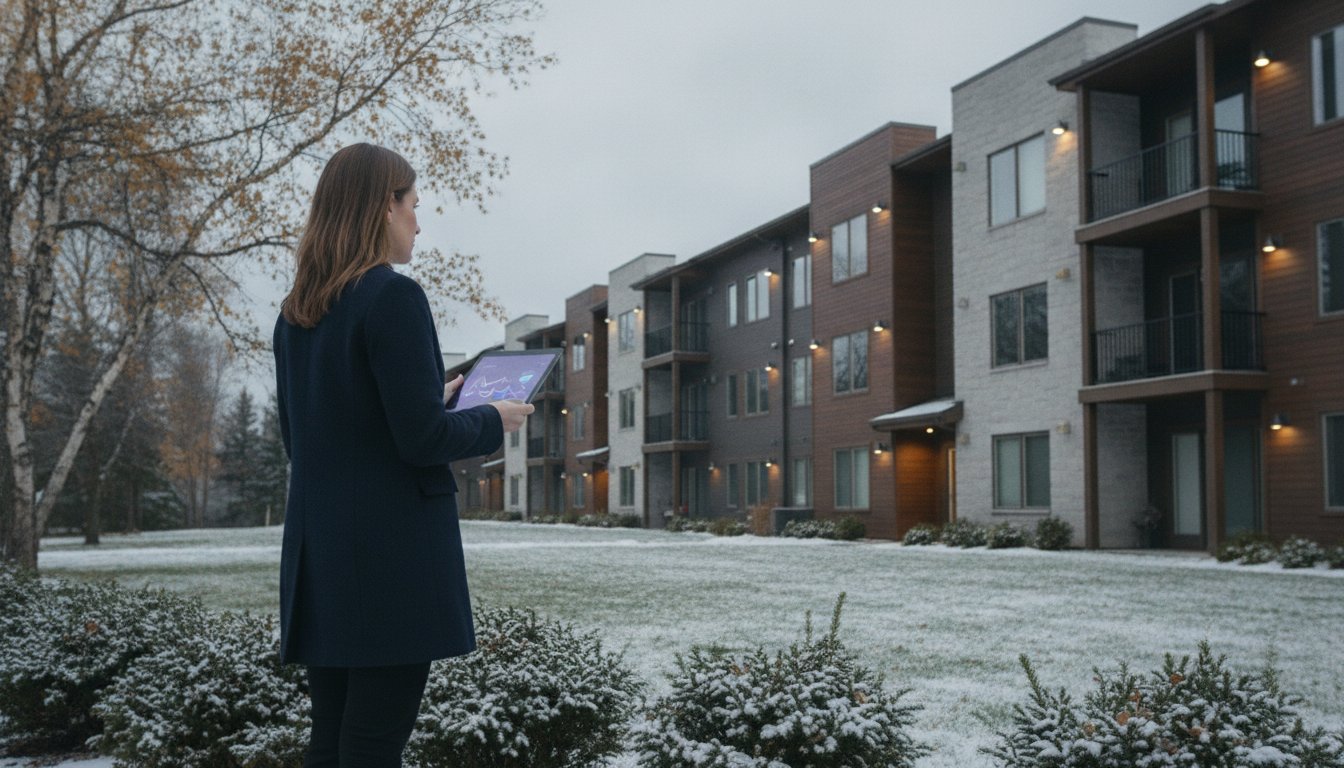
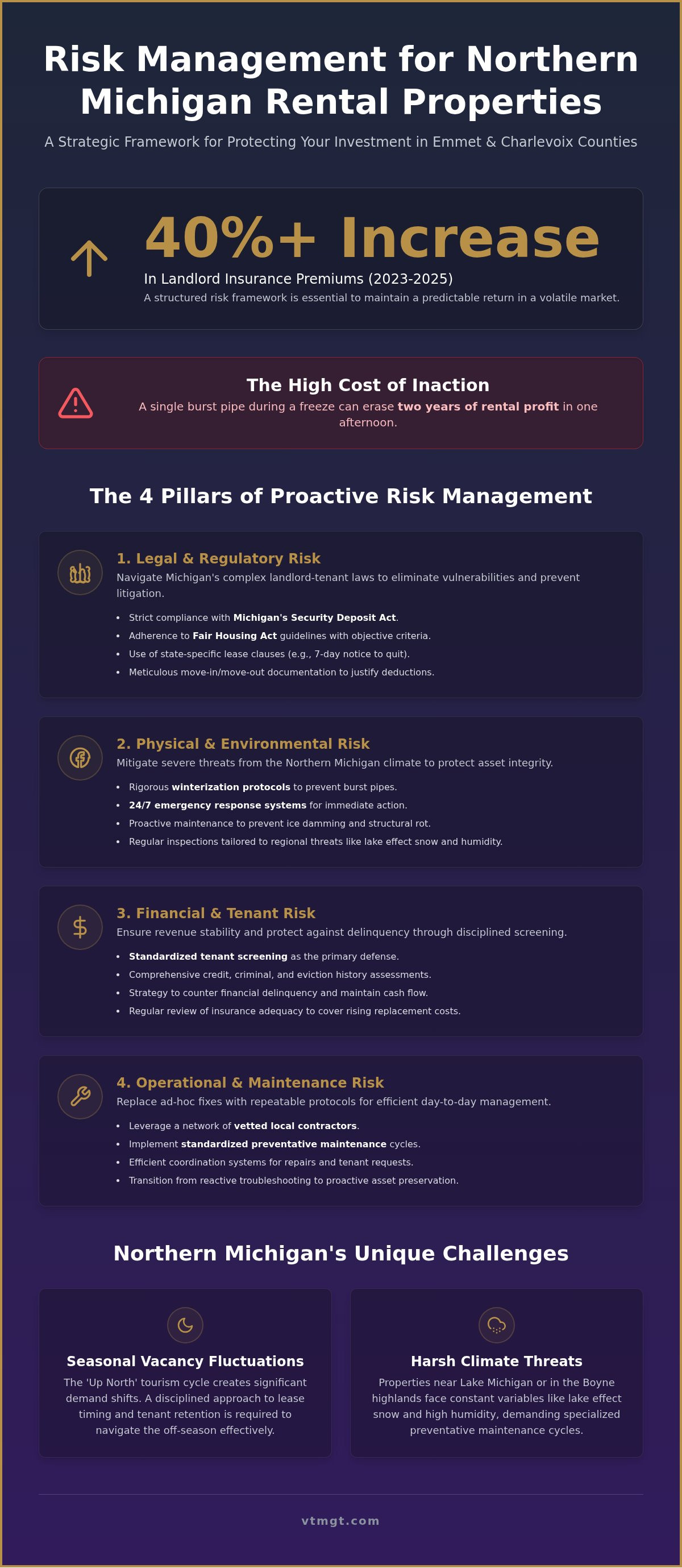
A single burst pipe during a Northern Michigan freeze can cause enough structural damage to erase two years of rental profit in one afternoon. For property owners in Emmet and Charlevoix counties, the margin for error has narrowed as landlord insurance premiums climbed more than 40 percent between 2023 and 2025. You likely recognize that maintaining a profitable portfolio requires more than a casual approach; it demands a disciplined strategy to counter unpredictable weather and evolving legal standards. Implementing professional risk management for rental properties Northern Michigan is now a technical necessity for those seeking long term financial stability.
We understand the pressure of protecting your investment against legal loopholes and environmental hazards. This guide provides a structured framework to shield your assets from liability while ensuring consistent performance through 2026. We'll outline the standardized systems required for rigorous tenant screening, seasonal maintenance protocols, and insurance adequacy. You'll gain a clear roadmap to transition from reactive troubleshooting to a state of controlled, professional asset management that preserves your peace of mind and secures your cash flow.
Key Takeaways
- Understand the mandatory compliance requirements of Michigan’s Security Deposit Act and Fair Housing guidelines to eliminate legal vulnerabilities and potential litigation.
- Implement rigorous winterization protocols and 24/7 emergency response systems to mitigate the severe environmental threats unique to the Northern Michigan climate.
- Deploy a professional framework for risk management for rental properties Northern Michigan to shield your investment from rising insurance premiums and financial delinquency.
- Utilize standardized tenant screening processes, including credit and criminal history assessments, as your primary defense against long-term financial instability.
- Leverage a network of vetted local contractors and maintenance coordination systems to ensure the structural integrity of your assets through standardized preventative cycles.
The Framework of Real Estate Risk Management in Northern Michigan
Effective risk management for rental properties Northern Michigan involves a structured framework of risk management that identifies, assesses, and prioritizes potential threats to an investment portfolio. We define real estate risk management as a systematic process to protect asset value and owner liability. Standardized systems outperform ad-hoc fixes because they replace human error with repeatable protocols. By moving from a reactive stance to a proactive one, we ensure that variables like fluctuating insurance costs and municipal regulatory changes don't compromise the asset's structural or financial integrity.
Our methodology categorizes threats into four primary pillars to ensure comprehensive coverage. Legal risks involve compliance with evolving state statutes and local ordinances. Physical risks encompass the structural degradation caused by environmental extremes. Financial risks focus on revenue stability and tenant creditworthiness. Finally, operational risks cover the efficiency of day to day management and vendor coordination. Addressing these pillars simultaneously creates a stable environment for capital appreciation.
Why Northern Michigan Requires a Custom Risk Strategy
The regional economy creates a specific risk profile that generic management models fail to address. The 'Up North' tourism cycle causes significant fluctuations in residential vacancy risks, particularly in markets like Petoskey, Boyne City, and Traverse City. While summer demand remains high, the off-season requires a disciplined approach to lease timing and tenant retention. We treat geographic considerations as technical parameters; a property's proximity to Lake Michigan or its elevation in the Boyne highlands dictates different preventative maintenance cycles and insurance requirements. A standard approach won't suffice when lake effect snow and high humidity levels are constant variables.
The Cost of Inaction: Real-World Consequences
Failing to implement a structured system leads to exponential cost increases over time. We've observed that legal fees resulting from improper eviction filings or Fair Housing violations often far exceed the annual cost of professional management. In our harsh climate, deferred maintenance creates a 'snowball effect' where a minor roof leak or unaddressed insulation gap leads to catastrophic ice damming and structural rot. When investing in rental property Northern Michigan, owners must account for the 41 percent increase in landlord insurance premiums seen between 2023 and 2025. A structured risk framework is the only way to maintain a predictable internal rate of return in this volatile environment.
Legal and Regulatory Risk: Navigating Michigan Landlord Laws
Legal compliance is a technical discipline that ensures the long term viability of your portfolio. In Northern Michigan, the regulatory environment in 2026 demands a higher degree of precision than ever before. We view risk management for rental properties Northern Michigan as a defensive strategy that begins with the lease document itself. Generic templates often omit critical Michigan specific clauses, such as the 7 day notice to quit for non payment or the specific language required for month to month terminations. Relying on outdated forms in Emmet or Charlevoix counties can lead to administrative delays in court, extending vacancy periods and increasing legal expenses.
Fair Housing Act compliance is another area where unintentional errors lead to significant exposure. We eliminate this risk by using objective, standardized criteria for every applicant to ensure no discriminatory patterns emerge. Michigan's Security Deposit Act also requires strict adherence to timelines; landlords must return deposits within 30 days of a tenant's departure. Documentation is the primary defense here. Every move in and move out inspection must be recorded with technical accuracy to justify any deductions. Failing to provide a written list of damages within the statutory window often results in the landlord losing the right to retain any portion of the deposit.
Adhering to Michigan Landlord-Tenant Law
Effective risk mitigation begins with standardized tenant placement and background checks. Our systems verify credit, criminal, and eviction history to ensure financial stability and protect the physical asset. We also manage risks associated with unauthorized occupants and lease violations through regular oversight and clear communication protocols. For a deeper dive into these regulations, consult our Michigan landlord laws guide. If you require professional assistance, our team offers specialized lease agreement preparation to ensure your documents meet current standards.
Commercial Lease Compliance Risks
Commercial assets introduce complex liability structures that differ significantly from residential holdings. Managing Common Area Maintenance (CAM) charges requires meticulous accounting and regular audits to prevent financial disputes with tenants. Liability risks in commercial spaces, ranging from slip and fall incidents to structural integrity issues, demand a specialized approach to maintenance and insurance. Our commercial property management Northern Michigan resources explain how to handle these technical requirements. We ensure that every commercial lease is structured to protect the owner from operational and financial volatility while maintaining a professional environment for business tenants.
Physical Asset Protection: Mitigating Environmental Hazards
In our region, the physical envelope of a building faces environmental stressors that can rapidly degrade its value. Effective risk management for rental properties Northern Michigan requires a technical understanding of how lake effect snow and sub-zero temperatures impact structural components. We treat property maintenance as a precision engineering task rather than a series of chores. By implementing standardized preventative cycles, we identify vulnerabilities in the building's shell before they become catastrophic failures. This proactive stance is the only way to preserve the structural integrity of an asset through the harsh seasonal transitions.
Reaction time is the most critical variable when a mechanical failure occurs. Our 24/7 emergency response coordination ensures that licensed professionals are on-site immediately to mitigate damage. We maintain a network of vetted local contractors who understand the specific building codes and climatic challenges of Emmet and Charlevoix counties. This professional oversight prevents recurring liabilities caused by substandard repairs and ensures that every intervention meets our quality benchmarks. We don't just fix a leak; we analyze the root cause to prevent future occurrences, effectively reducing the property's long-term risk profile.
The Northern Michigan Winterization Checklist
The 'frozen pipe' window is the highest risk period for local owners. Our protocol includes a technical audit of pipe insulation and the installation of heat tape in high-vulnerability areas, particularly for homes in the Petoskey and Boyne City areas. We also focus on roofing integrity to prevent ice dams, which are the primary cause of structural water damage during the spring thaw. For a comprehensive list of these technical requirements, see our guide on rental property maintenance Northern Michigan. Every checklist item is designed to harden the asset against the predictable extremes of the winter season.
Fire and Life Safety Compliance
Risk mitigation also extends to life safety systems, which must comply with current Michigan standards. We conduct regular inspections of smoke and carbon monoxide detectors to ensure 100 percent operational readiness. In older Northern Michigan estates, we pay particular attention to egress routes and chimney maintenance to prevent fire hazards and ensure tenant safety. Implementing a 24/7 monitoring system ensures that a minor supply line leak is identified and remediated before it evolves into a total loss scenario involving structural rot and mold remediation. These inspections provide the documentation necessary to prove due diligence in the event of an insurance claim or legal inquiry.
Financial Risk Mitigation: Tenant Screening and Insurance
Financial stability in real estate isn't a matter of luck; it's the result of rigorous, repeatable systems. Implementing risk management for rental properties Northern Michigan requires a technical approach to income protection that begins before a lease is ever signed. We view tenant screening as the primary defense against delinquency and bad debt. A single eviction can cost an owner thousands in lost rent and legal fees, which is why we prioritize applicants with documented histories of financial responsibility. By filtering for high-quality residents, we ensure the asset remains a consistent, cash-flowing vehicle rather than a liability.
Rent collection systems must be automated and uncompromising to reduce the risk of late payments. We deploy structured platforms that provide tenants with clear payment channels, which minimizes administrative friction. Market risk is another critical factor; accurate property valuations prevent high vacancy rates that drain capital. If a property is priced above the local average, which reached $1,432 statewide in 2026, the risk of prolonged vacancy increases. We use data-driven assessments to ensure competitive pricing that attracts qualified applicants without sacrificing the internal rate of return.
The Standardized Screening Process
We use objective criteria to eliminate bias and protect owners from Fair Housing complaints. This process involves a multi-point verification of credit, criminal, and eviction history. In seasonal economies like Traverse City or Petoskey, verifying income stability is a complex task. We don't just look at a single pay stub; we analyze year-round earnings to ensure the tenant can sustain payments during the winter months. Maintaining a rigorous paper trail is essential for financial protection and provides the necessary evidence if a legal dispute ever arises.
Insurance and Liability Gaps
Standard homeowner policies are insufficient for professional rental assets. Landlord policies are a technical requirement because they include 'Loss of Use' and 'Rent Loss' coverage. These provisions ensure that if a property becomes uninhabitable due to a covered peril, your cash flow remains uninterrupted while repairs are underway. For high-value portfolios, umbrella policies provide an additional layer of protection against significant liability claims. We also require tenants to maintain their own renter's insurance to shift personal property liability away from the owner. Our financial reporting and accounting systems ensure that these insurance costs and rent flows are tracked with absolute precision.
Strategic Mitigation: The Van Treese Management System
The Van Treese Management System is engineered to eliminate the variables that lead to financial and structural instability. Our approach to risk management for rental properties Northern Michigan relies on standardized management systems that remove human error from critical oversight tasks. We treat property management as a technical infrastructure project; every process, from lease preparation to maintenance coordination, follows a rigorous protocol designed to protect the owner's capital. Founded in 2018, our firm has developed these frameworks specifically to address the complexities of the regional market, ensuring that every asset in our portfolio operates under a controlled, professional environment.
Transparency is a core component of our risk mitigation strategy. Our financial reporting and accounting systems provide the granular data required for audit protection and long term tax planning. Unlike remote firms that rely on generic data, our Petoskey-based team understands the specific risks associated with Emmet and Charlevoix counties. We leverage a network of vetted local contractors who have passed our internal quality assurance checks, ensuring that all repairs meet our engineering standards. This local expertise allows us to identify and remediate risks before they manifest as costly liabilities.
Transforming Risk into Stability
A disciplined management model transforms potential threats into predictable outcomes. Our 24/7 emergency response coordination is a critical tool for physical asset protection; it ensures that mechanical failures are addressed within minutes, not days. We also conduct regular market research to reduce economic risk, allowing owners to adjust their strategies based on real-time data rather than speculation. For a detailed look at how we apply these systems locally, read our guide on property management Petoskey MI. These systems provide the stability needed to scale a portfolio without increasing operational friction.
Building Thriving Communities through Safe Housing
We believe that high-quality maintenance is the most effective tool for long-term tenant retention. When a property is maintained with technical precision, it attracts residents who value stability and safety, which naturally reduces the risk of delinquency and turnover. Our commitment to innovation allows us to use modern tools for screening and reporting, but we maintain a focus on human interaction to resolve complex issues. This balance creates a secure environment for both owners and tenants. If you are ready to secure your portfolio, Protect your Northern Michigan investment with Van Treese Management through our professional risk management framework.
Securing Long-Term Asset Performance through 2026
Maintaining a high-performing real estate portfolio in 2026 requires a technical, systems-based approach to asset protection. A disciplined intersection of legal compliance, environmental resilience, and financial screening forms the foundation of a secure investment. By moving away from ad-hoc fixes and embracing standardized management systems, you eliminate the operational friction that often leads to capital loss. Our local expertise in the Petoskey and Traverse City markets ensures that your property is hardened against regional threats like extreme winterization risks and evolving Michigan statutes.
Effective risk management for rental properties Northern Michigan is a continuous process of identification and mitigation. Whether it's through 24/7 emergency response coordination or rigorous financial reporting, the goal remains the same: protecting your bottom line while building a stable, thriving community. You don't have to manage these complexities in isolation. Professional oversight provides the structural and legal safeguards necessary to scale your holdings with confidence.
Secure your Northern Michigan rental with professional risk management.
We look forward to partnering with you to ensure your portfolio remains a resilient, cash-flowing asset for years to come.
Frequently Asked Questions
What are the most common legal risks for landlords in Northern Michigan?
The most frequent legal vulnerabilities involve Fair Housing Act violations, security deposit mismanagement, and incorrect notice-to-quit procedures. Michigan law strictly caps security deposits at 1.5 times the monthly rent and mandates a 30-day return window. In regions like Petoskey or Traverse City, local ordinances can add administrative layers. Standardized lease preparation ensures compliance with the 7-day notice required for non-payment, which prevents costly delays in the judicial system.
How does professional property management reduce my liability?
Professional management implements standardized risk management for rental properties Northern Michigan by replacing individual discretion with repeatable protocols. We handle tenant screening, lease execution, and maintenance coordination within a fegyelmezett framework. By utilizing objective criteria for placement and 24/7 emergency response for physical repairs, we insulate owners from negligence claims. This systematic approach ensures every interaction meets current Michigan regulatory standards and local building codes.
What insurance coverage is essential for Michigan rental properties in 2026?
Landlords must utilize specialized policies that include 'Loss of Rent' and 'Loss of Use' provisions to protect cash flow. These are critical as Michigan landlord insurance premiums rose 41 percent between 2023 and 2025. You should also maintain a liability umbrella policy and require tenants to carry personal renter's insurance. This tiered structure protects your capital against environmental perils and personal injury claims within both residential and commercial assets.
How do I protect my rental property from frozen pipes during a Petoskey winter?
Protecting assets from Northern Michigan winters requires technical winterization cycles. We mandate the installation of pipe insulation and heat tape in vulnerable crawlspaces or exterior wall cavities. Our systems include regular inspections of furnace efficiency and thermostat settings to ensure consistent heat. Implementing 24/7 monitoring allows for the immediate detection of temperature drops. These preventative measures are essential in Petoskey and Boyne City to prevent catastrophic structural water damage.
Is tenant screening enough to prevent financial risk?
Screening serves as a primary defense, but it doesn't eliminate all financial risk. It identifies historical patterns of delinquency but cannot account for future economic shifts or environmental disasters. You must pair rigorous background checks with automated rent collection and adequate insurance. Diversifying your risk management for rental properties Northern Michigan ensures that even if a tenant's financial situation changes, your cash flow remains protected through loss-of-rent coverage and standardized financial reporting.
What is the difference between a repair and a capital improvement for risk purposes?
A repair restores the property to its original condition, while a capital improvement adds value or extends the asset's operational life. From a risk perspective, repairs often address immediate safety hazards like a broken furnace or leaking roof. Capital improvements, such as upgraded electrical systems, proactively harden the asset against future environmental threats. Our financial reporting systems track these expenditures separately to ensure correct tax treatment and provide transparency for audit protection.
How often should I conduct safety inspections on my Northern Michigan rental?
We recommend a minimum of two comprehensive safety inspections per year, typically aligned with the spring and fall seasonal transitions. These inspections focus on life safety systems, including smoke detectors, carbon monoxide sensors, and egress routes. In older estates throughout Charlevoix and Emmet counties, we also inspect chimneys and structural integrity. Regular oversight ensures that minor mechanical issues are identified before they escalate into high-liability failures or total losses.
Can a property manager handle evictions in Emmet County?
A professional property manager handles the administrative and procedural aspects of evictions in Emmet County. This includes serving the mandatory 7-day notice to quit and coordinating with legal counsel to file court documents. Our standardized systems ensure that every step follows Michigan's specific legal timelines. This professional oversight reduces the risk of case dismissal due to technical errors, which can happen when owners attempt to navigate the eviction process independently.