
Smart Home Tech: 2026 Buying Guide for Landlords
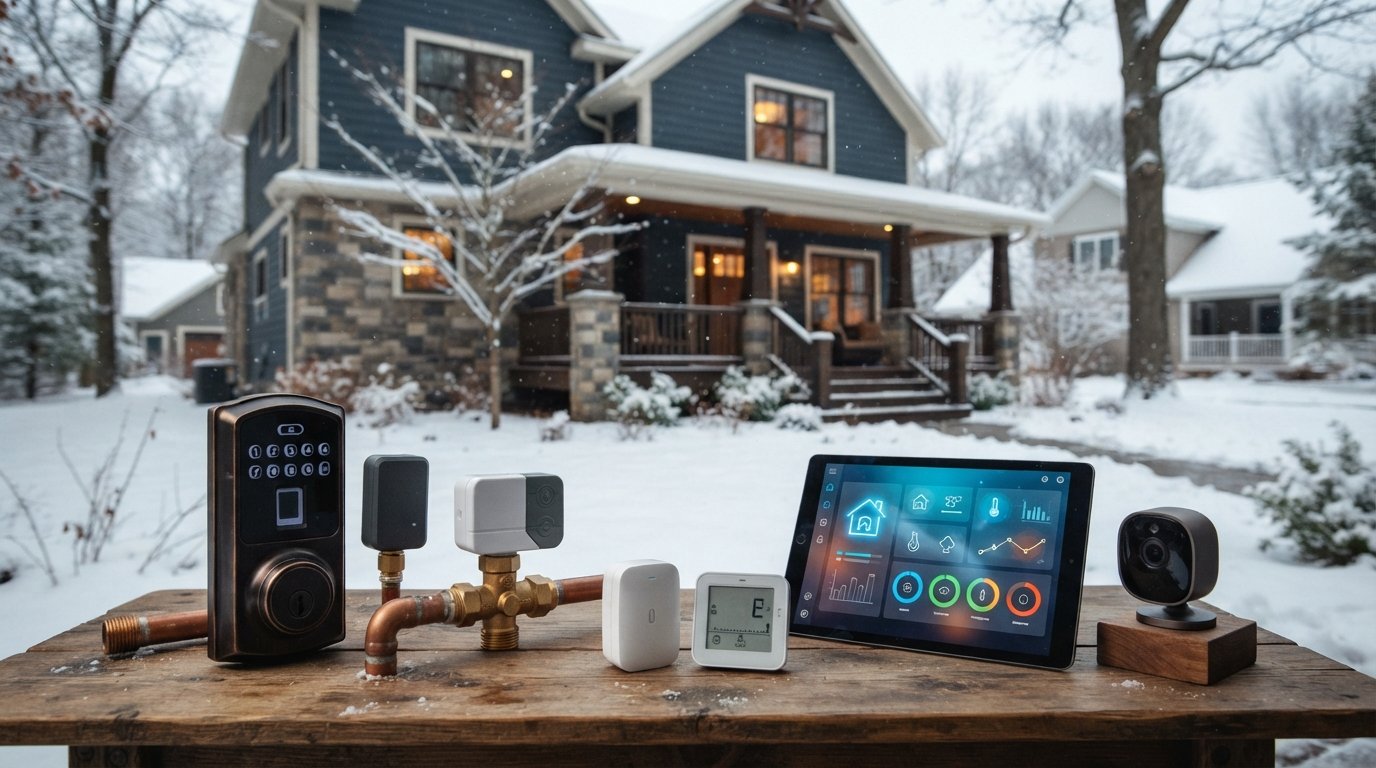
Did you know that the average insurance payout for a frozen pipe claim in a residential property now ranges between $11,600 and $13,954? For landlords in Northern Michigan, where sub-zero temperatures and lake-effect snow are standard, these aren't just statistics; they represent significant risks to your bottom line. Integrating smart home technology for rental properties has shifted from a luxury tenant amenity to a fundamental requirement for asset protection. By adopting a standardized technical approach, you can proactively manage environmental threats and reduce the high utility costs associated with our regional winters.
We recognize the operational strain of managing long-term rentals, particularly the anxiety surrounding undetected leaks or the inefficiency of manual re-keying during tenant turnovers. It's a challenge to maintain high retention rates while your expenses climb. This 2026 guide provides a structured roadmap for implementing hardware that delivers measurable ROI. You'll discover how to utilize the latest Matter 1.4 standards and automated systems, such as flow-based water shutoff valves and high-security smart locks, to secure your portfolio. We'll show you how to transform these technical investments into a more resilient, profitable, and professional management operation.
Key Takeaways
- Learn how strategically implementing smart home technology for rental properties can mitigate high utility costs and increase long-term tenant retention rates.
- Identify the essential hardware categories needed to prevent catastrophic asset damage, including automated water shutoff valves and climate sensors designed for Northern Michigan winters.
- Understand the technical infrastructure requirements of Matter and Thread standards to ensure your smart ecosystem remains scalable and interoperable across all units.
- Navigate Michigan privacy statutes and legal requirements to correctly place exterior security devices and draft robust lease addendums.
- Discover how professional maintenance coordination transforms technical alerts into rapid, onsite responses that protect your property and reduce owner involvement.
The Strategic Business Case for Smart Tech in Northern Michigan
Smart home technology for rental properties isn't just about consumer convenience. In professional property management, it's a suite of interconnected home automation systems designed to monitor environmental conditions and regulate access. For owners in Traverse City and Petoskey, this infrastructure serves as a critical risk-mitigation tool. It protects physical assets from the extreme thermal fluctuations characteristic of Northern Michigan. By treating these devices as essential infrastructure rather than optional gadgets, landlords can build a more resilient and profitable portfolio.
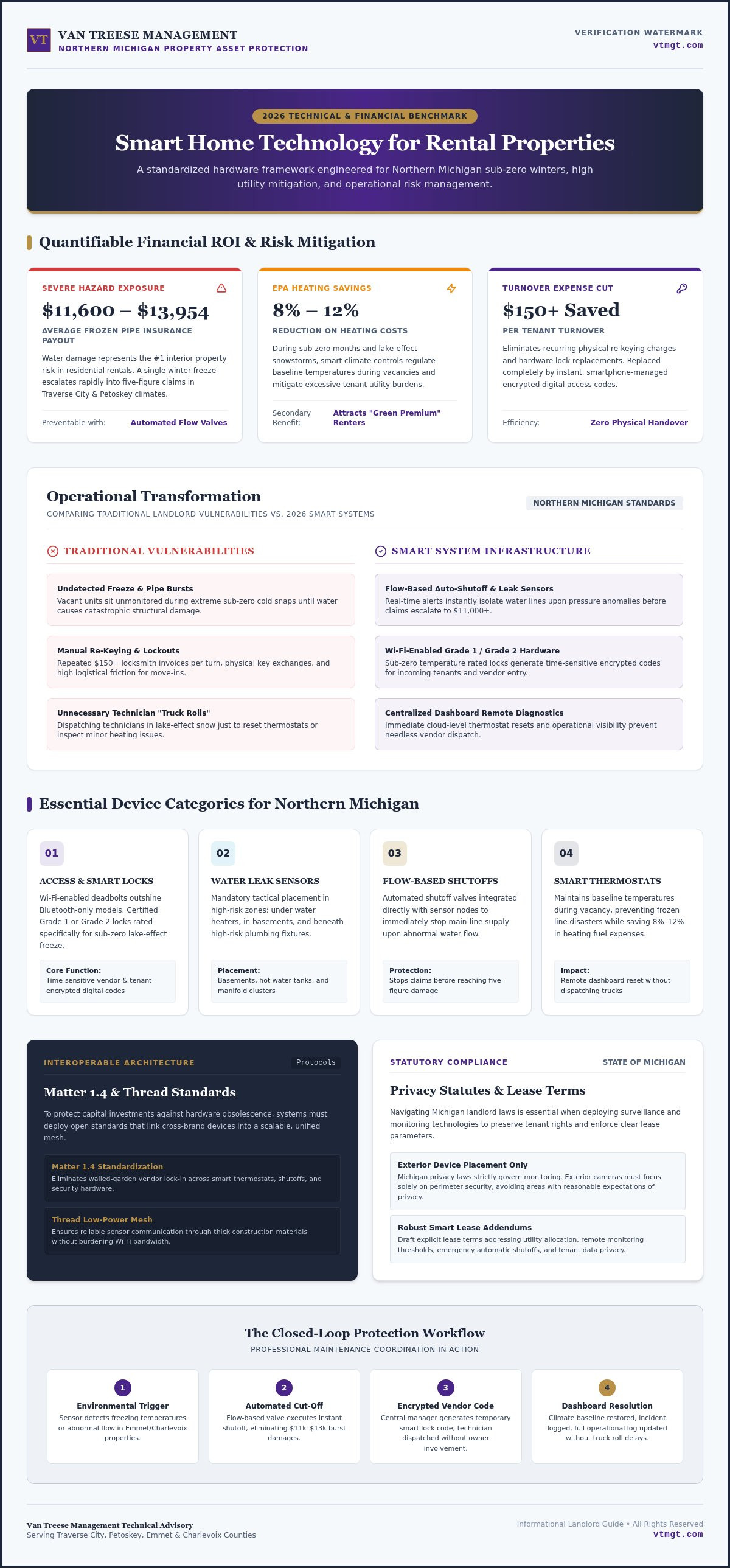
High-value tenants increasingly seek properties with a lower carbon footprint. This "Green Premium" allows landlords to justify competitive rental rates while reducing turnover. When a unit is vacant, smart tech maintains a baseline temperature, preventing the catastrophic costs of frozen pipes. Industry data indicates that water damage is the most frequent interior property risk. Smart sensors provide a structured defense against these liabilities, ensuring that a small leak doesn't escalate into a five-figure insurance claim.
Boosting Tenant Retention and Marketing Appeal
Millennial and Gen Z renters in the Petoskey area prioritize tech-enabled living. They value the security of digital access and the convenience of remote climate control. Highlighting these features in your rental listings creates immediate differentiation in a crowded market. A digital-first approach ensures a frictionless move-in experience. New tenants can receive encrypted access codes via smartphone, which eliminates the logistical hurdle and expense of physical key handovers.
Operational Efficiency and Cost Mitigation
The financial impact of smart thermostats is significant during Michigan's sub-zero months. EPA data suggests these devices save approximately 8% to 12% on heating costs. Beyond utility savings, remote management reduces "truck rolls." Instead of dispatching a technician for a simple thermostat reset, managers can resolve issues via a centralized dashboard. It's vital to stay compliant with Michigan Landlord Laws when determining how these tech-driven utility savings are shared or billed to tenants. We focus on standardized systems to ensure that maintenance coordination remains efficient and predictable across your entire residential or commercial portfolio.
Essential Device Categories for Northern Michigan Landlords
Selecting the correct hardware for smart home technology for rental properties requires a focus on industrial-grade durability and systemic integration. Unlike consumer-grade gadgets designed for novelty, landlord-focused devices must withstand the environmental stresses of Emmet and Charlevoix counties while providing reliable remote oversight. We prioritize four essential categories that directly impact operational expenses and asset safety. These systems move beyond convenience; they serve as a technical shield for your investment.
Security and Access Control
Physical key management remains a significant overhead for traditional rentals. Every tenant turnover typically necessitates a $150 or higher re-keying fee to maintain security standards. Smart locks eliminate this recurring cost entirely. When comparing hardware, Wi-Fi-enabled deadbolts offer superior remote management compared to Bluetooth-only models. They allow owners to generate unique, time-sensitive codes for tenants and vendors. This capability is vital for effective maintenance coordination, as it permits technician entry without the need for physical key exchanges. For exterior doors, we recommend Grade 1 or Grade 2 certified hardware specifically rated for sub-zero temperatures to prevent electronic failure during lake-effect snowstorms.
Environmental Protection and Monitoring
In Northern Michigan, the primary threat to property value is water damage resulting from frozen pipes or failed appliances. Strategic placement of leak sensors is mandatory. These devices should be installed near water heaters, in basements, and beneath high-risk plumbing fixtures. When integrated with an automated shutoff valve, these sensors can stop water flow the moment a leak is detected. This prevents the catastrophic damage that leads to insurance claims, which often average between $11,600 and $13,954 for residential water incidents.
Climate control is equally critical for asset protection. Utilizing ENERGY STAR certified smart thermostats ensures that your heating system operates efficiently while providing real-time low-temperature alerts. If a furnace fails in January, a push notification at a 50°F threshold provides a critical window to intervene before pipes freeze. Additionally, humidity sensors help prevent mold growth in older Traverse City homes where ventilation may be inconsistent. For owners seeking to professionalize their oversight, partnering with Van Treese Management ensures these technical alerts are handled by a team capable of immediate physical response.
Comparing Smart Ecosystems: Choosing the Right Infrastructure
The technical architecture supporting smart home technology for rental properties determines whether an installation provides long-term value or becomes a maintenance liability. Landlords must distinguish between consumer-grade plug-and-play devices and commercial-grade infrastructure. A fragmented ecosystem leads to "app fatigue" and complicates troubleshooting. We advocate for a standardized protocol across your entire portfolio to ensure that your maintenance coordination remains structured and efficient. By selecting hardware based on durability and interoperability, you reduce the risk of technical obsolescence.
Standardization simplifies the training of onsite staff and the procurement of replacement parts. When every unit in your Petoskey or Traverse City portfolio utilizes the same hardware revisions, your team can resolve issues faster. It's also essential to adhere to FTC guidelines on securing connected devices to maintain the integrity of your network. Prioritizing security at the infrastructure level protects both your business data and your tenants' digital privacy.
Wi-Fi vs. Specialized Mesh Networks
While Wi-Fi devices are accessible, they rely on tenant-provided internet services. If a tenant changes their network password or unplugs their router, the landlord loses remote visibility into critical freeze sensors and leak detectors. Specialized mesh networks, such as Z-Wave or Zigbee, operate on dedicated frequencies. These are often the preferred choice for commercial property management due to their reliability and ability to bypass signal interference. In historical Petoskey buildings with thick plaster or masonry walls, these mesh systems ensure consistent connectivity without requiring expensive repeaters.
Integration with Property Management Systems
Professional-grade hardware should offer an open API to sync with existing management workflows. This allows smart locks to automatically generate access codes based on tenant screening results or lease start dates. This integration ensures that turnover remains a hands-off process for the owner. Emergency overrides are a mandatory feature for any professional system. Every lock must support a physical master key or a permanent administrative code. This ensures that property managers can enter the premises during urgent environmental events without relying on cloud connectivity. Selecting hardware that allows for these overrides is a fundamental requirement for protecting your Northern Michigan assets.
Implementation: Privacy, Legal Compliance, and Lease Terms
Successful integration of smart home technology for rental properties depends on a rigorous legal and operational framework. Landlords in Northern Michigan must align their technical deployments with state privacy statutes to avoid significant criminal exposure. Michigan law is particularly strict regarding surveillance. Under MCL 750.539d, installing observation devices in "private places" without consent is a felony. This makes internal cameras a non-starter for long-term residential rentals. Professional owners prioritize transparency to mitigate these risks and protect their professional reputation.
A robust "Smart Home Addendum" is essential for every lease agreement. This document should explicitly define which devices are installed, what data they collect, and who has access to that information. Beyond privacy, the addendum must address data security. Landlords should implement a standardized protocol for resetting all hardware to factory defaults during the tenant turnover process. This ensures that departing tenants lose access to the property's network and that new residents can start with a secure, "clean" technical environment.
Privacy Boundaries and Disclosure
External cameras and video doorbells are permissible but require careful management. Under MCL 750.539c, Michigan's eavesdropping statute, recording audio without all-party consent can lead to felony charges. We recommend disabling audio recording features on all exterior devices to ensure compliance. Transparent communication is the foundation of a successful landlord-tenant relationship. You should clearly disclose the presence of any exterior sensors or cameras in the initial property listing and reinforced within the lease terms. This proactive approach builds trust and prevents future disputes regarding "quiet enjoyment" of the premises.
Maintenance and Tech Support Responsibilities
Standardized lease terms must delineate maintenance duties for smart hardware. While the landlord typically handles major system failures, tenants are often responsible for minor tasks like battery replacements. It's vital to define whether a technical failure, such as a smart lock malfunction, constitutes an emergency repair. Establishing a structured protocol for firmware updates and security patches is also necessary to prevent vulnerabilities. If you want to ensure your portfolio remains compliant and technically sound, Van Treese Management provides the professional oversight needed to handle these complex regulatory requirements.
- Device Inventory: Maintain a detailed log of all MAC addresses and serial numbers for every unit.
- Access Logs: Define how often and under what circumstances the landlord will review access logs for smart locks.
- Internet Connectivity: Clarify if the tenant or the landlord is responsible for maintaining the Wi-Fi uptime required for remote monitoring.
Optimizing Tech Oversight with Van Treese Management
Implementing smart home technology for rental properties creates a sophisticated digital layer over your physical assets. However, technology alone cannot thaw a frozen intake line or reset a tripped breaker during a winter storm. Van Treese Management (VTM) bridges this gap by integrating real-time technical alerts into a structured Petoskey rental management workflow. We transform raw data from your sensors into actionable maintenance tasks, ensuring that your investment remains protected without requiring your constant attention.
Professional management simplifies the inherent complexity of multi-device ecosystems. We focus on industrial-grade reliability, ensuring that every component in your portfolio functions as a cohesive unit. Our team oversees the entire lifecycle of your smart infrastructure, from initial installation to routine security patches and tenant handovers. By centralizing these technical processes, we eliminate the fragmentation that often plagues self-managed properties. You gain the benefits of a modern rental without the burden of constant technical troubleshooting.
Standardized Management Systems
VTM utilizes technology as a strategic tool to support thriving local communities in Emmet and Charlevoix counties. Our standardization strategy ensures that we utilize the same hardware configurations across all managed units. This consistency allows our maintenance team to troubleshoot issues with greater precision and speed. We handle the alert monitoring, so you don't have to manage push notifications or emergency calls. In several Emmet County properties, our proactive response to low-temperature alerts has prevented localized flooding incidents, saving owners from the high remediation costs associated with burst pipes.
Our network of vetted local contractors specializes in the installation and calibration of smart locks, thermostats, and leak detection systems. These technicians understand the specific environmental challenges of the Traverse City region. They ensure that every device is configured for maximum uptime and security, following the federal guidelines for connected hardware. This local expertise ensures that your tech investments are installed correctly the first time, reducing long-term maintenance overhead.
Next Steps for Northern Michigan Investors
Modernizing your portfolio requires a calculated approach rather than a haphazard purchase of consumer gadgets. We recommend starting with a comprehensive property valuation that accounts for the increased equity and rentability provided by smart upgrades. From there, we can develop a phased rollout plan that prioritizes high-impact devices like automated shutoff valves and intelligent climate control. If you're ready to enhance your ROI and secure your assets, consult with Van Treese Management on your smart tech strategy today. We provide the technical expertise and local physical presence necessary to turn smart alerts into long-term portfolio stability.
Securing the Future of Your Northern Michigan Portfolio
Strategic investments in smart hardware provide a robust defense against regional environmental risks while enhancing the marketability of your residential or commercial units. By prioritizing interoperable standards and rigorous legal compliance, you create a frictionless experience for tenants and a more resilient asset for your business. The transition from traditional locks and thermostats to integrated systems is no longer a luxury; it's a fundamental requirement for modern property oversight in our climate.
Integrating smart home technology for rental properties requires more than just high-quality hardware. It demands a structured management approach that combines standardized maintenance systems with local expertise in the Northern Michigan market. Our team provides the comprehensive financial reporting and onsite coordination necessary to ensure these technical systems deliver a measurable return on investment. We invite you to Partner with Van Treese Management to Modernize Your Portfolio and experience the stability that professional oversight provides. Protecting your investment is our priority, and we're ready to help you navigate this technological evolution with confidence.
Frequently Asked Questions
Does smart home technology really increase the rental value of a property?
Implementing smart home technology for rental properties attracts high-quality tenants who prioritize energy efficiency and security. In competitive markets like Traverse City, properties with these features often command higher rent and experience shorter vacancy periods. Tenants value the convenience of digital access and the potential for reduced utility bills. This technical upgrade serves as a differentiator, positioning your property as a modern, premium choice for long-term residents seeking professional management standards.
What happens to smart home devices if the internet goes out?
Most professional-grade devices continue to function locally during an internet outage. Smart locks utilize physical keypads or Bluetooth for entry, ensuring tenants aren't locked out. However, remote oversight and push alerts for environmental sensors require a stable connection. By utilizing mesh networks like Z-Wave, your system maintains internal communication between devices. We recommend standardized hardware that includes physical overrides to ensure property access remains secure regardless of current cloud connectivity status.
Can I monitor my tenants through smart home devices?
No, Michigan law strictly prohibits the use of internal surveillance in rental units. Under MCL 750.539d, placing cameras in private areas without consent is a felony. While exterior cameras and video doorbells are permissible for security, you must disclose their presence in the lease. We focus on using technology for asset protection, such as leak detection and climate monitoring, rather than tenant surveillance, to ensure full legal compliance and resident privacy.
Are smart locks more secure than traditional deadbolts for rentals?
Smart locks provide superior security by eliminating the risks associated with lost or duplicated physical keys. You can track access logs and instantly revoke codes when a lease ends. We recommend Grade 1 or Grade 2 hardware that meets industrial durability standards for the Northern Michigan climate. These devices are more difficult to pick than traditional deadbolts and provide a structured way to manage vendor access during maintenance coordination in Petoskey or Boyne City.
How do I handle smart home tech in my Michigan lease agreements?
You should include a specific Smart Home Addendum in your lease agreement. This document defines the tenant's responsibility for maintaining internet uptime and specifies who is liable for battery replacements. It also outlines the landlord's right to access emergency data, such as freeze alerts. Clear disclosure builds trust and ensures that both parties understand their technical duties. Our team assists owners in Petoskey with lease preparation to ensure these technical clauses are legally sound.
What is the most cost-effective smart upgrade for a Northern Michigan rental?
For Northern Michigan properties, smart thermostats and water leak sensors offer the highest immediate ROI. These devices mitigate the risk of pipe bursts during sub-zero winters, where insurance claims can exceed $11,000. Preventing a single flood incident justifies the initial hardware investment. These upgrades protect your equity and reduce the frequency of emergency maintenance calls, making them essential for long-term portfolio stability in Traverse City and the surrounding Emmet County areas.
Do I need to provide internet for the smart home devices to work?
Landlords aren't strictly required to provide internet, but critical monitoring features depend on it. If you rely on tenant-provided Wi-Fi, you risk losing visibility if the service is disconnected. For multi-family properties in Grand Rapids or Petoskey, we often suggest a dedicated landlord-controlled gateway for essential sensors. This ensures that freeze alerts and leak detections remain active regardless of the tenant's personal internet account status or router configuration, protecting the building's core infrastructure.