

Imagine receiving a midnight call during a Petoskey blizzard because a tenant is confused about who is responsible for clearing the snow from the driveway. For many property owners in Emmet and Charlevoix counties, these avoidable disruptions are a common byproduct of vague communication. Setting tenant expectations from the start is not about being an inflexible landlord. Instead, it's about establishing a professional framework that provides technical clarity for both parties. You likely understand that a rental property is a complex investment that requires disciplined management to remain profitable and secure.
When operational boundaries are undefined, you risk late payments, preventable property damage, and the exhaustion of constant micromanagement. This article will show you how to implement standardized systems to protect your Northern Michigan investment and ensure zero confusion regarding maintenance duties. We'll examine the specific protocols for lease preparation and tenant screening that lead to respectful, long-term occupancy. By the end of this guide, you'll have the tools to secure a predictable monthly income and maintain the highest professional standards for your residential or commercial portfolio.
Key Takeaways
- Understand the direct correlation between structured communication and long-term ROI by mitigating the financial risks associated with turnover and deferred maintenance.
- Establish a technical framework for setting tenant expectations from the start to eliminate ambiguity regarding financial obligations and specific maintenance responsibilities.
- Identify the operational advantages of replacing ad-hoc verbal agreements with standardized management systems that provide documented clarity for both owners and residents.
- Implement a rigorous two-phase onboarding process involving thorough lease execution and detailed move-in inspections to establish a precise baseline for property condition.
- Discover how professional maintenance coordination and automated rent collection ensure consistency while protecting the owner’s investment from avoidable disruptions.
Why Setting Tenant Expectations from the Start is Critical for ROI
In professional property management, tenant expectations represent the technical and behavioral parameters that define the relationship between an asset owner and the resident. This isn't a casual arrangement; it's a professional boundary designed to protect the integrity of a high-value investment. Setting tenant expectations from the start ensures that the property is treated as a business asset. When these boundaries are vague, the financial consequences are measurable and severe. Poor communication often results in costly evictions, high turnover rates, and significant deferred maintenance. For example, the average cost to place a new tenant in Michigan is approximately 74.1% of the first month's rent. These expenses directly erode your net operating income.
A structured approach doesn't just prevent loss; it proactively attracts "A-Class" tenants. These individuals prioritize stability and professionalism. They prefer a living environment where the rules are transparent and consistently applied. At Van Treese Management, our philosophy integrates technological innovation with disciplined human interaction. We provide the systems necessary for precision while maintaining the personal oversight required for complex asset management. A firm grasp of landlord-tenant law provides the necessary legal foundation for these boundaries, ensuring that every interaction remains within a compliant, professional framework.
The Psychology of a Professional Landlord-Tenant Relationship
Ambiguity is the primary catalyst for friction. When a resident is unsure about late fee protocols or maintenance reporting, they often default to inaction or frustration. This leads to midnight phone calls for non-emergencies and resentment over standard enforcement. The "First 30 Days" rule is a critical calibration period. Every interaction during this initial phase sets the tone for the remainder of the lease. Transitioning from a casual landlord to a professional property investor requires a shift toward structured, documented communication. It's the difference between a handshake agreement and a rigorous management system that prioritizes fact-based outcomes over emotional responses.
Protecting Your Northern Michigan Investment
Properties in Petoskey and Boyne City face specific environmental challenges, particularly during the winter months. Clear expectations regarding snow removal, ice mitigation, and pipe protection are vital for safeguarding the physical condition of the building. Without explicit instructions, an owner may find themselves liable for damages that could have been prevented through simple clarity. This structural clarity is particularly vital when navigating complex Michigan landlord laws. By establishing clear maintenance responsibilities, you reduce legal liability and ensure that the property remains a high-performing asset for the long term.
The Three Pillars of Clear Tenant Expectations
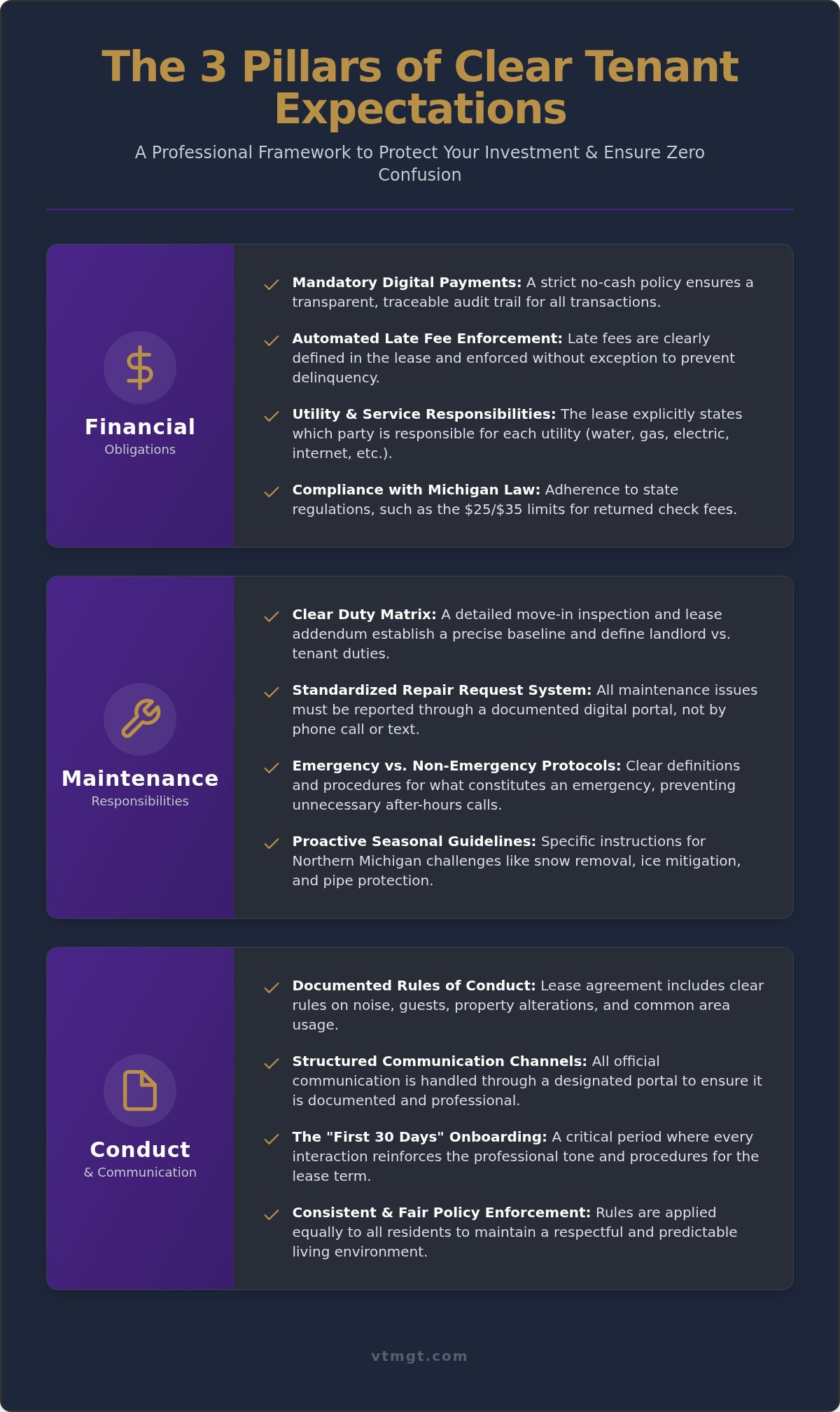
Establishing a high-performing rental asset requires a tripartite framework of expectations: financial, maintenance, and conduct. These pillars provide the structural integrity needed to manage the owner-tenant relationship without constant manual intervention. By setting tenant expectations from the start, you replace ambiguity with a defined set of operational parameters. This objective approach ensures that both parties understand their specific duties, which is a cornerstone of protecting your investment in the Northern Michigan market.
Standardizing the Rent Collection Process
Financial stability relies on a rigorous rent collection protocol. We recommend a strict no-cash policy, utilizing standardized digital portals to track payments with precision. This system provides a transparent audit trail for both owners and residents. Late fees must be clearly defined in the lease and enforced without exception to prevent creeping delinquency. According to Michigan tenant rights, landlords must adhere to specific regulations regarding fee structures, such as the $25 or $35 limits for returned checks depending on the timeline of payment. Professional property management Petoskey MI services prioritize these automated systems to ensure a predictable cash flow and reduce administrative overhead.
Maintenance Protocols: DIY vs. Emergency
Clearly defining maintenance boundaries prevents unnecessary service calls and protects the property's physical systems. Tenants must understand the difference between a true emergency and a standard repair request. In the context of Northern Michigan, a true emergency typically involves a total loss of heat during winter, burst pipes, or active flooding. Standard response times for non-emergencies should be set at 24 to 48 hours. Educating residents on basic home care, such as replacing lightbulbs and testing smoke detector batteries, is essential for reducing rental property maintenance Northern Michigan costs. This technical clarity ensures that professional resources are only deployed when necessary.
Seasonal Responsibilities: The Michigan Factor
The climate in Petoskey and Boyne City necessitates specific seasonal protocols. Snow removal and lawn care duties must be explicitly assigned before the first weather event occurs. If the resident is responsible for shoveling or plowing, the required standard of care must be documented. Winterization is another critical factor. Tenants must agree to maintain a minimum interior temperature, typically 55 to 60 degrees, to prevent frozen plumbing. If you find managing these technical details overwhelming, professional maintenance coordination can provide the oversight needed to protect your asset throughout the year.
Standardizing Communication: DIY vs. Professional Management Systems
Professional property management requires a definitive shift from reactive communication to a standardized, systems-based approach. DIY landlords often rely on ad-hoc methods, such as casual phone calls or text messages, which lack the structural integrity of a professional framework. Setting tenant expectations from the start involves defining exactly how and when communication occurs. Informal "handshake agreements" or verbal promises are significant operational liabilities. They provide no legal audit trail and frequently lead to disputes over historical details. Centralized portals solve this issue by documenting every interaction, creating a permanent record that protects both the asset owner and the resident. This transparency is the foundation of a disciplined investment strategy.
A 24/7 emergency response coordination system is a critical component of a standardized management model. It ensures that residents feel supported during critical infrastructure failures, such as a furnace outage during a Northern Michigan winter, while insulating the property owner from constant disruption. This technical oversight provides immediate peace of mind and reinforces the professional nature of the lease agreement. By utilizing a centralized system, you ensure that every maintenance request is logged, tracked, and resolved with measurable efficiency.
The Pitfalls of Informal Communication
Casual communication channels, like texting, often erode the professional respect necessary for effective asset management. When a landlord texts a tenant at 9 PM, it signals that boundaries are non-existent. This lack of structure makes it significantly harder to enforce lease violations or implement rent increases later. "Friendly" landlords frequently struggle with these business decisions because the relationship has become too personal. Written notices are the only acceptable medium for lease-related matters. They ensure compliance with Michigan regulations and maintain the necessary distance to treat the property as a disciplined investment rather than a personal favor.
Leveraging Management Systems for Scalability
Standardized systems enable "management by exception," where the property owner only intervenes when a situation falls outside of established protocols. This allows for scalability that isn't possible with a manual, fire-fighting approach. A dedicated maintenance coordination fee ensures that professional oversight is applied to every repair, maintaining the property's value without requiring the owner's constant attention. Setting tenant expectations from the start through these systems ensures that the resident understands the process for every possible scenario. Van Treese Management utilizes advanced technological innovation to automate these communication workflows, ensuring that every resident interaction is handled with precision and speed.
A Step-by-Step Onboarding Process for Northern Michigan Landlords
The onboarding process is a technical sequence designed to transition a lead into a disciplined resident. Setting tenant expectations from the start requires a structured approach that spans from the initial contract signing to the first week of occupancy. This sequence minimizes operational friction and establishes a clear baseline for property standards. By treating onboarding as a series of defined phases, you ensure that the resident is fully integrated into your management system without the ambiguity that leads to deferred maintenance or late payments.
Executing the Lease Agreement with Clarity
Lease execution is the first critical phase. Rather than treating the signing as a formality, use this meeting to highlight the "Big Three": rent payment protocols, maintenance responsibilities, and notice periods. In Michigan, landlords must provide specific disclosures and adhere to security deposit limits, which are strictly capped at 1.5 times the monthly rent. Addressing these financial parameters immediately prevents future disputes. If you find the legal complexities of lease preparation difficult to manage, our professional property management systems provide the standardized documentation necessary for compliance and protection.
The second phase, the move-in inspection, establishes the physical baseline of the asset. By documenting the exact condition of the unit through photos and detailed checklists, you create an objective record. This documentation is essential for the eventual security deposit reconciliation process. It eliminates emotional arguments by replacing them with factual evidence of the property's state at the time of possession.
The Welcome Packet: Your Property’s Manual
A comprehensive welcome packet serves as the technical manual for the residence. This document should include essential data such as trash collection schedules, utility provider contact information, and 24/7 emergency response numbers. For properties in Petoskey or Boyne City, include specific instructions regarding local ordinances, such as street parking restrictions during active snow plowing hours. This documentation acts as a primary defense against "I didn't know" excuses. It provides the tenant with the tools they need to succeed in their home while protecting your investment from avoidable citations or damage.
The final phase is the 7-day check-in. This brief, professional interaction allows you to answer early questions and correct minor misunderstandings before they become ingrained habits. It reinforces the fact that you are an attentive yet disciplined owner who monitors the asset's performance. By following this four-phase sequence, you build a professional relationship based on transparency and mutual respect.
How Van Treese Management Automates Tenant Success
Van Treese Management operates on the principle that property performance is a direct result of process engineering. Setting tenant expectations from the start is achieved through our standardized management systems, which replace the variability of manual oversight with technical precision. By automating rent collection and maintenance requests, we eliminate the ambiguity that typically leads to operational friction. These systems provide a structured environment where residents understand their specific obligations without the need for constant owner intervention. This disciplined approach ensures that the property remains a high-functioning asset from day one.
Our 24/7 emergency response coordination ensures that critical infrastructure issues are addressed immediately, regardless of the hour. This system provides tenants with the security of professional support while ensuring that property owners remain undisturbed by routine or urgent repair logistics. We bridge the gap between high-tech efficiency and genuine human interaction by maintaining a dedicated local presence in Petoskey and Traverse City. This proximity allows for the rigorous enforcement of lease terms and community standards that remote management software alone cannot replicate. It's a balance of technological modernism and professional accountability.
Professional Tenant Placement and Screening
The success of any rental investment begins with the quality of the resident. Our tenant screening Petoskey MI process is designed to identify residents who value professional standards and structured living. Quality placement is the primary variable in long-term lease compliance. By selecting residents through a disciplined, data-driven framework, we ensure that the property is occupied by individuals who respect the established boundaries and technical requirements of the home. This proactive selection reduces turnover and protects the owner's capital investment.
Comprehensive Solutions for Northern Michigan Owners
We provide comprehensive solutions that include monthly financial reporting, professional accounting, and meticulous repair coordination. These systems are designed to transform struggling rentals into stable, high-performing assets within their local communities. Every detail of the investment is tracked and managed through our centralized platform, providing owners with total transparency and control over their portfolios. We handle the technical complexities of asset management so you can focus on long-term growth. Contact Van Treese Management today to professionalize your rental portfolio and secure the stability of your Northern Michigan investment.
Transitioning to a Disciplined Property Management Model
The long-term stability of a rental portfolio depends on the precision of its operational framework. By setting tenant expectations from the start, you establish a professional boundary that protects both the physical asset and the financial performance of the investment. We have examined how standardized systems for rent collection and maintenance coordination remove the friction of manual oversight. These technical parameters ensure that residents understand their specific duties, particularly regarding the environmental challenges of Northern Michigan winters.
Relying on informal agreements or reactive communication creates unnecessary risk. Instead, implementing a structured onboarding process ensures that every lease begins with total clarity. Van Treese Management offers the local expertise and technological infrastructure required to manage properties across Emmet and Charlevoix counties with absolute control. Our 24/7 emergency response and standardized management systems provide the oversight necessary to maintain high standards without requiring your constant intervention.
Streamline Your Rental with Van Treese Management and secure the future of your property today. Professionalizing your approach is the most effective way to ensure consistent results and sustainable growth.
Frequently Asked Questions
What is the most important expectation to set with a new tenant?
The most critical expectation involves the technical parameters of rent collection and emergency communication. Setting tenant expectations from the start regarding due dates, payment methods, and non-emergency response times prevents operational friction. This clarity ensures the resident understands that the lease is a professional agreement with specific financial obligations. Establishing these boundaries early protects the asset's cash flow and minimizes late-night disruptions for the property owner.
How do I handle a tenant who constantly ignores the rules in Petoskey, MI?
You must address non-compliance through a disciplined, documented process of written notices. In Petoskey and Boyne City, verbal warnings lack the structural integrity needed for legal enforcement. If a resident repeatedly violates lease terms, such as parking or noise ordinances, you should issue formal notices that cite the specific lease provision. Utilizing a professional management system ensures that every violation is recorded, creating a necessary audit trail if eviction becomes required.
Should I provide a physical welcome manual or a digital one?
We recommend providing a digital manual through a centralized portal, supplemented by a physical copy for immediate reference. Digital versions are superior for tracking receipt and ensuring that the resident always has access to the most current technical instructions. This manual should cover local Petoskey utility contacts and specific maintenance protocols. Standardizing this delivery method ensures that every tenant receives identical data, which reinforces the professional nature of the relationship.
What are the common mistakes landlords make during tenant onboarding?
The most frequent error is relying on informal handshake agreements rather than structured documentation. Many owners fail to conduct a rigorous move-in inspection or neglect setting tenant expectations from the start regarding seasonal maintenance like snow removal. This ambiguity leads to disputes over security deposits and property damage. Another common mistake is failing to provide a clear welcome packet, which forces tenants to guess about essential operational details for the home.
How often should I check in with my tenants to ensure expectations are met?
You should implement a structured check-in schedule rather than ad-hoc visits. A formal 7-day check-in after move-in allows you to address early questions before they become problematic habits. Beyond this, semi-annual property inspections provide a technical baseline for the home's condition. These scheduled interactions maintain professional distance while ensuring the resident remains compliant with the lease terms. Frequent, unscheduled communication often destroys the boundaries necessary for effective asset management.
Can setting too many expectations actually increase my vacancy rate?
Professional structure actually decreases vacancy rates by attracting high-quality tenants who value stability and clear rules. While vague requirements might attract a wider pool of applicants, they often lead to high turnover and costly evictions. Quality residents in Northern Michigan prefer a living environment with defined parameters and responsive maintenance systems. A transparent framework reduces friction during the lease, leading to longer occupancies and more predictable monthly income for the owner.
How does a property manager handle tenant disputes over expectations?
Property managers resolve disputes by referencing the objective language of the lease and the documented history in the management portal. When a resident disputes a maintenance charge or a late fee, we provide the technical data and written notices that support the enforcement. This removes emotional bias from the interaction. By relying on standardized systems, we ensure that every dispute is handled with the same level of professional precision and legal compliance.
What does Michigan law say about changing house rules mid-lease?
Michigan law generally prohibits landlords from unilaterally changing significant lease terms during a fixed-term agreement. Any modifications to house rules or financial obligations must be mutually agreed upon in writing through a lease addendum. For month-to-month tenancies, a 30-day written notice is typically required to implement changes. It's essential to consult the specific language of your current lease and adhere to the standards outlined in Michigan's landlord-tenant regulations to ensure compliance.