
Rental Property Maintenance Costs Northern Michigan: The 2026 Guide

Could your current maintenance strategy survive a record-breaking lake-effect snowstorm without a single emergency call? For many owners in Emmet and Charlevoix counties, the answer is often found in expensive, last-minute repairs and frustrated tenants. We know that managing rental property maintenance costs Northern Michigan isn't just about fixing what breaks; it's about engineering a system that withstands one of the most demanding climates in the country. Relying on a reactive approach in rural markets often leads to unreliable contractor schedules and high turnover due to heating inefficiencies.
This 2026 guide introduces a standardized, climate-driven maintenance framework designed to safeguard your assets and stabilize your ROI. You'll learn how to implement proactive systems that prevent structural degradation and reduce the frequency of middle-of-the-night furnace failures. We'll break down the essential technical requirements for insulation, HVAC longevity, and seasonal coordination to ensure your 2026 budget remains predictable and your property remains a high-performing asset regardless of the weather.
Key Takeaways
- Understand how the unique environmental stresses of Emmet and Charlevoix counties, specifically lake-effect snow and high humidity, dictate a more rigorous maintenance standard for building envelopes.
- Discover the financial framework required to transition from reactive repairs to a systematic budget that stabilizes rental property maintenance costs Northern Michigan for the 2026 fiscal year.
- Learn the specific 2026 seasonal milestones, including gutter clearing and HVAC servicing, that prevent minor weather-related issues from escalating into major structural failures.
- Identify the criteria for vetting and coordinating reliable local contractors in rural markets to ensure consistent service quality and professional accountability.
- Explore how a standardized 24/7 emergency response system acts as a critical safety feature for remote owners, preserving long-term asset value in harsh climates.
The Technical Reality of Rental Property Maintenance in Northern Michigan
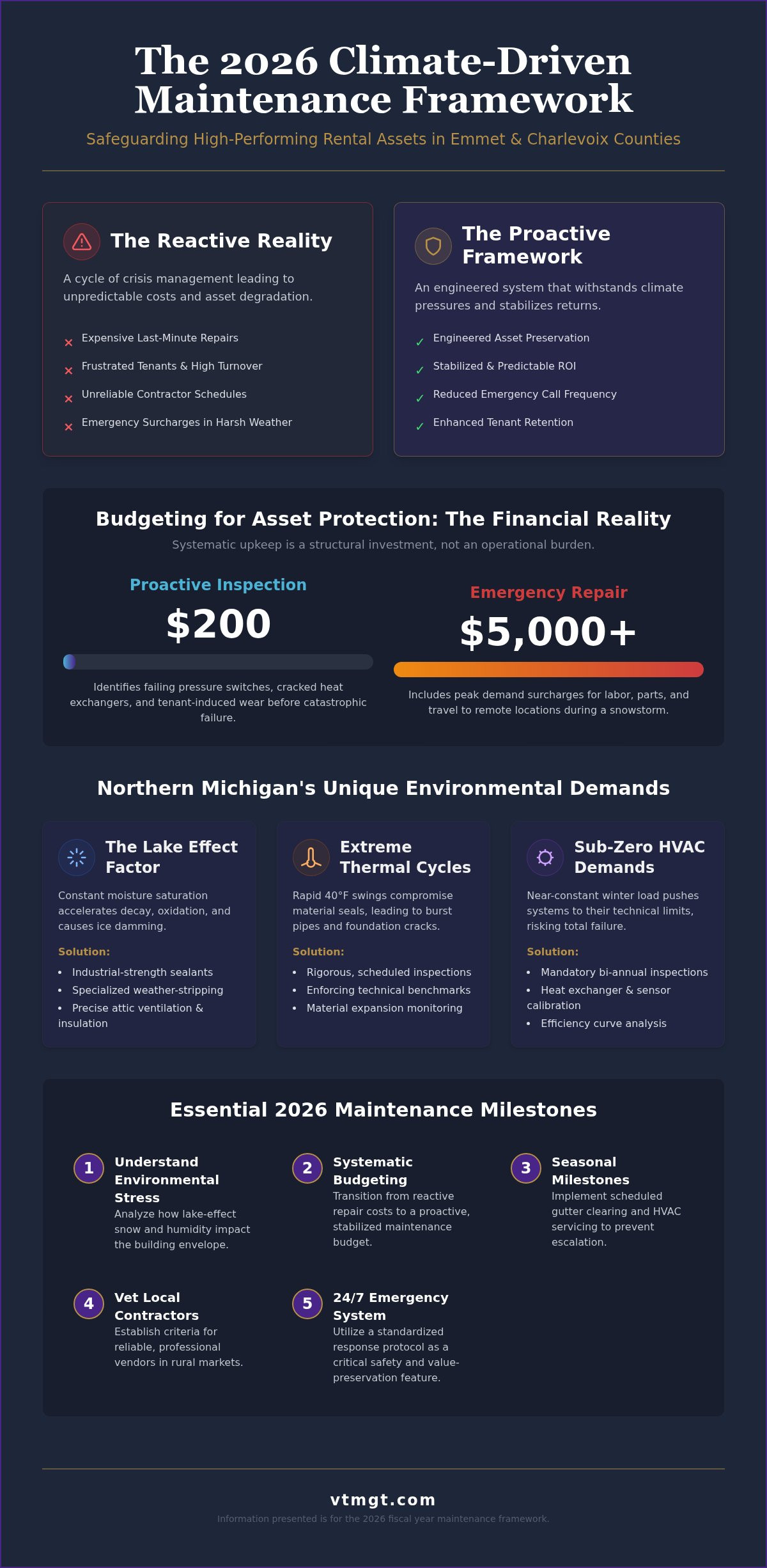
The Northern Michigan Maintenance Standard for 2026 demands a shift from reactive repairs to engineered preservation. In rural markets like Emmet and Charlevoix counties, the building envelope faces stresses that standard property management models simply aren't equipped to handle. Maintaining a rental in this region requires a deep understanding of how atmospheric moisture and extreme thermal cycles degrade structural integrity. When calculating rental property maintenance costs Northern Michigan, owners must account for these environmental variables to avoid catastrophic asset depreciation. Standard management often fails here because it treats maintenance as a recurring expense rather than a climate-driven protection strategy.
The region's rapid temperature fluctuations create a high-risk environment for plumbing and roofing. A single 40-degree swing within 24 hours can cause materials to expand and contract at different rates, compromising seals and joints. Without a professional oversight system, these small technical failures lead to burst pipes or compromised foundations that are expensive to remediate in remote areas where labor is scarce. We focus on stabilizing these variables through rigorous inspections and technical benchmarks.
The Lake Effect Factor on Exterior Durability
Petoskey and Boyne City experience unique microclimates where high humidity levels accelerate the oxidation of hardware and the decay of organic siding materials. The "Lake Effect" isn't just about snow volume; it's about the constant moisture saturation that challenges even premium roofing systems. We prioritize the application of industrial-strength sealants and specialized weather-stripping to maintain a hermetic seal against the elements. Ice damming is a ridge of ice that forms at the edge of a roof, primarily caused by heat escaping from the living space into the attic, which prevents melting snow from draining and forces water under the shingles. Preventing this requires precise attic ventilation and insulation management to ensure the roof deck remains at a uniform temperature throughout the winter months.
HVAC Demands in a Sub-Zero Climate
Mechanical systems in Northern Michigan operate under near-constant load during the winter. Furnace failures represent the primary emergency call-out in Emmet County, often occurring when temperatures drop below zero and systems are pushed to their technical limits. To protect the asset, we mandate bi-annual HVAC inspections as a technical necessity. These inspections ensure that heat exchangers are intact and sensors are calibrated, preventing the burst pipes that inevitably follow a total loss of heat. Efficient management requires balancing energy efficiency with tenant comfort during extreme cold. This involves verifying that systems aren't just running, but operating within their designed efficiency curves to manage long-term wear and tear.
Budgeting for Asset Protection: A 2026 Financial Framework
Reactive maintenance in rural Michigan markets involves a significant financial penalty. When a critical system fails during a lake-effect event, the cost isn't just the repair; it's the emergency surcharge for a technician to travel to a remote location. Establishing a rigorous fiscal framework for rental property maintenance costs Northern Michigan allows owners to bypass these crisis-driven markups. By treating maintenance as a structural investment rather than an operational burden, you enhance the long-term valuation of the asset. Standardized systems ensure that every dollar spent contributes to asset preservation. This is a far more efficient use of capital than paying for emergency management during a snowstorm. Systematic upkeep also directly reduces long-term vacancy rates by ensuring the property remains habitable and comfortable, which encourages tenant retention.
The ROI of Proactive Inspections
Quantifying the value of prevention is straightforward. A professional inspection costing $200 can identify a failing pressure switch or a hairline crack in a heat exchanger before the system fails. Ignoring these indicators leads to emergency repairs that often exceed $5,000 when labor, parts, and travel are calculated during peak winter demand. Regular walk-throughs also allow for the early detection of tenant-induced wear, such as unauthorized plumbing modifications or neglected ventilation. It's essential to follow Michigan landlord laws when documenting these conditions to ensure that security deposit claims and maintenance charges are legally defensible. Accurate documentation protects your capital and sets a professional standard for the tenancy.
Standardized Systems for Commercial Assets
Commercial properties in Gaylord and Traverse City require a more complex approach to financial coordination. Managing Common Area Maintenance (CAM) charges effectively is critical for maintaining lease compliance and ensuring that tenants contribute fairly to the property's upkeep. Commercial tenants typically demand higher response standards than residential occupants because system downtime directly impacts their business operations. A failure in a multi-tenant office building's HVAC system can result in significant lease concessions or legal liabilities. Implementing long-term capital improvement plans ensures that major expenses, such as parking lot resurfacing or roof replacements, are amortized correctly. This level of professional Maintenance Coordination transforms maintenance from a variable expense into a predictable component of your 2026 business plan.
The Essential Seasonal Maintenance Cycle for 2026
Operational success in Emmet and Charlevoix counties relies on a rigid seasonal calendar. Without this discipline, rental property maintenance costs Northern Michigan fluctuate wildly, often peaking during mid-winter emergencies that could have been prevented. In 2026, we advocate for a proactive approach where summer is utilized for technical exterior touch-ups and AC optimization, while winter efforts focus on the logistics of snow removal and continuous pipe protection. This structured flow ensures that technicians aren't spread thin during peak demand periods, allowing for more predictable budgeting and higher service quality.
Summer maintenance must prioritize the building envelope's integrity. High-UV exposure and humidity require exterior paint or stain touch-ups to prevent wood rot. Simultaneously, AC servicing ensures that cooling systems operate at peak efficiency during the humid months of July and August. These interventions are technical requirements that extend the lifespan of expensive mechanical assets. Winter requires a different logistical framework, focusing on vetted snow removal contracts that prevent structural damage from heavy snow loads and ensure tenant safety on-site.
The Northern Michigan Winterization Protocol
Shutting off exterior water lines is a non-negotiable step in late autumn. Irrigation systems must be blown out using compressed air to prevent subterranean line fractures caused by deep frost penetration. We also mandate testing heat tape on vulnerable roof edges and checking attic insulation levels to maintain a stable thermal barrier. The three most critical fall tasks for Petoskey rentals include professional furnace calibration, comprehensive gutter clearing to facilitate drainage, and the installation of insulated covers on all exterior hose bibs. These steps form the baseline for protecting your investment against the harsh 2026 winter cycle.
Spring Recovery and Structural Integrity Audits
Foundation drainage must be assessed immediately after the spring thaw to prevent basement flooding or structural shifting. Heavy snow piles often exert significant lateral pressure on siding and foundations; our teams prioritize checking for cracks, siding deformation, or moisture intrusion during this period. We schedule "Spring Clean" inspections with tenants to identify any interior winter damage that may have gone unreported. This audit is essential for documenting the property's condition and addressing minor issues before they escalate into major 2026 repair expenses. Systematic spring recovery ensures the asset is fully prepared for the high-occupancy summer season.
Professional Coordination: Vendor Management and Communication
Finding reliable labor in rural Northern Michigan remains a primary challenge for 2026 property owners. The scarcity of licensed tradespeople in remote areas often creates inflated service fees and extended lead times for critical repairs. To manage rental property maintenance costs Northern Michigan effectively, a structured vendor vetting process is mandatory. This involves verifying active liability insurance, workers' compensation compliance, and professional licensure before any work begins. Standardizing the repair request process for long-term tenants further optimizes these costs by preventing miscommunication and ensuring that technicians arrive with the correct technical specifications for the job.
Managing 24/7 emergency response without burning out requires a decentralized coordination system. Owners who attempt to handle midnight furnace failures or burst pipes personally often face decision fatigue and increased liability. A professional coordination system filters these calls, ensuring that only genuine emergencies trigger high-cost after-hours dispatch while routine issues are scheduled for standard business hours. This fegyelmezett approach protects the owner's time and ensures that emergency funds are only utilized when the asset's integrity is at immediate risk.
Building a Vetted Vendor Network
Establishing deep-rooted local relationships in Boyne City and Indian River is essential for securing priority service during peak demand cycles. Contractors are more likely to respond to emergency calls from partners who provide a steady volume of work throughout the year. This volume-based approach allows for negotiated rates and faster response times that individual owners rarely access. Maintaining these high standards ensures full compliance with commercial property management Northern Michigan benchmarks, where professional accountability and rapid resolution are non-negotiable for business continuity.
The Tenant’s Role in Maintenance
Tenant education acts as a front-line defense against unnecessary service calls. Teaching residents how to perform basic troubleshooting, such as GFI resets or locating the main water shut-off, can prevent a significant dispatch fee for a simple fix. Clear lease language must define exactly which maintenance responsibilities fall to the tenant and which are handled by the owner. Fast, professional response times remain the most effective tool for tenant retention; when residents see that their environment is maintained with precision, they are more likely to respect the asset and renew their leases. For owners seeking a structured approach to these complex interactions, our professional Maintenance Coordination services provide the necessary technical oversight to protect your investment.
Protecting Your Investment with Van Treese Management
Van Treese Management provides the technical infrastructure required to stabilize rental property maintenance costs Northern Michigan. We operate on the principle that maintenance is a core engineering function, not a secondary administrative task. Our coordination system replaces the unpredictability of DIY oversight with standardized protocols that have been refined since our founding in 2018. By focusing on innovation and human interaction, we bridge the gap between remote ownership and the technical demands of Emmet and Charlevoix counties. We don't just react to failures; we manage the entire lifecycle of your asset to ensure long-term structural integrity.
Our 24/7 emergency response coordination serves as a primary safety feature for your investment. In a region where a failed furnace or a burst pipe can lead to total asset loss within hours, immediate response is a technical necessity. We maintain a vetted network of local contractors who understand the specific requirements of the Northern Michigan climate. This ensures that your property receives priority service during peak demand cycles, such as the severe snowstorms common in 2026. Owners gain peace of mind knowing that their properties are under constant professional supervision.
Transparency remains a cornerstone of our service model. We provide comprehensive financial reporting and repair accounting, allowing owners to track every dollar allocated to maintenance. This level of detail is essential for accurate property valuation and long-term capital planning. Our local expertise in Petoskey and Traverse City ensures that your maintenance strategy is informed by actual market conditions and regional environmental stresses. We provide the data you need to make informed decisions about your portfolio's future.
Our Standardized Maintenance System
We use continuous market research to drive every maintenance decision within our portfolio. This data-driven approach allows us to identify emerging technical risks before they impact your ROI. Transitioning from the stress of DIY management to our professional oversight system provides owners with a predictable operational framework. By integrating these processes with professional property management in Petoskey, MI, we ensure that your asset remains competitive and structurally sound throughout the 2026 fiscal year.
Getting Started with Professional Coordination
The first step in securing your asset is requesting a comprehensive property evaluation. We conduct technical audits in Emmet and Charlevoix counties to establish a baseline for your maintenance requirements. Our onboarding process is designed for both residential and commercial owners, focusing on a seamless transition into our standardized management systems. We handle the vendor coordination and tenant communication, allowing you to focus on the growth of your portfolio. Protect your Northern Michigan investment with Van Treese today to ensure long-term stability in a challenging climate.
Optimizing Your 2026 Maintenance Framework
Transitioning from reactive crisis management to an engineered, climate-driven system is the most effective way to ensure long-term profitability. This guide has detailed how a rigid seasonal cycle and professional coordination mitigate the technical risks inherent in our region. Effectively managing rental property maintenance costs Northern Michigan requires more than just a local handyman; it demands a standardized system of oversight that protects your building envelope from the unique stresses of lake-effect snow and high humidity. By prioritizing proactive inspections and technical benchmarks, you transform maintenance from an unpredictable expense into a predictable engine for asset preservation.
Van Treese Management has served Petoskey, Traverse City, and the surrounding counties since 2018. We provide the structural stability your portfolio needs through our vetted network of local Northern Michigan contractors and 24/7 emergency response coordination. Our team is committed to the precision and reliability required to manage complex residential and commercial assets in harsh environments. Schedule Your Property Maintenance Consultation with Van Treese Management today. We look forward to helping you secure your investment's future with the highest standards of professional care.
Frequently Asked Questions
How often should I inspect my rental property in Northern Michigan?
You should conduct comprehensive inspections at least twice per year, specifically during the spring and fall transitions. These audits allow you to assess the building envelope before and after the severe winter season. In areas like Boyne City and Indian River, mid-winter drive-by checks are also recommended to ensure vents are clear of snow. Regular oversight helps stabilize rental property maintenance costs Northern Michigan by identifying minor leaks or mechanical wear before they require emergency intervention.
Who is responsible for snow removal at a Northern Michigan rental property?
Responsibility for snow removal is defined within the lease agreement. In multi-family or commercial properties in Petoskey, the landlord typically manages professional plowing to ensure safety and accessibility. For single-family homes, the duty often falls to the tenant, though many owners prefer to provide a contracted service to protect the driveway and foundation from improper clearing. We recommend standardized contracts to ensure consistent response times during lake-effect events.
What is the most common emergency repair in Petoskey during winter?
Furnace failure is the most frequent emergency repair encountered during the winter months in Petoskey. When temperatures drop below zero, heating systems operate under maximum load, which often leads to ignition or blower motor failures. Because a loss of heat can cause pipes to burst within hours, we prioritize 24/7 emergency response coordination. Maintaining a furnace through bi-annual inspections is the most effective way to prevent these high-cost after-hours service calls.
Does a property manager mark up the cost of maintenance repairs?
Van Treese Management utilizes a transparent fee structure for maintenance and repair coordination rather than arbitrary markups. This fee covers the professional oversight, scheduling, and vetting of our local contractor network. Our standardized system ensures that you receive competitive rates from tradespeople who prioritize our portfolio. This coordination provides a layer of quality control and accountability that typically saves owners more than the cost of the service itself through reduced emergency surcharges.
How do I handle emergency repairs if I live out of state?
Out-of-state owners should utilize a professional management firm with a 24/7 emergency response system. Attempting to coordinate repairs from a distance during a Northern Michigan snowstorm is technically difficult and often leads to unreliable service. We provide local oversight in Emmet and Charlevoix counties, serving as the primary point of contact for tenants and vendors. This ensures that your asset is protected immediately, even if you are thousands of miles away from the property.
What maintenance tasks are tenants responsible for in Michigan?
Tenants in Michigan are generally responsible for maintaining the property in a clean and safe condition. This includes basic tasks like replacing light bulbs, changing HVAC filters, and reporting maintenance issues promptly to prevent further damage. Specific duties, such as lawn care or snow removal, must be clearly outlined in the lease agreement. Fast communication between the tenant and our coordination team is essential for managing rental property maintenance costs Northern Michigan effectively over the long term.
How does the Northern Michigan climate affect roofing lifespan?
The Northern Michigan climate significantly accelerates roofing degradation through heavy snow loads and frequent freeze-thaw cycles. Ice dams are a particular risk, as they force water under shingles and compromise the roof deck's integrity. While a high-quality roof might last 25 years in milder climates, properties in Traverse City or Gaylord often require more frequent inspections and repairs. Maintaining proper attic ventilation and insulation is the technical requirement for extending the lifespan of your roofing system.
Is preventive maintenance tax-deductible for Michigan landlords?
Preventive maintenance and routine repairs are generally considered tax-deductible operating expenses for Michigan landlords. These include costs for HVAC servicing, gutter cleaning, and professional management fees. While major capital improvements must be depreciated over several years, the day-to-day costs of keeping your rental habitable are usually fully deductible in the year they occur. We provide detailed financial reporting and accounting to ensure you have the documentation necessary for your tax professional to maximize these deductions.