
Maximizing Rental Property ROI in Northern Michigan: The 2026 Landlord Strategy

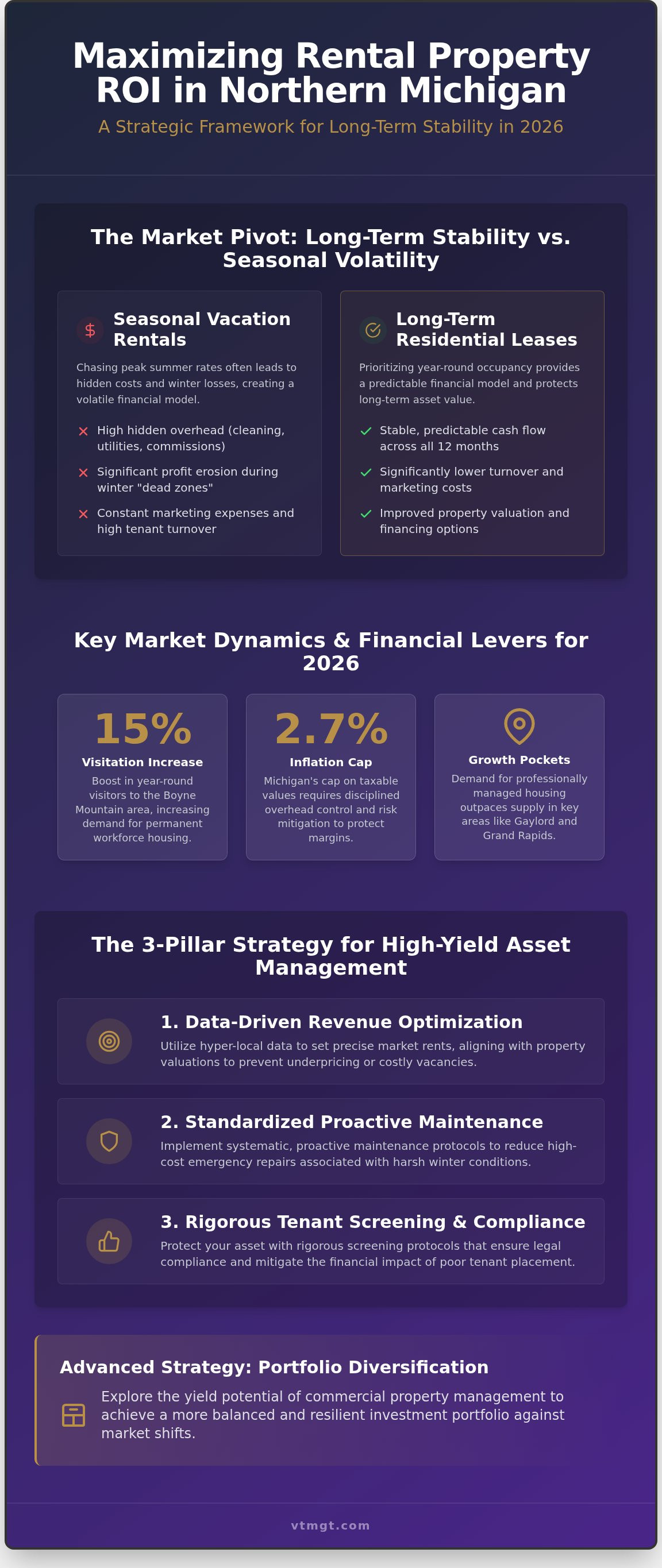
The most significant gains in maximizing rental property ROI Northern Michigan don't actually come from chasing peak summer nightly rates; they're found in the technical precision of year-round occupancy. While many investors focus on the geographic scarcity of the Petoskey region for quick wins, true financial stability requires a more structured, engineering-led approach to property management. It's a common frustration to watch summer profits evaporate during a harsh Michigan winter or see your margins thinned by unreliable local contractors.
You've likely felt the anxiety of navigating Michigan's complex security deposit laws or the stress of rising maintenance costs as temperatures drop. With Michigan's inflation cap for taxable values set at 2.7% for 2026, protecting your margins requires a disciplined mindset toward overhead and risk mitigation. This article provides a strategic framework to transform your property into a high-yield asset through standardized systems and professional tenant placement. We'll explore how to mitigate the risks of seasonal vacancy and leverage transparent financial reporting to secure stable, long-term cash flow.
Key Takeaways
- Understand why the 2026 market shift toward long-term residential housing offers greater financial stability and lower overhead than seasonal vacation rentals.
- Learn the technical methodology for maximizing rental property ROI Northern Michigan by aligning property valuations with precise market rent benchmarks.
- Discover how implementing standardized, proactive maintenance systems reduces the high costs associated with emergency repairs and harsh winter conditions.
- Identify the rigorous tenant screening protocols required to ensure legal compliance and protect your asset from the financial impact of poor placement.
- Explore the yield potential of diversifying into commercial property management to achieve a more balanced and resilient investment portfolio.
The Northern Michigan Rental Market: Long-Term Stability vs. Seasonal Volatility
The 2026 landscape in Northern Michigan reflects a fundamental pivot from seasonal volatility toward residential consistency. While high nightly rates in peak summer months often capture the headlines, sophisticated investors are increasingly prioritizing the long-term rental market in Petoskey and Traverse City. The core principles of real estate investing dictate that net yield is the ultimate metric of success, not just gross revenue. In a dual-season economy like ours, ROI must be calculated across a 12-month cycle to account for the "dead zones" that often plague the vacation market.
Vacation rentals carry substantial hidden overhead that many owners overlook. Cleaning fees, high utility consumption during harsh winters, and platform commissions frequently erode the perceived gains of short-term stays. Residential stability offers a predictable financial model instead. By utilizing standardized management systems, we ensure that property owners maintain steady cash flow regardless of the tourism climate. This structured approach is the technical foundation for maximizing rental property ROI Northern Michigan landlords need to remain competitive in a tightening market.
Why Residential Stability Beats Short-Term Spikes
Marketing a new tenant every week is an expensive process. Year-round leases significantly reduce turnover costs and eliminate the constant marketing expenses associated with short-term platforms. Consistent cash flow also has a positive impact on property valuation and financing options, as lenders prefer the security of documented, long-term lease agreements. Beyond the balance sheet, long-term tenants contribute to the stability of Emmet and Charlevoix counties. They support local businesses and schools, creating a thriving local community that sustains property values over time.
Market Trends for 2026: Where the Demand is Shifting
The "Renaissance 2.0" master plan has bolstered year-round visitation to the Boyne Mountain area by 15%, but it has also increased the need for permanent housing for the local workforce. Remote workers are also seeking year-round rentals in Boyne City and Indian River to escape urban congestion. Current inventory shortages in Northern Michigan have created a environment where rental yields remain high for quality residential assets. We're seeing specific growth pockets in Gaylord and Grand Rapids, where demand for professionally managed housing continues to outpace supply. Identifying these areas early allows for strategic acquisition before price points peak.
Strategic Revenue Optimization: Setting the Right Rent in 2026
Setting the correct market rent is a technical exercise that directly impacts your bottom line. In Northern Michigan, relying on national averages or broad regional data often leads to mispricing. A property in Petoskey commands a different premium than one in Gaylord; even a few miles can shift the yield. For maximizing rental property ROI Northern Michigan, landlords must utilize hyper-local comparable data to ensure their rates reflect the actual value of the asset. This precision prevents the two biggest ROI killers: underpricing, which leaves money on the table, and overpricing, which leads to costly vacancies. Our methodology treats rent setting as a calculation of market demand versus asset quality, ensuring that every dollar of potential revenue is captured without alienating the tenant pool.
Data-Driven Rent Pricing in Emmet and Charlevoix
Effective pricing requires a granular analysis of local variables. In Boyne City, for instance, the quality of school districts and proximity to year-round amenities significantly influence what tenants are willing to pay. We analyze these parameters using standardized systems to justify premium rent without increasing vacancy risks. While high-end finishes matter, they must be supported by a robust rental property maintenance strategy to maintain that premium status over time. A well-maintained property justifies annual rent increases because the value proposition remains clear to the resident. Our approach to annual renewals is disciplined and transparent, utilizing a structured review process that considers the 2.7% Michigan inflation cap for taxable values alongside current market benchmarks.
Maximizing Occupancy: The Key to True ROI
A single month of vacancy during a harsh Michigan winter can erase an entire year's worth of profit. The cost isn't just the lost rent; it's the utilities, snow removal, and the increased risk of mechanical failures in an unheated building. Our marketing strategies focus on attracting high-quality, long-term applicants who value stability. This process is governed by a strict adherence to Michigan landlord-tenant laws, ensuring that every lease is both profitable and legally sound. Professional tenant placement fees often pay for themselves by securing residents who stay for multiple years, thereby reducing the high expenses associated with turnover. If you're looking for a structured way to manage these variables, our residential property management services provide the data-driven oversight needed for consistent returns. By balancing high-yield targets with the goal of long-term retention, we create a sustainable financial model that withstands seasonal fluctuations.
Minimizing Operational Costs through Standardized Maintenance
Operational efficiency is the primary driver of profitability in a heavy-winter climate. Many landlords view maintenance as an unpredictable expense, but we treat it as a manageable engineering process. Transitioning from reactive repairs to proactive, standardized maintenance systems is essential for maximizing rental property ROI Northern Michigan. When you wait for a system to fail, you aren't just paying for the repair; you're paying for emergency labor premiums and potential tenant relocation costs. By implementing a structured schedule, we protect your margins and ensure that minor technical issues don't escalate into major capital expenditures.
A critical component of this strategy is our vetted network of local Northern Michigan contractors. In rural areas, labor scarcity often drives up prices and wait times. Our established vendor relationships allow us to secure priority service and more competitive rates for our clients. These partnerships are built on a foundation of reliability and quality control, ensuring that every repair meets professional standards. This systematic approach to vendor management transforms maintenance from a headache into a predictable component of your financial reporting.
Northern Michigan Winterization: A Profit-Preservation Essential
Winter conditions in Gaylord and Indian River are unforgiving to poorly managed assets. Standardized winterization is not a luxury; it's a profit-preservation tactic. Preventing a single pipe burst or roof failure can save thousands in insurance deductibles and lost rental income. Our process includes scheduling standardized HVAC and plumbing checks before the first freeze. These seasonal inspections also serve as a touchpoint for tenant satisfaction, as residents appreciate a property that remains functional and efficient through the peak winter season. Proactive inspections allow us to identify wear and tear on building envelopes before the snow load makes repairs impossible.
Maintenance Coordination as a Management System
There is a fundamental difference between "calling a guy" and utilizing a professional maintenance coordination system. Our approach involves tracking the full repair history of every asset to make data-driven "repair vs. replace" decisions. If a major appliance requires frequent servicing, our financial reporting will highlight the point where replacement becomes the more cost-effective choice. This level of oversight is a core part of our investing in rental property in Northern Michigan strategy. By managing the technical lifecycle of your property's systems, we reduce long-term depreciation and stabilize your annual cash flow. Our 24/7 emergency response coordination ensures that even when the unexpected happens, the response is immediate, structured, and focused on risk mitigation.
Protecting Your Investment: Tenant Quality and Legal Compliance
The financial impact of a poor tenant placement often exceeds the cost of several months of vacancy. When a resident fails to respect the terms of a lease; the result is a cascade of legal fees, property damage, and lost revenue that directly undermines your bottom line. Achieving the goal of maximizing rental property ROI Northern Michigan requires a defensive strategy as rigorous as your revenue optimization. We treat tenant selection as a quality control process; where only those who meet high-standard technical benchmarks are cleared for occupancy. A single eviction can cost a landlord thousands in legal representation and lost time; making professional tenant placement an essential insurance policy for your capital.
Michigan Landlord-Tenant Law: Avoiding ROI-Killing Fines
Legal compliance in 2026 is more than a formality; it's a risk mitigation necessity. Michigan's regulatory environment for residential housing is precise; particularly regarding security deposit escrow accounts and specific notice requirements. Failure to adhere to these timelines can result in mandatory penalties that erase your annual margins. Our standardized systems ensure every document is prepared according to current Michigan landlord laws. Beyond state statutes; we also maintain strict adherence to Fair Housing Act guidelines tailored to the unique demographics of Northern Michigan communities. This level of oversight protects you from the expense and reputation damage of avoidable litigation. Professional lease agreement preparation ensures that every contingency; from winter maintenance responsibilities to late fee structures; is clearly defined and legally enforceable.
Standardized Screening: More Than Just a Credit Check
A standard credit check is insufficient for a market driven by a seasonal economy. In areas like Petoskey and Traverse City; verifying income stability requires a deeper analysis of employment history and local industry trends. Our screening process includes comprehensive background checks and direct verification with previous landlords to establish a pattern of reliability. We don't rely on "gut feelings"; we rely on data. While the technical screening is paramount; we also emphasize human interaction to gauge a tenant's fit for the local community. This balanced approach builds a community of residents who value their housing and maintain the asset as if it were their own. This reduces the frequency of "nuisance" maintenance calls and ensures the property remains in top condition. To secure your portfolio with professional tenant screening and placement, contact our team to implement these standardized protections today.
Commercial Real Estate: Diversifying for Maximum ROI
Portfolio diversification is a fundamental principle of risk management. While residential assets provide a baseline of stability, incorporating commercial real estate is a strategic move for maximizing rental property ROI Northern Michigan investors should consider. Commercial properties in Traverse City and Petoskey often present higher yield potentials due to the nature of business tenancies and longer lease durations. Managing these assets requires a different technical framework than residential housing; specifically regarding lease compliance and Common Area Maintenance (CAM) oversight. Our approach treats every commercial square foot as a production unit that must be optimized through precise operational control and rigorous financial monitoring.
Van Treese Management transforms commercial operations by applying standardized systems to complex lease structures. Unlike residential agreements, commercial leases often involve intricate cost-sharing arrangements. Ensuring that CAM charges are accurately calculated and billed is essential for protecting owner margins. By providing professional commercial property management, we remove the administrative burden of these calculations; ensuring that the asset remains a passive, high-performing vehicle for wealth generation. This level of innovation in process management allows owners to scale their portfolios without a corresponding increase in personal workload.
The Benefits of Commercial Management Systems
Commercial units typically benefit from significantly longer lease terms; which provides a predictable revenue stream and reduces the costs associated with turnover. Our standardized administration of triple-net (NNN) leases ensures that property taxes, insurance, and maintenance costs are passed through to the tenant; effectively insulating the owner from rising operational expenses. This structure is explored in detail in our commercial property management in Northern Michigan guide. By shifting these liabilities, the net operating income becomes more stable and resistant to the inflationary pressures often seen in the regional economy.
Financial Reporting: The Investor's Scorecard
Transparent, monthly financial reporting is the essential scorecard for any serious investor. Our standardized financial systems provide a clear view of asset performance; allowing for precise ROI tracking and informed decision-making. These reports simplify tax season by providing structured, categorized data that aligns with professional accounting standards. When the numbers are clear, owners can identify specific opportunities for property improvements or portfolio expansion based on hard data rather than speculation. We provide the technical oversight needed to ensure that every commercial asset contributes its maximum potential to the overall investment strategy. This data-driven approach is the final pillar in maximizing rental property ROI Northern Michigan for the modern landlord.
Securing Long-Term Profitability in the 2026 Market
Success in Northern Michigan's real estate sector requires a transition from seasonal speculation to a disciplined, year-round operational model. We've examined how prioritizing residential stability and utilizing hyper-local data for rent optimization creates a resilient financial foundation. By implementing standardized systems for maintenance and tenant screening; owners can mitigate the risks of harsh winters and complex legal requirements. This structured approach is the technical requirement for maximizing rental property ROI Northern Michigan. It ensures your asset remains productive across every season regardless of tourism fluctuations.
Our team provides the deep local expertise in Emmet and Charlevoix counties needed to navigate this evolving landscape. Through professional standardized management systems and 24/7 emergency maintenance coordination; we maintain full control over your property's technical and financial performance. Maximize your Northern Michigan property's potential with Van Treese Management. We look forward to helping you build a more stable and high-yielding investment portfolio through precision and professional oversight.
Frequently Asked Questions
What is a good ROI for rental property in Northern Michigan in 2026?
A good ROI typically ranges between 8% and 12% for standard residential properties, though specialized assets like Boyne Mountain ski-in/ski-out condos reached approximately 17% in mid-2026. Achieving these figures is central to maximizing rental property ROI Northern Michigan. Investors should focus on net yield after accounting for Michigan's 1.25% effective property tax rate and seasonal maintenance requirements.
How do property management fees in Petoskey affect my overall ROI?
Management fees represent a fixed operational cost that should be viewed as an investment in risk mitigation. While these fees impact gross margins, they often improve net ROI by reducing vacancy periods and preventing costly technical failures. Professional oversight ensures that rent levels stay aligned with Petoskey's 2026 market averages, which prevents the revenue loss associated with underpricing.
Is it better to do long-term or short-term rentals in Traverse City for ROI?
Long-term rentals generally provide superior financial stability due to lower turnover costs and predictable cash flow. While short-term rentals in Traverse City can command higher daily rates, they face strict regulations, such as the $1 million liability protection requirement. Long-term residential housing avoids the 6% state use tax on short-term stays, making it a more consistent strategy for maximizing rental property ROI Northern Michigan.
What are the biggest maintenance costs for Northern Michigan landlords?
Heating system failures and building envelope repairs during the winter months represent the most significant financial risks. A standard deck replacement in 2026 can cost up to $25,000 for composite materials, highlighting the importance of proactive care. Emergency plumbing repairs due to frozen pipes are also major drivers of unbudgeted expenses that can be avoided through standardized winterization protocols.
How does Michigan landlord-tenant law impact my rental profits?
Legal non-compliance is a significant threat to profitability because it leads to mandatory penalties and litigation expenses. Michigan's specific requirements for security deposit escrow and damage notices must be followed precisely to avoid court-ordered repayments. Maintaining a structured legal framework for every lease agreement ensures that your revenue is protected from the financial drain of avoidable legal disputes.
Can professional tenant screening really reduce my vacancy rates?
Rigorous screening directly reduces vacancy rates by identifying residents who have a documented history of long-term stability. By verifying income against the 2026 regional job market, we place tenants who are less likely to default or break leases. This systematic approach leads to multi-year tenancies, which eliminates the marketing and turnover costs that typically erode annual returns.
What is the difference between residential and commercial property management ROI?
Commercial property ROI is often characterized by higher initial yields and longer lease durations, whereas residential ROI offers greater liquidity and a broader tenant pool. Commercial assets frequently utilize triple-net (NNN) leases, which shift the burden of taxes and insurance to the tenant. Residential properties require more frequent management intervention but remain a staple for consistent cash flow in the Emmet and Charlevoix markets.
Why should I choose a local Petoskey property manager over a national firm?
Local managers provide a technical advantage through their established networks of vetted Northern Michigan contractors. National firms often lack the granular data needed to price rentals accurately in specific growth pockets like Gaylord or Indian River. A local partner understands the regional climate challenges and hyper-local regulations, ensuring that your asset is managed with the precision required for the Northern Michigan environment.