

On January 5, 2026, a new property owner in Kent County might find themselves holding keys to a multi-unit building while facing a 30-day deadline for a City of Grand Rapids rental certification renewal. If you've recently inherited a rental property what to do Grand Rapids residents often find that legal compliance becomes an immediate priority rather than a distant financial goal. You likely understand that while this asset represents a significant legacy, it also introduces rigorous requirements under Michigan's Estates and Protected Individuals Code. Managing existing tenant relationships while deciphering local housing codes demands a disciplined, professional approach to avoid costly litigation or municipal fines.
We've developed this guide to help you transition from an heir to a successful housing provider with precision and technical clarity. You'll gain a clear understanding of the 2026 tax implications, such as the step-up in basis, and a structured roadmap for managing tenant transitions without disrupting cash flow. This analysis covers everything from the 48-hour notice requirements for inspections to the specific registration protocols required by the Grand Rapids Code Compliance Department. By the end of this article, you'll have a strategic framework to maximize the return on investment for your inherited asset while maintaining full regulatory alignment.
Key Takeaways
- Maximize your financial position by leveraging the "Step-up in Basis" tax advantage and navigating the Kent County Probate Court title transfer process with precision.
- Benchmark your property’s performance against neighborhood-specific rental yields in Heritage Hill, Eastown, and Belknap Lookout to determine its true market value.
- Establish a professional decision-making framework for when you have inherited a rental property what to do Grand Rapids, using objective financial modeling to compare sale proceeds against long-term cash flow.
- Ensure full municipal compliance by following our checklist for Grand Rapids City Code registration and mandatory lead-based paint hazard control requirements.
- Discover how transitioning to professional management systems can stabilize inherited assets and provide critical 24/7 protection against the harsh Michigan climate.
Navigating Michigan Probate and Tax Laws for Inherited Property
Managing a real estate transition requires a high degree of procedural precision and an understanding of the current legal framework. If you've recently inherited a rental property what to do Grand Rapids residents should prioritize is an immediate audit of the asset's legal standing. Michigan law provides a stable environment for beneficiaries, specifically because the state does not currently levy a separate inheritance or estate tax. This means your primary financial focus will remain on federal obligations and property tax assessments regulated by Kent County.
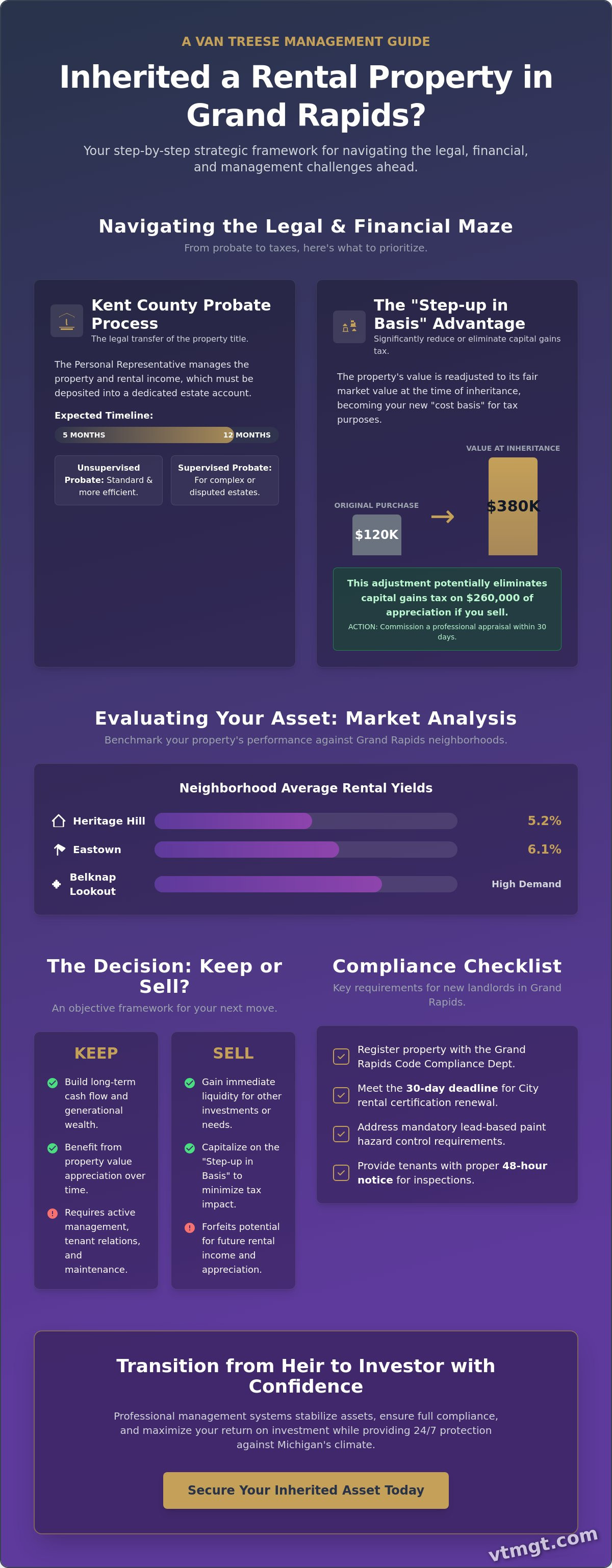
The transition of ownership is governed by the Michigan Probate and Tax Laws, which ensure that titles are transferred accurately and debts are settled. In 2026, the role of the Personal Representative, formerly known as the Executor, is central to this process. This individual possesses the legal authority to manage the property, communicate with existing tenants, and oversee the collection of rental income. It's critical that all rental payments received during this period are deposited into a dedicated estate bank account rather than a personal account to maintain a clear audit trail for the court.
The Step-up in Basis Explained
A step-up in basis is the readjustment of an appreciated asset's value for tax purposes to its fair market value at the time of the previous owner's death. To document this value accurately, you must commission a professional appraisal from a certified Grand Rapids appraiser within 30 days of the date of death. This figure serves as your new "cost basis." For example, if the property was originally purchased for $120,000 in 2005 but is valued at $380,000 in 2026, your tax liability is calculated from the $380,000 benchmark. This adjustment can eliminate thousands of dollars in capital gains taxes if you choose to sell the property shortly after the title transfer.
Probate Procedures in Kent County
The Kent County Probate Court handles the legal transfer of the deed through either supervised or unsupervised probate. Unsupervised probate is the standard for most Grand Rapids estates, as it allows the Personal Representative to act without constant court intervention, provided there are no disputes among heirs. Supervised probate is reserved for complex cases where the court monitors every transaction, including the sale or lease of the rental unit.
You should anticipate a timeline of 5 to 12 months for the full probate process to conclude in the Grand Rapids legal system. During this waiting period, the property remains under the control of the estate. The Personal Representative is responsible for maintaining the structure, paying property taxes, and ensuring the rental income is managed according to the decedent’s wishes or state law. Understanding these steps is the first phase of knowing inherited a rental property what to do Grand Rapids to ensure the asset remains a viable investment rather than a legal liability.
Evaluating Your Grand Rapids Rental Asset: Market Analysis
A successful transition starts with a rigorous technical evaluation of the asset's current standing. When you have inherited a rental property what to do Grand Rapids requires a systematic review of the physical structure and its market positioning. In 2026, Grand Rapids rental standards demand high-efficiency HVAC systems and modernized interiors to compete for premium tenants. Properties failing to meet these technical benchmarks often face higher vacancy rates and increased maintenance overhead.
Neighborhood-specific data is critical for calculating long-term viability. Heritage Hill maintains a steady 5.2% average yield due to historic prestige, while Eastown often sees 6.1% because of high walkability scores. Belknap Lookout remains a top performer for owners targeting Medical Mile professionals. The Decision Framework helps owners determine if these yields justify the ongoing maintenance costs of an older portfolio. If the current rental price sits 15% or more below the local market average, the property is technically under-performing and requires immediate optimization.
Grand Rapids Neighborhood Performance
Vacancy rates near the Medical Mile dropped to 2.4% in early 2026, making it a low-risk zone for consistent cash flow. Multi-family units in these corridors currently outperform single-family homes by 12% in gross rental income. High-demand school districts, such as those serving the East Grand Rapids border, influence long-term retention. Families in these areas typically sign leases 18 months longer than the city average, providing higher stability for the owner.
Audit of Existing Tenant Leases
Our analysis must include a strict legal audit of all active contracts. Existing leases must comply with the Michigan Truth in Renting Act to avoid litigation risks. We verify that security deposits reside in a regulated Michigan escrow account as mandated by state law. Reviewing the communication logs left by the deceased provides insight into tenant reliability and previous maintenance requests. Identifying "hidden" clauses that conflict with 2026 Michigan landlord laws is a priority to ensure the asset remains compliant. For those seeking professional oversight during this transition, consulting with experienced management ensures all technical and legal parameters are met. This structured approach minimizes liability while maximizing the property's financial output.
The Decision Framework: Should You Keep or Sell?
Deciding how to manage a legacy asset requires a shift from emotional attachment to technical analysis. When you've inherited a rental property what to do Grand Rapids markets offer varies based on the building's current structural integrity and your long-term liquidity requirements. You've got to strip away the "family home" bias. Treat the property as a line item on a balance sheet. A professional framework evaluates the net proceeds from an immediate sale against the projected 10-year rental cash flow, specifically accounting for Michigan’s unique tax climate and the 2026 energy mandates.
Calculating Real ROI and Cash Flow
Michigan’s Proposal A creates a specific financial hurdle for heirs. Upon the transfer of ownership, property taxes "uncap." This means the taxable value resets to the current state equalized value, often resulting in a 30% to 50% increase in annual tax liabilities for properties held by the previous owner for decades. When you've inherited a rental property what to do Grand Rapids investors must calculate is whether the net yield outperforms traditional benchmarks. We recommend comparing the property's annual return against the S&P 500’s historical 10% average. If the rental income doesn't exceed this after accounting for insurance, vacancy rates, and the legal requirements found in the Michigan Landlord-Tenant Laws, liquidation is often the more efficient path.
Out-of-state landlords face additional complexity. If you don't live in Michigan, you'll be subject to non-resident income tax filings. You'll also need to account for the "distance tax," which includes the cost of travel for inspections and the mandatory requirement for a local point of contact to handle emergency repairs and tenant disputes.
Capital Improvements and Deferred Maintenance
Grand Rapids weather demands high-performance building envelopes. Roofs in West Michigan typically reach the end of their functional life after 20 years due to heavy snow loads and ice damming. By 2026, energy efficiency standards require modernized HVAC systems capable of maintaining consistent temperatures during sub-zero winters without excessive utility costs. Upgrading a legacy property to attract high-quality professional tenants involves significant capital. Identifying these high-ticket items early is vital for your 10-year modeling.
- Roofing: Assessment of asphalt shingle degradation and ice shield effectiveness.
- HVAC: Replacement of aging 80% AFUE furnaces with 96% high-efficiency units to meet modern renter expectations.
- Electrical: Modernizing panel capacity to support EV charging or high-draw appliances.
Modernizing a property isn't just about aesthetics; it's about mitigating liability. Utilizing VTMG’s maintenance coordination ensures these technical upgrades are handled with engineering precision. This systematic approach reduces the risk of emergency repairs that erode profit margins and ensures the property remains competitive in a market that increasingly values energy-efficient, low-maintenance housing.
Grand Rapids Municipal Compliance Checklist for New Landlords
Transitioning from an heir to a landlord requires immediate attention to the Grand Rapids City Code Compliance department. The city maintains rigorous standards to ensure housing safety and structural integrity across all wards. If you've inherited a rental property what to do Grand Rapids municipal law dictates is clear: you must register the asset as a non-owner-occupied dwelling within 30 days of the title transfer. Failure to act promptly places the property in violation of city ordinances before you've even collected the first rent check.
The Grand Rapids Rental Registration Process
The registration process involves submitting a formal application and paying the tiered registration fees through the City’s Development Center. This action triggers the scheduling of a Certificate of Compliance (COC) inspection. Grand Rapids utilizes a performance-based inspection cycle. Most properties fall under a 4-year cycle, but those maintaining exceptional standards may qualify for a 6-year extension. Operating an unregistered rental in Kent County leads to civil infractions and prevents you from utilizing local courts for legal proceedings if a tenant dispute arises.
- Initial Filing: Complete the Rental Registration form with the Code Compliance office to establish the ownership record.
- Fee Structure: Pay the required inspection and registration fees, which are calculated based on the total number of units.
- Pre-Inspection Audit: Rectify common pitfalls like missing smoke detectors on every level, faulty GFCI outlets in kitchens/baths, or improper egress windows before the city inspector arrives.
Lead Safety and Environmental Regulations
Environmental safety is a primary focus for the city, particularly for the high volume of housing stock built before 1978. New landlords must hire certified lead inspectors to conduct visual assessments and dust wipe sampling. If hazards are identified, you're required to perform interim controls or abatement using certified lead-safe contractors. Precision in documentation is mandatory. You must integrate federal and state lead disclosure forms into your Michigan lease agreements to avoid severe liability. Missing a single signature on these disclosures can result in significant penalties from the EPA.
Administrative updates are the final step in establishing operational stability. You must notify the Grand Rapids Water System to transfer billing and contact the City Assessor to update the property tax records. Because the property is no longer a primary residence, you must rescind the Principal Residence Exemption (PRE). This change shifts the property to the 18-mill non-homestead tax rate, which directly impacts your annual cash flow projections. Our team ensures every technical detail of your transition meets these professional standards. Partner with our Grand Rapids management experts to secure your property's compliance status.
Transitioning to Professional Management with Van Treese
Inheriting a property often involves navigating a complex web of outdated leases, deferred maintenance, and incomplete financial records. If you've just inherited a rental property what to do Grand Rapids owners often ask is how to stabilize the asset without letting it consume their personal time. Van Treese Management Group (VTMG) applies a structured, precision-oriented approach to property management. We transform disorganized portfolios into high-performing assets through standardized systems that mirror industrial quality-control protocols.
Our team manages the critical technical requirements of West Michigan real estate. This includes a 24/7 emergency response system designed to protect infrastructure during the extreme temperature fluctuations common in the Grand Rapids climate. Whether it's a burst pipe during a January freeze or an HVAC failure, our rapid intervention prevents minor mechanical issues from escalating into structural damage. We provide heirs and co-owners with absolute clarity through transparent financial reporting. Every line item is documented; this ensures all stakeholders have access to real-time data regarding cash flow and capital expenditures.
From Accidental Landlord to Passive Investor
The shift from reactive management to passive investment requires a rigorous tenant screening process. In Kent County, eviction rates are often tied directly to insufficient initial vetting. We utilize a multi-point verification system to place high-quality residents who respect the property and community. Implementing standardized maintenance protocols is another essential step in maximizing your ROI. By scheduling preventative inspections, we identify component wear before it leads to system failure. This methodology removes the day-to-day burden of tenant communication, allowing you to focus on your long-term financial objectives.
Why Local Expertise Matters in Grand Rapids
National management firms often lack the granular data necessary to navigate the specific regulatory and economic environment of Grand Rapids. VTMG maintains a network of vetted local contractors who prioritize our projects, ensuring rapid repair turnarounds that "big-box" firms cannot match. We understand the neighborhood-level trends across Kent County, from the Heritage Hill historic requirements to the growing demand in the Medical Mile. This localized precision ensures your property remains competitive in the 2026 market. If you've inherited a rental property what to do Grand Rapids consultants at VTMG can provide the answers. Your next step is to request a professional property valuation and a comprehensive management consultation to secure your legacy.
- Standardized intake audits to identify immediate compliance risks.
- Automated rent collection and direct deposit for consistent cash flow.
- Proactive winterization schedules to mitigate Michigan-specific climate risks.
- Professional photography and market analysis for every vacancy.
Strategic Management for Your Inherited Grand Rapids Asset
Navigating the transition after you've inherited a rental property what to do Grand Rapids requires a methodical approach to Michigan probate regulations and local municipal compliance. Success in the 2026 market depends on precise execution of the Grand Rapids Municipal Compliance Checklist and a data-driven evaluation of the property's current market position. Since our founding in 2018, Van Treese has focused on the Northern Michigan and Grand Rapids markets to provide owners with the stability they need. We implement standardized management systems that prioritize operational efficiency and asset protection. Our team coordinates 24/7 emergency maintenance to ensure your property remains in peak condition regardless of the hour. Transitioning from an accidental landlord to a strategic investor is a process of technical precision. You don't have to manage these complex legal and operational requirements alone. We're here to provide the professional oversight your investment deserves.
Request a Professional Rental Analysis for Your Inherited Grand Rapids Property
Your property represents a significant financial foundation, and with the right systems in place, it'll continue to provide value for years to come.
Frequently Asked Questions
Do I have to pay Michigan inheritance tax on a Grand Rapids rental property?
No, you don't have to pay Michigan inheritance tax because the state officially repealed this tax in 1993. While the federal estate tax still exists, it only applies to estates exceeding $13.99 million as of 2025. Most heirs in Grand Rapids won't face any state-level inheritance tax liabilities during the transfer of ownership. You should still consult with a tax professional to ensure all federal filings are handled correctly.
What happens to the existing tenants when I inherit a rental property?
The existing lease remains legally binding and the tenants have the right to stay until the contract expires. Under Michigan Compiled Laws Section 554.131, a change in ownership doesn't terminate a valid rental agreement. You're now the landlord and must honor all terms, including the security deposit and maintenance obligations. If you've inherited a rental property what to do Grand Rapids landlords often find is that clear communication with tenants prevents legal disputes during the transition.
How does Michigan property tax "uncapping" work after an inheritance?
Michigan law requires the taxable value of a property to "uncap" and reset to the current State Equalized Value in the year following a transfer of ownership. This process often leads to a substantial increase in property taxes for the heir. You must file a Property Transfer Affidavit, or Form 2766, with the Grand Rapids City Assessor within 45 days of the transfer. This ensures the city updates its records and applies the new tax rate correctly for the 2026 tax year.
Can I sell an inherited rental property immediately after the owner passes?
You can sell the property once the probate court grants you the legal authority to act as the personal representative or after the title transfers through a trust. The timeline depends on the complexity of the estate, but a summary proceedings process in Kent County can sometimes expedite this. If the property is in a trust, you can often list it for sale within days. Make sure you've cleared the title and addressed any existing liens before signing a purchase agreement.
Do I need a new lease agreement if I inherit a property with tenants?
You aren't legally required to sign a new lease because the original contract carries over to you as the successor. It's still a good idea to provide tenants with a formal Notice of Change of Management that includes your contact details and where to send rent. Many owners choose to sign a new agreement or an addendum to clarify the new ownership structure. This helps when you've inherited a rental property what to do Grand Rapids compliance steps often involve updating these records.
What is the Grand Rapids Rental Registration requirement?
All non-owner-occupied residential units in Grand Rapids must be registered and certified through the City’s Code Compliance Department. Properties receive a certification lasting 2, 4, or 6 years based on their initial inspection performance and history of violations. You must pay a registration fee and ensure the property meets the International Property Maintenance Code standards. Failure to maintain a valid certificate of compliance can result in fines or the inability to collect rent legally.
How much does professional property management cost in Grand Rapids?
Most professional property management firms in West Michigan charge between 8% and 12% of the monthly gross rent. You might also encounter a leasing fee, which typically equals half or a full month's rent for finding and screening new tenants. Some companies offer flat-fee structures starting around $100 per month for single-family homes. These costs cover rent collection, maintenance coordination, and 24/7 emergency responses for your tenants.
What is a "Step-up in Basis" and how does it help me?
A step-up in basis adjusts the property's cost basis from the original purchase price to its fair market value on the date of the previous owner's death. This tax provision significantly reduces your capital gains tax liability if you decide to sell the asset. For example, if the property was bought for $50,000 in 1990 and is worth $350,000 when you inherit it, your new tax basis is $350,000. You'll only pay taxes on appreciation that occurs after you take ownership.