
How to Reduce Vacancy Rates in Northern Michigan: A 2026 Landlord’s Guide
In the Northern Michigan rental market, a vacant property isn't a byproduct of seasonal shifts; it's often a direct result of fragmented systems and inconsistent maintenance. While Emmet and Charlevoix counties face a critical shortage of long-term housing, many landlords still experience disruptive cash flow gaps during the winter months or high turnover costs. We recognize that maintaining a stable income stream in this unique market requires more than just a "for rent" sign. It demands a disciplined, technical approach to reduce vacancy rates Northern Michigan owners encounter during the shoulder seasons.
You deserve a management strategy that treats your investment with the same precision as a complex industrial process. This guide outlines the professional systems and local market research we use to minimize vacancies and maximize ROI for residential properties. We'll examine how to leverage current data, such as the 25.49% year-over-year rent increase in Emmet County, to optimize your asset's performance. By the end of this article, you'll understand our standardized methods for tenant placement and maintenance coordination that provide consistent monthly income and long-term stability.
Key Takeaways
- Learn how to utilize localized market research from Emmet and Charlevoix counties to establish competitive pricing that prevents extended vacancy periods.
- Discover the technical protocols required to reduce vacancy rates Northern Michigan investors face by implementing standardized tenant screening and professional property marketing.
- Understand the direct correlation between structured maintenance coordination and lease renewal rates through the implementation of 24/7 emergency response systems.
- Identify the digital positioning strategies, such as virtual tours and professional photography, necessary to attract high-quality tenants in a seasonal economy.
- Explore how shifting to data-driven management systems provides the structural stability required to scale a residential rental portfolio efficiently.
Analyzing the Northern Michigan Vacancy Landscape in 2026
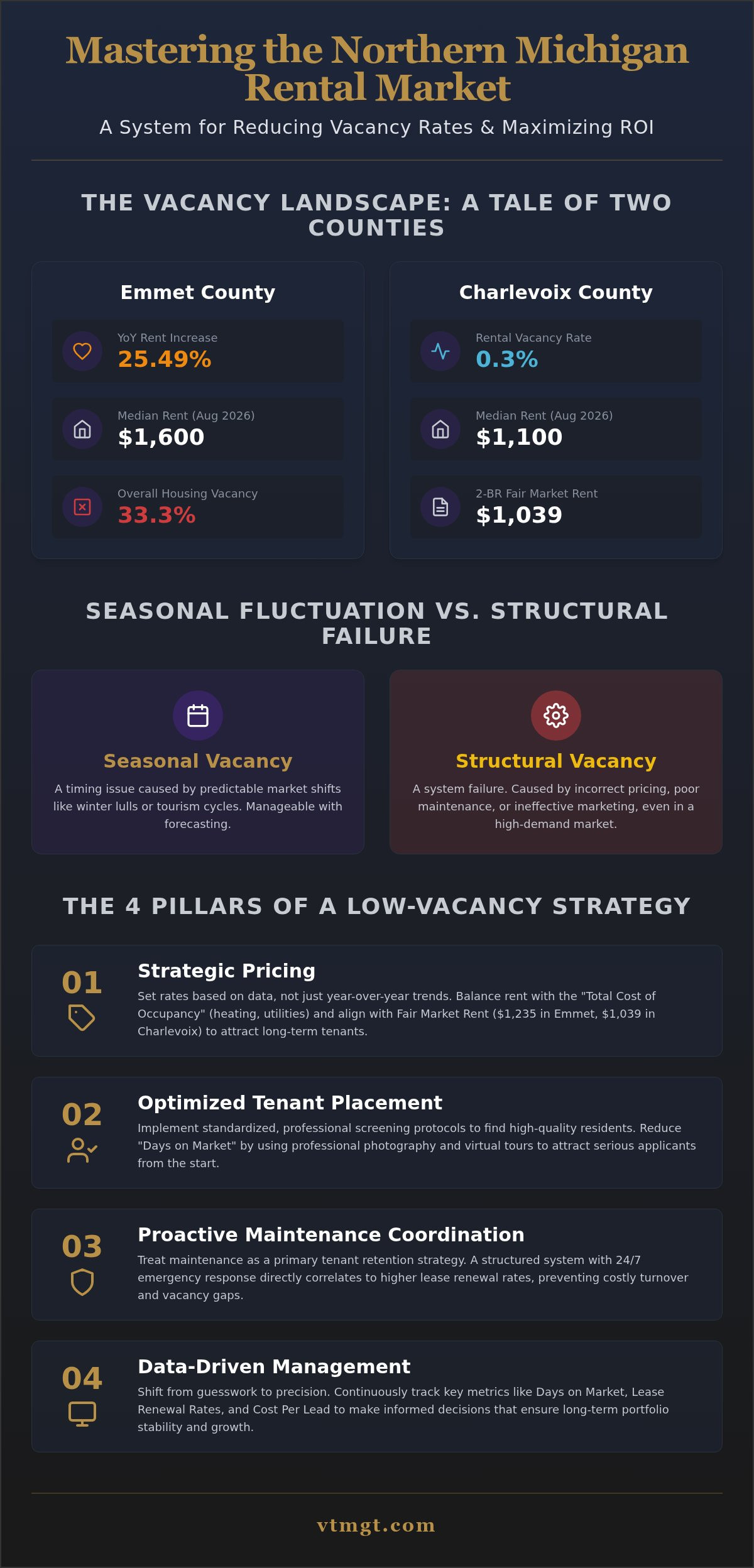
Precision in property management begins with a clear understanding of your primary performance indicators. At its core, the vacancy rate represents the percentage of unoccupied units within your rental portfolio at any given time. In Northern Michigan, this metric isn't just a number; it's a reflection of how well your property aligns with regional economic shifts. While August 2026 data shows a median rent of $1,600 in Emmet County and $1,100 in Charlevoix County, these figures don't guarantee occupancy. High listing prices can often mask underlying inefficiencies in how owners reduce vacancy rates Northern Michigan portfolios currently experience.
The financial impact of a vacant unit extends far beyond the loss of monthly rent. Every day a property sits empty, the owner absorbs the cost of utilities, increased security risks, and the invisible loss of tax depreciation benefits. In a market where Emmet County's overall housing vacancy rate sits at 33.3 percent due to seasonal second homes, long-term residential landlords must be hyper-vigilant. A disciplined approach is required to distinguish between a healthy market dip and a structural failure in property positioning. Without a proactive system, these hidden costs can quickly erode the 25.49 percent year-over-year rent increases seen in areas like Petoskey.
Seasonal vs. Structural Vacancy in the North
Investors must identify whether their vacancy is a result of timing or property-specific issues. Seasonal vacancy often occurs during the winter lulls or the "shoulder seasons" in Boyne City and Indian River, when tourism cycles shift and the local workforce remains stagnant. If your property remains unleased during these periods, it may be a timing issue. However, structural vacancy occurs when a property remains empty despite high demand. With Charlevoix County reporting a critically low rental vacancy rate of 0.3 percent, any extended vacancy in 2026 likely points to a failure in maintenance, pricing, or marketing systems rather than a lack of available tenants.
Key Metrics Every Northern Michigan Owner Should Track
To maintain a stable ROI, you must monitor specific technical data points. Days on Market (DOM) is the most critical metric; it measures the interval between listing and lease execution. A high DOM in a low-inventory market like Emmet County suggests your pricing is decoupled from local fair market values. Additionally, tracking lease renewal rates provides a predictive look at future vacancy. High turnover often signals that maintenance coordination is failing to meet tenant expectations. Finally, analyzing your cost per lead ensures your marketing spend is directed toward the high-quality long-term residents who provide the most stability for your investment.
Strategic Pricing and Market Positioning for Emmet and Charlevoix Counties
Strategic pricing in Emmet and Charlevoix counties requires a technical evaluation of available inventory and local income levels. Setting a rate solely based on the 25.49 percent year-over-year increase in Emmet County is risky without considering the Federal Fair Housing Act and local fair market rent benchmarks. For the 2026 fiscal year, the fair market rent for a two-bedroom unit in Emmet County is established at $1,235, while Charlevoix County sits at $1,039. Pushing significantly beyond these parameters without clear asset differentiation leads to extended days on market and high turnover costs. We've seen that over-pricing in smaller hubs like Gaylord or Indian River often results in a total loss of interest from the local workforce, who are the primary drivers of long-term rental stability.
Landlords must also evaluate the "Total Cost of Occupancy" for their tenants. In Northern Michigan, rent is only one part of the financial equation. High winter heating costs and snow removal expenses can fluctuate significantly, impacting a tenant's ability to maintain consistent payments. When positioning a property, we look at the efficiency of the heating systems and the insulation quality as part of the value proposition. A property with modern, energy-efficient upgrades can command a higher base rent because the total monthly outlay for the tenant remains manageable. This data-driven approach is essential to reduce vacancy rates Northern Michigan owners experience during the harsh winter months.
The Role of Local Market Research
Market research must move beyond broad averages to analyze specific comparable listings in Petoskey and Traverse City. We look for technical parity in amenities; for instance, a garage isn't merely a convenience in the North. It's a structural necessity that justifies higher rent by protecting a tenant's vehicle from lake-effect snow. Flat pricing models often fail in the 2026 economy because they don't account for these hyper-local variables. Adjusting your rates based on seasonal demand cycles while maintaining a core baseline ensures your property remains a competitive option for high-quality residents throughout the year.
Incentives vs. Price Cuts: What Works Better?
Lowering the base rent can permanently devalue a property’s market position and complicate future financial reporting. Instead, we've found that structured incentives often provide a more effective solution. Offering the "thirteenth month free" on a long-term lease maintains the property’s valuation while providing the tenant with a tangible benefit. Value-adds like pre-paid snow removal services or designated covered parking are often more attractive than a $50 price cut. These incentives help attract stable residents who prioritize property quality and professional management over the lowest possible price. Utilizing professional market analysis ensures your pricing remains both legally compliant and financially optimized for the current landscape.
Optimizing Tenant Placement Through Standardized Screening Systems
Efficiency in tenant placement is a function of visibility and rigorous process control. In the 2026 market, a digital first impression is the primary filter for high-quality applicants. We utilize professional photography and high-definition virtual tours to provide a transparent, technical overview of the property before a physical showing is even scheduled. This precision reduces wasted time for both parties and is a critical component in our strategy to reduce vacancy rates Northern Michigan investors must manage. By presenting a well-maintained asset from the start, we set a standard that directly correlates with higher tenant satisfaction and retention rates throughout the lease term.
Standardized placement doesn't just fill units; it builds a foundation for financial stability. By leveraging local networks and established management systems, we ensure that every vacancy is addressed with a repeatable, data-driven workflow. This includes the seamless integration of Michigan landlord laws into every stage of the screening process. For example, we strictly adhere to the 1.5-times monthly rent limit for security deposits and the 30-day return deadline mandated by state regulations. These legal safeguards protect your portfolio from liability while signaling professionalism to prospective residents.
Optimizing Your Listing for Local Search
Visibility in the Northern Michigan landscape requires a localized keyword strategy. Listings must be optimized for specific search terms like "Petoskey long-term rental" or "Boyne City residential lease" to capture intent-driven traffic. Your property narrative should highlight "Up North" lifestyle features, such as proximity to lake access or winter recreation trails, which are high-value drivers for local residents. We've found that while broad platforms like Zillow are useful, niche local networks often deliver higher-quality leads in markets like Gaylord and Indian River, where community reputation carries significant weight.
Standardized Screening: Protecting Your Asset
A disciplined screening system is your best defense against future turnover and financial loss. Every applicant undergoes a rigorous verification process, including credit analysis and comprehensive background checks. In Northern Michigan, we pay special attention to income verification for seasonal or self-employed residents. This requires a nuanced approach to reviewing tax returns and bank statements rather than relying solely on traditional pay stubs. Maintaining absolute consistency in these criteria isn't just a best practice; it's a structural requirement for Fair Housing Act compliance. By applying the same technical standards to every candidate, you ensure a fair process while securing tenants who have the financial capacity to maintain long-term residency.
Maintenance Coordination as a Primary Tenant Retention Strategy
Maintenance is the technical backbone of tenant retention. While initial placement is critical, the longevity of a lease depends on the operational reliability of the property. In the 2026 market, professional rental property maintenance serves as a primary driver to reduce vacancy rates Northern Michigan owners see during turnover cycles. Tenants who experience a 24/7 emergency response and structured repair protocols are significantly more likely to renew their leases, even when faced with market-wide rent increases. This reliability transforms a simple rental unit into a stable, long-term home.
We utilize a vetted network of local contractors across Emmet and Charlevoix counties to ensure that repairs are executed with precision and within standardized timelines. By minimizing the duration of maintenance delays, we reduce the friction that often leads to tenant frustration and eventual vacancy. A property that functions without interruption is an asset that retains its value and its residents. Our maintenance coordination systems are designed to handle everything from minor plumbing issues to complex HVAC failures with minimal owner involvement.
The Winter Maintenance Challenge
Northern Michigan winters place extreme stress on residential systems and tenant patience. Snow removal and heating system calibrations are not just conveniences; they're essential retention tools. Preventing frozen pipes and roof dams through seasonal preventative maintenance protects the owner’s capital and ensures the tenant’s safety during the harshest months. Clear communication regarding these maintenance schedules builds a foundation of trust. When a tenant knows their furnace has been inspected before the first frost, their confidence in the management's professionalism increases, directly impacting their decision to renew.
Standardizing Repair Coordination
Standardizing repair coordination eliminates the reactive chaos that often defines property ownership. By using centralized maintenance systems, we ensure that every work order is tracked from inception to completion. This approach allows for the use of standardized parts and procedures, which lowers the total cost of repairs and ensures a consistent quality of work across a portfolio. Moving from a reactive model to a proactive one, including an annual property audit, allows us to identify potential failures before they result in a mid-winter crisis. This disciplined framework reduces owner stress and provides the structural stability required for a high-performing rental investment.
Implementing Professional Management Systems for Long-Term Portfolio Stability
Long-term profitability in real estate is rarely the result of luck; it's the product of disciplined process control. In the complex 2026 rental market, standardized management systems are the primary defense against the financial erosion caused by empty units. While some owners attempt to manage properties using fragmented spreadsheets or ad-hoc communication, these methods lack the structural integrity required to reduce vacancy rates Northern Michigan portfolios face during economic shifts. We implement technical frameworks that ensure every operational phase, from financial reporting to lease execution, follows a repeatable and audited sequence. This systemic approach transforms a property from a high-maintenance chore into a predictable investment asset.
Transitioning from a traditional landlord role to that of a strategic property investor requires the delegation of daily operations to a professional partner. Our role in residential management involves more than just rent collection; we provide the technological infrastructure and human expertise necessary to scale a portfolio. By integrating modern property technology with local market intelligence, we create a management environment where human interaction is leveraged for high-value tasks like tenant relations and conflict resolution, while automated systems handle the administrative complexity. This balance ensures that your investment remains resilient regardless of seasonal tourism cycles.
Standardization vs. Improvisation
Improvisation is a significant risk factor in the 2026 regulatory environment. Ad-hoc management often leads to inconsistent lease enforcement and delays in maintenance, which are the leading causes of tenant dissatisfaction and mid-term turnover. We replace improvisation with standardized lease execution and rent collection protocols that reduce friction between the owner and the resident. By applying consistent management standards across every unit in Petoskey or Boyne City, we build thriving rental communities where residents feel a sense of stability. This professional environment naturally encourages longer lease terms and reduces the frequency of costly vacancy periods.
Scaling Your Northern Michigan Portfolio
Scaling an investment portfolio requires a shift in focus from individual tasks to high-level financial performance. We provide professional financial reporting that allows owners to identify underperforming assets and optimize their ROI with precision. Calculating the value of your time is a critical step in this transition; every hour spent coordinating a minor repair or chasing a late payment is an hour lost to strategic growth. To begin this transition, we recommend obtaining a professional rental analysis for your property. This data-driven audit provides a clear roadmap for optimizing your rates and implementing the systems necessary for long-term stability and portfolio expansion.
Optimizing Your Northern Michigan Investment for 2026 and Beyond
Managing a rental portfolio in the North requires a transition from reactive landlord behaviors to disciplined, data-driven investment strategies. The key to long-term success lies in the implementation of standardized management systems that remove the guesswork from pricing and tenant placement. By integrating expert local market research in Emmet and Charlevoix counties, you can establish a competitive position that ensures consistent cash flow regardless of seasonal shifts. These technical frameworks provide the structural stability necessary to reduce vacancy rates Northern Michigan owners often face during the winter months.
Success is defined by the reliability of your property's operations and the satisfaction of your residents. Utilizing professional maintenance coordination, including 24/7 emergency response coordination, creates a high-standard environment that encourages long-term residency and protects your asset's value. When your property operates within a disciplined and predictable framework, you gain the freedom to focus on scaling your portfolio. Reduce your vacancy rates with Van Treese's standardized management systems. We're here to ensure your rental properties achieve their full financial potential through precision and professional oversight.
Frequently Asked Questions
What is the average vacancy rate for rentals in Northern Michigan in 2026?
The rental vacancy rate in Charlevoix County remains critically low at approximately 0.3 percent, while Emmet County shows a higher overall housing vacancy of 33.3 percent. It's important to recognize that the higher figure in Emmet County includes seasonal second homes and isn't a direct reflection of the long-term residential market. These statistics indicate a severe shortage of available housing for the local workforce. Owners must distinguish between these data points to effectively reduce vacancy rates Northern Michigan investors encounter.
How can I find reliable tenants in Petoskey during the winter months?
Finding reliable tenants during the winter requires targeting the local workforce through intent-driven digital marketing and professional networking. We focus on highlighting property efficiencies, such as modern insulation and energy-efficient heating, which are high-value features for residents during the colder months. Establishing a digital first impression through virtual tours allows out-of-area professionals moving for local employment to secure housing without the logistical barriers of winter travel.
Does lowering the rent always reduce vacancy rates?
Lowering the rent isn't always the most effective method for filling a unit and can often devalue your long-term asset positioning. If a property sits empty despite a low price, the issue is usually related to poor maintenance, ineffective marketing, or a lack of essential amenities like garages. We recommend using structured incentives, such as value-added snow removal or a free month of rent, to maintain the property's baseline valuation while attracting high-quality tenants.
What are the most common reasons for high tenant turnover in Charlevoix County?
High tenant turnover in Charlevoix County is frequently driven by inconsistent maintenance coordination and poor communication during the shoulder seasons. When residents experience delays in emergency repairs or feel their property's neglected during the winter, they're more likely to seek alternatives. Additionally, the gap between local income levels and rising rent prices can cause residents to relocate to more attainable housing options if the property's value proposition isn't clearly maintained.
How much do property management firms in Northern Michigan charge for tenant placement?
Fees for tenant placement typically vary based on the complexity of the screening process and the scope of the marketing required. While industry standards often involve a percentage of the first month's rent, local rates in Northern Michigan are influenced by the seasonal nature of the market and the depth of the management systems utilized. You should evaluate these costs against the potential loss of income from a single month of vacancy to determine the true ROI of professional placement.
Can professional maintenance coordination really save me money on vacancy?
Professional maintenance coordination saves money by significantly increasing lease renewal rates and reducing the time a unit sits empty between tenants. A vetted contractor network ensures repairs are completed with technical precision, which prevents minor issues from escalating into structural failures. By providing a 24/7 emergency response, you'll establish a standard of care that builds tenant loyalty, making them far less likely to vacate for a competitor's property.
What legal mistakes should I avoid when trying to fill a vacancy in Michigan?
Landlords must avoid exceeding the state-mandated security deposit limit of 1.5 times the monthly rent and failing to meet the 30-day deadline for returning deposits. Inconsistent screening criteria can also lead to Fair Housing Act violations, which carry significant legal and financial risks. Utilizing a standardized system for every applicant ensures that your placement process remains compliant with Michigan law while protecting your portfolio from unnecessary liability.
How do I market a commercial rental property differently than a residential one in the North?
Commercial marketing focuses on technical specifications, such as square footage, zoning capabilities, and utility infrastructure, rather than lifestyle narratives. Business owners prioritize operational efficiency and long-term lease stability over the aesthetic features that attract residential tenants. When marketing commercial assets in Northern Michigan, we emphasize the property's potential for regional economic contribution and its alignment with local infrastructure to attract established, credit-worthy businesses.