
Did you know that 62.4% of Michigan residents are pet owners, yet many property owners still hesitate to tap into this massive market segment? It's understandable why you might feel cautious. The fear of lingering odours, structural damage, and the legal complexities of distinguishing between emotional support animals and standard pets can make any investment feel vulnerable. Implementing robust pet-friendly rental policies for landlords Michigan isn't just about being inclusive; it's a strategic move to secure high-quality tenants who statistically stay longer and reduce vacancy rates in competitive markets like Petoskey.
We understand that your rental property is a significant asset that requires precise protection and disciplined management. This 2026 strategic guide will show you how to draft a legally airtight pet policy that maximizes your revenue while staying within state-mandated security deposit limits. We'll examine the technicalities of the 1.5-month rent cap, the nuances of ESA verification through LARA, and the transition toward individual pet assessments. By the end of this article, you'll have a structured framework to convert potential liabilities into stable, long-term returns.
Key Takeaways
- Analyze the shifting 2026 Michigan tenant demographics to understand why inclusive pet policies are essential for maximizing long-term occupancy rates.
- Navigate the legal constraints of the Michigan Landlord-Tenant Relationship Act, ensuring your pet-friendly rental policies for landlords Michigan respect the 1.5x monthly rent cap.
- Establish a clear operational distinction between Emotional Support Animals (ESAs) and ADA Service Animals to maintain full compliance with federal fair housing mandates.
- Apply structured screening protocols and verify animal references to mitigate the risks of property damage and ensure structural integrity.
- Utilize standardized management systems to remove subjective friction from the approval process and maintain rigorous lease enforcement across your portfolio.
The 2026 Michigan Rental Landscape: Why Pet-Friendly Policies are Essential
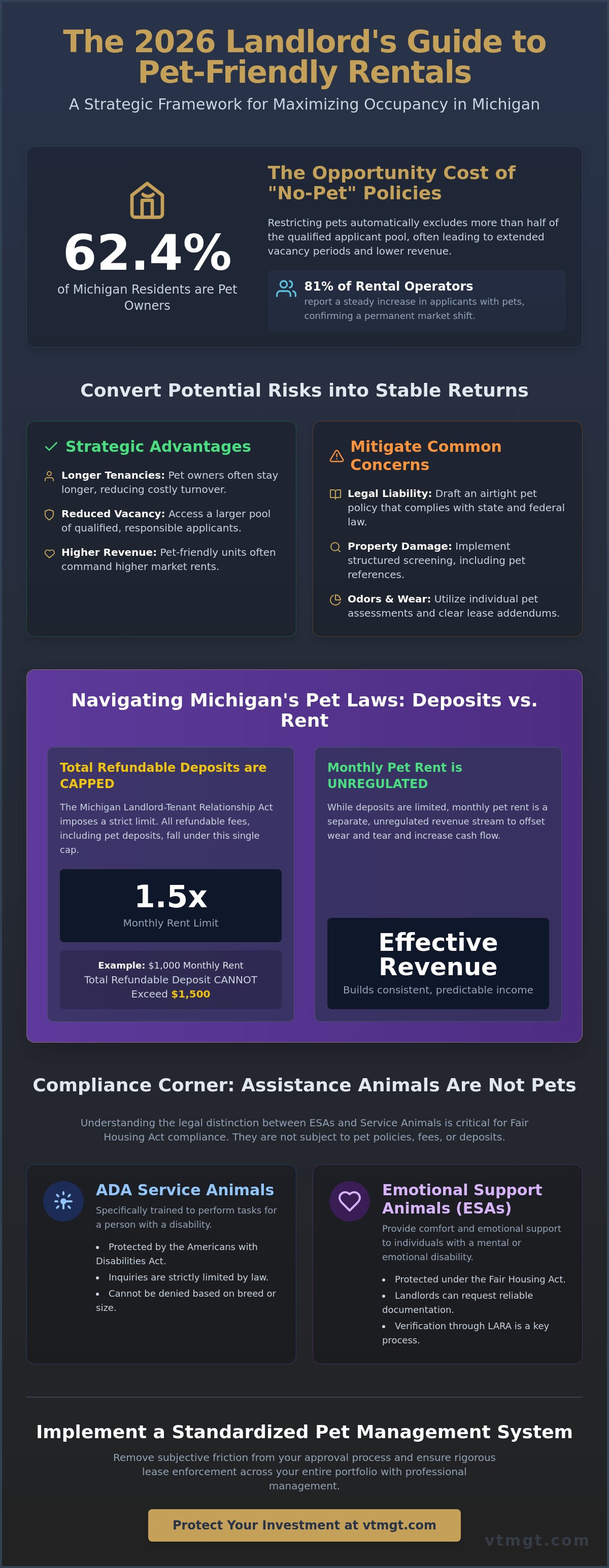
The Michigan rental market has undergone a fundamental shift. Data indicates that approximately 62.4% of residents now own a pet, with dog ownership reaching 41.9% statewide. For property owners, these figures represent a critical demographic that can't be ignored without incurring significant financial oversight. Implementing pet-friendly rental policies for landlords Michigan is a calculated method to stabilize occupancy. Beyond mere inclusivity, these policies correlate directly with long-term tenant retention. Renters with animals typically view their residence as a permanent home rather than a temporary stop. This mindset reduces the frequency of costly turnover cycles and ensures a more consistent cash flow for the investor.
The growth in pet ownership isn't a temporary trend. Approximately 81% of rental housing operators report a steady increase in pet-owning applicants. This shift requires a modern approach to property management that prioritizes technological readiness and professional screening. For instance, landlords can explore Mid-term rentals as a way to attract professionals who seek pet-friendly housing near local cultural hubs. By adopting a pro-pet stance, you aren't just filling a unit; you're building a stable community of responsible residents who value the stability of their living situation.
The Opportunity Cost of "No-Pet" Policies
Landlords who maintain strict "no-pet" stances often find themselves competing for a shrinking sliver of the market. Restricting pets creates an artificial barrier that excludes more than half of the qualified applicant pool. While the intent is often to mitigate risk, the actual result is frequently extended vacancy periods. Refining your pet-friendly rental policies for landlords Michigan allows you to capture high-income professionals who prioritize their animals' well-being. These tenants are often willing to pay a premium for properties that accommodate their households. This economic impact is measurable. Pet-friendly units often command higher market rents because the demand consistently outstrips the supply of quality housing. Understanding the Emotional Support Animal Guidelines is part of this strategic calculation. It helps distinguish between elective pet ownership and legally protected assistance animals, ensuring your decisions remain objective and compliant.
Market-Specific Considerations for Northern Michigan
Northern Michigan presents unique challenges and opportunities. In regions like Traverse City and Petoskey, the demand for outdoor-oriented housing is exceptionally high. Tenants in Emmet and Charlevoix counties often seek properties that accommodate an active lifestyle. Single-family homes in these areas have a distinct advantage when they offer fenced yards or proximity to recreation trails. Conversely, multi-unit complexes in Grand Rapids or Boyne City require more structured common-area protocols to maintain community standards. We observe that properties aligning their policies with these local lifestyle trends achieve superior market positioning. A disciplined approach ensures your investment remains a high-yield asset while serving the specific needs of the regional workforce. By quantifying the vacancy rate differences, it becomes clear that pet-restricted properties face higher turnover costs and lower lease renewal rates compared to their pet-friendly counterparts.
Navigating Michigan Pet Laws: Security Deposits, Fees, and Legal Limits
The Michigan Landlord-Tenant Relationship Act of 1972 provides the structural framework for all lease agreements. When drafting pet-friendly rental policies for landlords Michigan, you must prioritize compliance with the 1.5x monthly rent cap. This limit is absolute. It encompasses the security deposit, any pet-specific deposits, and any other refundable fees. If your monthly rent is $1,000, the total refundable deposit cannot exceed $1,500. Exceeding this threshold, even with the intent of protecting against animal damage, creates a significant legal liability for the property owner. It's a technical boundary that requires disciplined accounting to ensure your investment remains protected without violating state statutes.
Structuring Pet-Related Revenue Streams
While security deposits are capped, monthly pet rent remains an unregulated and effective revenue stream. Unlike a deposit, which is a liability held in escrow, pet rent is additional monthly income that compensates for the increased wear on the asset. We recommend integrating this fee directly into the base lease agreement. Additionally, non-refundable cleaning fees are permissible in Michigan if they're clearly disclosed for a specific purpose, such as professional carpet sanitization. These fees shouldn't be labeled as "deposits" to avoid confusion with the 1.5x cap. This distinction allows you to maintain a profitable investment while offering competitive pet-friendly rental policies for landlords Michigan.
Compliance with Michigan Security Deposit Laws
Precise financial management is required to avoid litigation. All deposits must be properly escrowed according to Michigan landlord laws. You're required to provide the tenant with the name and address of the financial institution holding the funds within 14 days of move-in. It's also vital to remember that assistance animals are exempt from these charges. Understanding the Fair Housing Act and ESAs is essential; these animals aren't legally classified as pets, meaning pet rent and pet deposits cannot be applied.
Upon lease termination, you have exactly 30 days to return the deposit or provide a detailed, itemized list of damages. If you're withholding funds for pet-related repairs, your documentation must be exhaustive. We utilize standardized move-in and move-out inspection reports that include high-resolution photographic evidence. This level of technical detail prevents disputes and ensures you're reimbursed for actual damages beyond normal wear and tear. If you need assistance with lease agreement preparation, our team provides the structured oversight necessary for long-term success.
ESA vs. Service Animals: Federal and State Compliance for Landlords
Establishing pet-friendly rental policies for landlords Michigan requires a precise understanding of the legal distinctions between elective pets and assistance animals. Under federal and state law, assistance animals are not classified as pets. This category includes Service Animals, defined by the Americans with Disabilities Act (ADA), and Emotional Support Animals (ESAs), protected under the Fair Housing Act (FHA). Service animals are limited to dogs or miniature horses specifically trained to perform tasks for individuals with disabilities. ESAs, however, provide therapeutic support and don't require specialized training. Because these animals are considered medical necessities, standard "no-pet" restrictions and pet-related financial charges are unenforceable. Failure to recognize this distinction can lead to significant legal exposure and fair housing litigation.
Landlords have limited scope when inquiring about an applicant's disability. If a disability isn't readily apparent, you may only ask if the animal is required because of a disability and what work or task the animal has been trained to perform. You cannot demand a demonstration of the animal's task or request specific medical records. Maintaining a disciplined, objective approach during these interactions ensures that your pet-friendly rental policies for landlords Michigan remain compliant with civil rights statutes while protecting your operational interests.
Verification Protocols for Assistance Animals
The verification process must be handled with technical rigor to distinguish legitimate requests from fraudulent claims. For ESAs, landlords are entitled to request a written letter from a licensed mental health professional. This documentation should confirm the individual's disability and the disability-related need for the animal. We advise landlords to verify the professional's credentials through the Michigan Department of Licensing and Regulatory Affairs (LARA) to ensure the provider is authorized to practice in the state. Online "certification" registries or ID cards are not legally recognized and don't constitute valid proof of a need for an ESA. While you must provide reasonable accommodation, you can legally deny a request if the specific animal poses a direct threat to the safety of others or would cause an undue financial and administrative burden on the property.
Mitigating Discrimination Risks
Consistency is the primary defense against discrimination claims. Every inquiry regarding assistance animals should follow a standardized procedural framework. This includes utilizing uniform intake forms and maintaining a centralized log of all accommodation requests. Training staff on the nuances of FHA compliance is essential; even an informal verbal rejection can be grounds for a complaint. Detailed record-keeping should include the date of the request, the documentation provided, and the specific reasoning for the final decision. By treating every request as a technical process rather than a personal negotiation, you create a stable environment that respects tenant rights while safeguarding your investment from regulatory scrutiny.
Structural Risk Mitigation: Screening Pets and Managing Liability
Effective pet-friendly rental policies for landlords Michigan rely on standardized screening protocols to convert potential liabilities into manageable variables. We treat animal screening with the same technical rigor as financial background checks. This involves a multi-layered verification process that includes landlord references and veterinarian records. Objective data points such as the animal's age, weight, and vaccination status provide a baseline for risk assessment. While Michigan law allows private landlords to impose breed or size restrictions, these must be balanced against market demand and insurance requirements. It's a structured approach that prioritizes property protection without excluding qualified applicants.
Many commercial insurance carriers maintain specific "restricted breed" lists that can impact your liability coverage. It's vital to cross-reference your pet policy with your insurance provider to avoid coverage gaps. If a tenant's animal falls under a restricted category, you might require the tenant to carry a separate pet liability policy that names you as additionally insured. This technical alignment ensures that your asset remains protected from high-impact litigation while maintaining a competitive position in the rental market.
The Pet Screening Interview
Observation is a critical component of professional tenant screening and placement. We recommend observing the pet's behavior during a property showing or a brief "interview" to assess temperament and obedience in real-time. Responsible pet owners who utilize professional services like Tails On Trails Pet Resort for boarding or daycare often demonstrate a higher level of commitment to their animal's socialization and behavior. Verification of local municipal licensing is also mandatory to ensure the animal is legally registered within the jurisdiction. A comprehensive pet agreement addendum should clearly define conduct rules, including noise thresholds and leash requirements. This ensures that the animal's presence doesn't compromise the quiet enjoyment of neighboring residents or the overall order of the property.
Property-Specific Rules and Maintenance
Northern Michigan presents unique environmental challenges that standard lease templates often overlook. Managing seasonal mud, heavy snowfall, and local wildlife interactions requires specific property modifications. We suggest installing dedicated waste stations and, where feasible, mud rooms with durable flooring to protect the primary living areas from moisture and debris. These requirements should be integrated into your rental property maintenance schedule to ensure long-term structural integrity. Seasonal inspections are necessary to verify that pet-related wear hasn't compromised the building's envelope or landscape. If you're looking to professionalize your oversight, our team provides maintenance coordination and screening services that minimize physical asset degradation.
Implementing Standardized Pet Management Systems with Van Treese
Professional property management acts as a technical buffer between the landlord and the emotional complexities of pet ownership. By implementing pet-friendly rental policies for landlords Michigan through a third-party framework, you eliminate the subjective friction often found in direct tenant-landlord negotiations. Our approach relies on standardized systems for pet screening and lease enforcement, ensuring that every decision is data-driven and legally compliant. We maintain a disciplined oversight that treats pet management as an operational process rather than a series of one-off exceptions. This structured method ensures that your property remains a stable, high-performing asset.
Routine inspection cycles are a core component of our management strategy. These aren't merely visual walkthroughs but structured audits designed to detect pet-related issues before they escalate into structural damage. Early detection of moisture, odors, or wear allows for immediate corrective action, preserving the asset's market value. For owners looking to modernize their holdings, transitioning a "no-pet" portfolio into a pet-friendly asset class is a strategic pivot that requires precise execution. We manage this transition by updating lease documents and establishing new community standards that protect existing tenants while opening the property to a broader demographic.
Professional Maintenance Coordination
Reliable maintenance is the foundation of a successful pet policy. We utilize a network of vetted local contractors who specialize in pet-related repairs and advanced cleaning techniques. Our standardized move-out protocols include deep-cleaning sanitization and ozone treatments when necessary to ensure property readiness for the next occupants. This engineering-grade attention to detail—mirroring the rigorous standards of specialists like Sani-Tech Victoria—prevents the "pet smell" stigma and maintains the structural integrity of your flooring and drywall. Additionally, our systems are equipped to handle pet-related property incidents, providing the technical oversight necessary to mitigate potential damage during off-hours.
Maximizing ROI through Managed Pet Policies
Van Treese Management focuses on asset optimization by balancing risk with revenue. We help you implement pet-friendly rental policies for landlords Michigan that include optimized monthly pet fees designed to offset potential wear and tear. Our financial reporting and accounting services provide you with a transparent view of pet-related income versus maintenance expenses. This data allows you to see the tangible ROI of being a pet-friendly landlord in the Northern Michigan market. If you're ready to professionalize your property management and maximize your occupancy rates, contact us for a professional management consultation today. Our team is prepared to integrate your portfolio into our proven, process-driven management system.
Optimizing Your Rental Portfolio for a Pro-Pet Future
Building a resilient investment requires a shift from reactive restrictions to proactive, standardized management. We've examined how pet-friendly rental policies for landlords Michigan can stabilize occupancy while respecting the technical boundaries of the 1.5x security deposit cap. Success in the 2026 market hinges on the ability to distinguish between elective pets and assistance animals while maintaining rigorous property maintenance standards. By implementing structured screening and clear lease addendums, you transform your property into a high-yield asset that attracts reliable, long-term tenants. These technical safeguards ensure that your property remains a stable environment for all residents.
Managing these complexities doesn't have to be a manual burden. Our team provides standardized tenant and pet screening systems alongside 24/7 emergency maintenance coordination. We offer the expertise in Northern Michigan landlord-tenant law necessary to safeguard your investment from legal and physical degradation. We handle the technical oversight so you can focus on portfolio growth without the friction of daily animal-related disputes. Partner with Van Treese Management for Stress-Free Pet-Friendly Rentals and secure the future of your rental assets today. We look forward to helping you achieve a more efficient and profitable management structure.
Frequently Asked Questions
Can a Michigan landlord charge a non-refundable pet fee?
Michigan law allows landlords to charge non-refundable fees if they're clearly designated for a specific purpose, such as professional carpet cleaning or sanitization. However, any amount labeled as a "deposit" is legally classified as part of the security deposit and must be refundable. It's essential to define these charges precisely in the lease to avoid them being counted toward the state's security deposit cap.
What is the maximum pet deposit allowed in Michigan?
The maximum pet deposit is constrained by the 1.5x monthly rent limit established by the Landlord-Tenant Relationship Act. This cap represents the cumulative total of all refundable deposits held for the unit. If the standard security deposit already reaches this limit, you cannot legally charge an additional refundable pet deposit.
How do I handle an Emotional Support Animal (ESA) if I have a no-pet policy?
Federal Fair Housing Act mandates require you to grant reasonable accommodation for a verified ESA, even if you have a strict no-pet policy. You're permitted to request a written letter from a licensed mental health professional to confirm the disability-related need. Once verified, you cannot apply pet-friendly rental policies for landlords Michigan that involve charging pet rent or pet deposits for these animals.
Can I restrict specific dog breeds in my Michigan rental property?
Private landlords generally retain the right to impose breed, size, and weight restrictions within their elective pet policies. These restrictions are often necessary to comply with the specific requirements of property insurance providers. These elective rules don't apply to verified service animals or emotional support animals, as they aren't legally classified as pets under civil rights statutes.
Am I allowed to charge "pet rent" in addition to a security deposit?
Yes, you can charge monthly pet rent as a separate line item in your lease agreement to account for increased wear on the asset. Unlike security deposits, Michigan law doesn't currently impose a specific cap on the amount of pet rent you can charge. This provides a structured revenue stream that remains separate from the refundable security deposit funds held in escrow.
What happens if a pet causes damage that exceeds the security deposit?
If pet-related damages exceed the 1.5x monthly rent security deposit, you may seek further compensation through a civil judgment or a direct reimbursement claim. You must provide the tenant with an itemized list of damages and actual repair costs within 30 days of move-out. We recommend requiring tenants to maintain renters' insurance with pet liability coverage to ensure funds are available for high-cost repairs.
Are there specific pet licensing requirements for rentals in Emmet County?
Emmet County requires all dogs over four months of age to be licensed and vaccinated against rabies. Landlords should verify that any animal on their property complies with these municipal health and safety standards. Including a requirement for proof of current licensing in your pet-friendly rental policies for landlords Michigan helps ensure your portfolio remains compliant with local ordinances.
Do I have to allow pets in a commercial rental property in Michigan?
Commercial landlords aren't required to allow elective pets, but they must accommodate Service Animals under the Americans with Disabilities Act (ADA). Emotional Support Animals don't have the same broad public access rights in commercial spaces as they do in residential housing. You should clearly define your commercial pet policy within the specific terms of the business lease to maintain a professional environment.