
Landlord Compliance in Emmet County, MI: A 2026 Guide to HOA Rule Enforcement
What if the greatest threat to your Northern Michigan rental investment isn't a vacant unit, but an overlooked paragraph in your HOA's 2026 bylaws? You likely recognize that maintaining high-yield assets requires more than just collecting rent. It demands a disciplined, technical approach to local regulations. For many owners, the friction between Michigan state law and specific community bylaws creates a complex legal landscape that's difficult to manage from a distance. Without a structured system, tenant negligence quickly translates into costly HOA fines and unnecessary liability.
Achieving consistent landlord compliance Emmet County MI requires a shift from reactive fixes to standardized operational frameworks. We understand that precision in lease preparation and rule enforcement is the only way to safeguard your property. This guide provides a comprehensive roadmap to mastering the hierarchy of local authority. You'll learn how to implement standardized lease clauses that protect your interests, establish a clear system for rule enforcement, and ensure your property maintains zero violations throughout 2026. By applying these engineering-grade management principles, you can secure the stability and long-term performance of your Northern Michigan portfolio.
Key Takeaways
- Understand the hierarchy between Michigan state law and local ordinances to ensure your property remains legally sound throughout 2026.
- Discover the technical requirements for integrating HOA bylaws directly into your lease agreements to hold tenants accountable for community standards.
- Implement standardized systems that automate landlord compliance Emmet County MI, reducing the risk of manual tracking errors and costly HOA fines.
- Master the 2026 protocols for resolving tenant-HOA disputes through structured mediation before escalating to the Emmet County court system.
- Identify how professional maintenance coordination and 24/7 response systems act as critical safeguards against non-compliance and property neglect.
The Legal Framework for Landlord Compliance in Emmet County
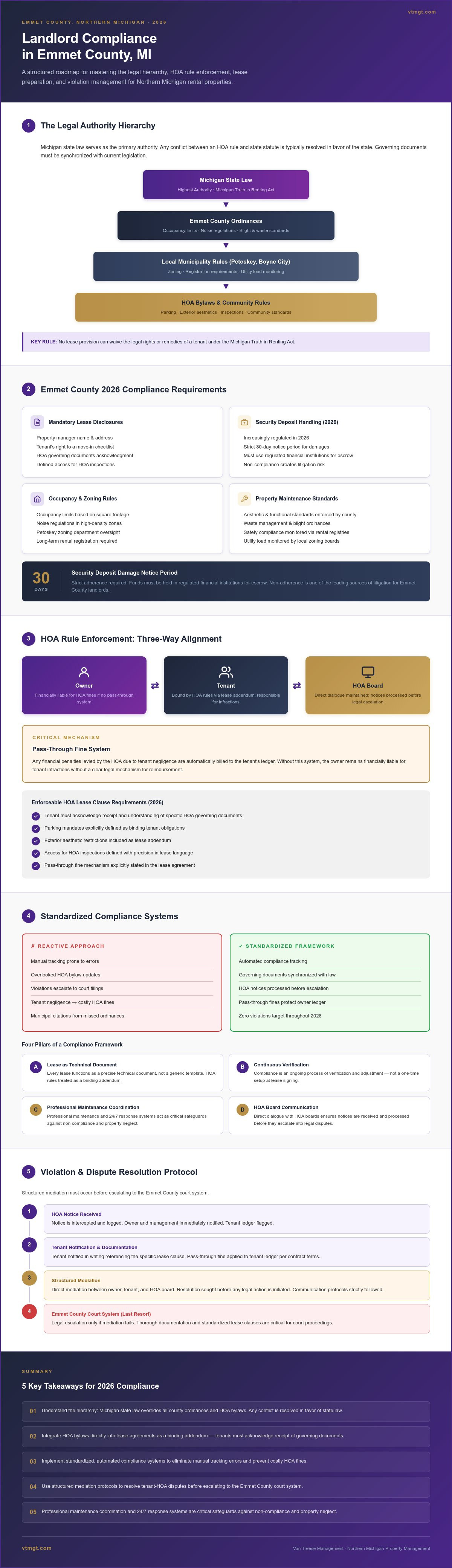
The stability of a real estate investment in Northern Michigan depends on a precise understanding of the legal hierarchy. Effective landlord compliance Emmet County MI requires a structured approach that recognizes Michigan state law as the primary authority, followed by county ordinances and private community bylaws. In 2026, the Michigan Truth in Renting Act remains the cornerstone of residential leasing, mandating that no lease provision can waive the legal rights or remedies of a tenant. Any conflict between a private homeowners association rule enforcement action and state statute is typically resolved in favor of the state. This hierarchy makes it critical for owners to ensure their governing documents are synchronized with current legislation.
We view standardized compliance systems as the only viable strategy for mitigating litigation risks. Manual oversight often fails to account for the overlapping requirements of the Petoskey zoning department and Emmet County’s broader residential standards. By implementing a rigorous compliance framework, owners can ensure that every lease agreement functions as a precise technical document rather than a generic template. This level of detail prevents common friction points that lead to court filings or municipal citations. Maintaining landlord compliance Emmet County MI is a continuous process of verification and adjustment.
Michigan Landlord-Tenant Law Fundamentals
Every lease agreement within Emmet County must include specific mandatory disclosures, such as the name and address of the property manager and a clear statement regarding the tenant's right to a move-in checklist. In 2026, security deposit handling has become increasingly regulated, requiring strict adherence to the 30-day notice period for damages and the use of regulated financial institutions for escrow. For a comprehensive analysis of these requirements, owners should consult our Michigan Landlord Laws guide, which details the statutory obligations for property owners in the current year.
Emmet County Specific Ordinances
Beyond state mandates, local municipalities like Petoskey and Boyne City enforce specific ordinances that impact long-term residential rentals. These include occupancy limits based on square footage and noise regulations that are strictly monitored in high-density residential zones. Waste management and blight ordinances are also critical. The county requires properties to be maintained to a specific aesthetic and functional standard to prevent community degradation. Owners must also verify current registration requirements for long-term rentals. Local zoning boards use these registries to monitor safety compliance and utility load throughout Northern Michigan.
Navigating HOA Rule Enforcement for Rental Properties
Managing a rental within a homeowners association requires a three-way alignment between the owner, the tenant, and the board. While the previous section established the legal hierarchy, the practical application of landlord compliance Emmet County MI rests on how effectively HOA bylaws are integrated into the residential lease. We treat the HOA's rules and regulations as a technical addendum to the primary contract. Without this explicit incorporation, an owner remains financially liable for tenant infractions without a clear legal mechanism for reimbursement. A standardized lease ensures that every community-specific restriction, from parking mandates to exterior aesthetics, becomes a binding obligation for the occupant.
A critical component of this framework is the pass-through fine system. This mechanism ensures that any financial penalties levied by the HOA due to tenant negligence are automatically billed to the tenant's ledger. It's a vital tool for protecting your investment's bottom line. Effective communication protocols are equally important. We maintain a direct line of dialogue with HOA boards to ensure that notices are received and processed before they escalate into legal disputes. Utilizing professional lease agreement preparation services helps establish these boundaries from the start of the tenancy.
Drafting Enforceable HOA Clauses
To withstand legal scrutiny in 2026, lease clauses must include mandatory language where the tenant acknowledges receipt and understanding of the specific HOA governing documents. We define reasonable access for HOA inspections with precision, typically requiring a 24-hour notice period unless an emergency exists. Indemnity clauses are also essential. These sections should clearly state that the tenant is responsible for all legal fees and costs associated with their breach of community rules. This structure transforms the lease from a simple rental agreement into a comprehensive risk management tool.
The 5-Step Enforcement Protocol
When a violation occurs, a structured response prevents minor issues from becoming litigation triggers. Our protocol follows a logical progression of verification and communication:
- Step 1: Formal Notification. We issue an immediate notice to the tenant upon receipt of an HOA complaint, documenting the specific rule breached and the potential financial consequences.
- Step 2: Verification. Our team utilizes maintenance coordination to physically verify the violation, ensuring the complaint is factual before proceeding with formal penalties.
- Step 3: Issuing a Formal Cure Notice. If the issue persists, we issue a formal notice to cure in accordance with Michigan law, setting a strict deadline for compliance to avoid further escalation.
This systematic approach ensures that every action is documented and legally defensible, providing a clear path to resolution while maintaining the integrity of the community standards.
Implementing Standardized Compliance Systems
Manual tracking in multi-property portfolios introduces unacceptable margins for error. In 2026, relying on spreadsheets or memory to monitor HOA deadlines and local ordinance updates is a significant liability. We utilize integrated digital property management portals to centralize all compliance data, ensuring that every requirement for landlord compliance Emmet County MI is met with technical precision. These systems provide real-time visibility into the status of each unit, allowing our team to identify potential rule breaches before they escalate into municipal citations or board-level disputes. Automation ensures that notice periods are never missed and that every communication is timestamped for legal verification.
A robust compliance system begins with a standardized tenant screening process. We prioritize applicants who demonstrate a history of community rule adherence, filtering for individuals who recognize the specific responsibilities of living within an HOA. This proactive approach reduces the friction points discussed in previous sections by ensuring that the occupant is aligned with the property's governing standards from day one. For a detailed analysis of how these systems integrate into a broader investment strategy, you can review our Petoskey Property Management Guide, which outlines the implementation of these specialized frameworks.
Maintenance as a Compliance Tool
In Northern Michigan, maintenance is a critical component of regulatory adherence. HOA blight violations often stem from inadequate seasonal care, particularly regarding snow removal and landscaping. We schedule seasonal inspections designed specifically for the 2026 weather patterns in the region. This ensures that properties remain within community aesthetic standards throughout the winter and summer months. Our Rental Property Maintenance framework include vetting local contractors who are familiar with HOA-approved repair standards. This prevents the use of non-compliant materials or methods that could trigger unnecessary fines or corrective orders.
Financial Reporting and Audit Trails
Precise documentation serves as the primary defense during court proceedings or legal audits. We maintain comprehensive audit trails for every enforcement action taken at a property. This includes tracking fine payments, tenant reimbursements, and all rule-related correspondence within structured financial statements. This level of transparency is essential for meeting the requirements of Emmet County tax audits and legal reviews. By maintaining a clear paper trail, we provide owners with the data necessary to prove due diligence in any dispute resolution scenario. It ensures that every financial transaction related to compliance is accurate, transparent, and legally defensible.
Handling Violations and Dispute Resolution
Conflict resolution within an HOA-governed environment requires a tactical choice between mediation and litigation. In Northern Michigan, mediation often serves as a more efficient and cost-effective precursor to formal court proceedings. The Emmet County court system handles landlord-tenant disputes with a focus on documented evidence and procedural accuracy. When a tenant's behavior threatens the legal standing of the property, the owner's defense depends entirely on the precision of prior notices and verification steps. We prioritize structured dialogue to resolve friction points, but we recognize that some disputes require a formal judicial ruling to protect the asset's long-term value.
Maintaining a property's reputation within the association is a critical component of landlord compliance Emmet County MI. A single non-compliant tenant can damage the relationship between an owner and the HOA board, leading to increased scrutiny and potential variance denials. Professional intervention at the first sign of conflict ensures that the owner's interests are represented by a calm, technical authority. By distancing yourself from the emotional aspects of a tenant dispute, you can maintain a professional standing with your neighbors and the board. If you're struggling with a difficult tenant, our residential property management services provide the structured oversight needed to resolve these issues decisively.
Resolving HOA Board Conflicts
HOA fines aren't always applied fairly or accurately. We represent out-of-state owners at board meetings to challenge arbitrary enforcement actions that lack technical merit. This process often involves presenting maintenance logs or communication records that refute the board's claims. Beyond challenging fines, we negotiate variance requests that allow for greater flexibility in long-term rental operations. This technical liaison role is essential for owners who can't attend local meetings in person. We ensure your property's voice is heard during critical decision-making processes, preventing the board from implementing rules that could negatively impact your rental yield in 2026.
The Eviction Path for Rule Violations
When a tenant refuses to correct a violation, the owner may need to pursue an eviction based on a non-monetary breach of the lease. In 2026, the timeline for eviction filings in Emmet County remains strict. It starts with a properly executed "Notice to Quit" for a lease violation. Legal pitfalls frequently occur during this phase, including:
- Failing to cite the specific paragraph number of the breached HOA rule.
- Missing the required delivery deadline for the formal cure notice.
- Accepting partial rent payments that might waive the right to evict for that specific breach.
- Inaccurate documentation of the violation's persistence after the notice period.
These clerical errors can lead to a dismissal in court, forcing the owner to restart the process and incur additional filing fees. We manage this timeline with engineering precision, ensuring every document meets the 2026 standards of the local judiciary. This systematic approach minimizes the duration of the vacancy and protects the owner from unnecessary legal exposure.
Professional Management: Ensuring Long-Term Compliance
Transitioning from reactive management to a system-based approach is the only way to ensure long-term stability. Professional oversight transforms landlord compliance Emmet County MI from a source of friction into a predictable operational standard. Van Treese Management automates the entire lifecycle of compliance, replacing manual tracking with engineered protocols. This shift allows Northern Michigan owners to view their properties as steady assets rather than high-maintenance liabilities. By delegating the technical complexities of HOA rules and state statutes, you secure the performance of your portfolio throughout 2026.
Our 24/7 emergency response system serves as a critical safeguard against HOA escalations. In a governed community, a delayed response to a maintenance issue or a noise complaint can trigger immediate board-level penalties. Our coordination team acts as the first line of defense. We resolve technical issues before they become community violations. This proactive stance preserves the property's reputation and protects your financial ledger from unnecessary fines. Systems eliminate human error. They ensure that every incident is documented and addressed according to the specific bylaws of your association.
Standardized lease execution is another pillar of our framework. In Petoskey and surrounding areas, we implement rigorous tenant screening and placement protocols. We identify occupants who demonstrate a history of respecting community standards. Our lease agreements are not generic templates. They are technical documents designed for the unique regulatory environment of Northern Michigan. This precision ensures that landlord compliance Emmet County MI is built into the foundation of every tenancy.
The Van Treese Compliance Advantage
We maintain an extensive network of vetted Northern Michigan vendors and contractors. These professionals understand the specific aesthetic and repair standards required by local HOAs. This ensures that every maintenance action supports long-term compliance without the risk of non-conforming materials. Our automated systems for rent collection and rule enforcement provide owners with real-time transparency through digital portals. We also conduct detailed market research to ensure your property remains both compliant and profitable in the 2026 landscape. We treat property management as a discipline of precision and reliability.
Next Steps for Emmet County Landlords
The regulatory environment of 2026 requires constant vigilance. We recommend that all owners request a comprehensive compliance audit for their current lease agreements. This technical review identifies gaps in HOA rule integration or state law adherence. We also provide consultations on Northern Michigan market trends to help you optimize your portfolio's performance. Securing your investment starts with a structured plan. Schedule a consultation with Van Treese Management to implement a professional compliance system for your property today.
Securing Your Northern Michigan Portfolio for 2026
Maintaining landlord compliance Emmet County MI requires a shift from manual oversight to technical precision. We've established that the integration of HOA bylaws into your lease agreements is the only way to shield your investment from tenant-driven violations. By adopting standardized management systems, you eliminate the guesswork that often leads to costly litigation or board-level disputes. These frameworks ensure that every maintenance requirement and legal disclosure is met with consistency. This structured approach protects your property's reputation and your financial bottom line.
Van Treese Management provides the stability you need through 24/7 emergency response coordination and deep expertise in Emmet and Charlevoix counties. Our systems are designed to handle the complexities of local ordinances so you don't have to. It's time to transform your property into a truly passive, high-performance asset. Protect your investment with professional compliance management and experience the confidence that comes with full operational control. Your Northern Michigan rental can thrive under the right structural discipline.
Frequently Asked Questions
Do HOA rules supersede Michigan landlord-tenant laws?
Michigan state law always maintains priority over private community bylaws. While an HOA can set specific standards for its members, these rules cannot supersede statutory tenant protections or the Michigan Truth in Renting Act. If a conflict arises between a local bylaw and state legislation, the state law is the governing authority. Owners must ensure their lease documents don't attempt to waive rights guaranteed by the state, as such clauses are legally unenforceable in 2026.
Can an HOA in Emmet County fine a landlord for tenant behavior?
Yes, the association holds the property owner responsible for all activity on the premises. Since the HOA doesn't have a direct contract with your tenant, any fines for noise, trash, or exterior violations are billed to your account. Effective landlord compliance Emmet County MI depends on having a lease that legally transfers these financial penalties to the tenant. This pass-through system ensures your investment's cash flow remains protected from tenant negligence.
Is a separate HOA addendum required for leases in Petoskey?
It's not a legal requirement under state statute, but we consider it a technical necessity for risk management. A dedicated addendum ensures the tenant acknowledges the specific governing documents of the community. In Petoskey, this document should include the full list of "Rules and Regs" and clearly state the consequences for non-compliance. Without this explicit link, enforcing community-specific standards in an Emmet County court becomes significantly more difficult for the owner.
How does the 2026 Truth in Renting Act affect HOA enforcement?
The 2026 updates to the Act emphasize transparency in how community rules are communicated to residents. Landlords must provide tenants with a physical or digital copy of the HOA bylaws before the lease is signed. Any enforcement action must align with the Act's requirements for fair notice and the right to cure. You can't use an HOA violation as a shortcut to bypass the standard legal protections afforded to Michigan tenants.
What happens if a tenant refuses to follow HOA parking rules in Northern Michigan?
Persistent parking violations typically trigger a series of escalating fines from the board. When a tenant ignores these community standards, the owner must initiate a formal enforcement protocol. This starts with a written warning and moves toward a notice to quit if the behavior isn't corrected. In Northern Michigan, parking rules are often strictly enforced during winter months to allow for snow removal, making prompt tenant compliance essential for safety.
Can I evict a tenant in Emmet County solely for HOA violations?
You can pursue eviction if the lease defines HOA adherence as a material term of the agreement. Emmet County judges require a detailed audit trail showing the tenant was notified of the specific rule and given a reasonable timeframe to correct the issue. These non-monetary breaches are valid grounds for termination, but the owner's documentation must be precise to withstand the technical scrutiny of the local court system in 2026.
Who is responsible for snow removal compliance in a Northern Michigan rental?
The property owner is the party held accountable by both the HOA and local municipal boards. Even if your lease agreement assigns shoveling duties to the tenant, you'll receive the citation if the sidewalks aren't cleared within the required timeframe. Our maintenance coordination systems use vetted local contractors to ensure that properties in Petoskey and surrounding areas meet these standards automatically. This prevents the blight violations that frequently target unmanaged rental properties.
How often should I audit my rental for HOA compliance?
We recommend performing a technical compliance audit at least four times per year. These inspections should coincide with seasonal changes in Northern Michigan to address specific requirements like landscaping and snow storage. Regular reviews ensure that landlord compliance Emmet County MI remains a continuous process rather than a reactive one. Auditing your financial statements and communication logs helps identify recurring issues before they lead to formal board hearings or legal disputes.