
Rental Property Maintenance Costs Northern Michigan: The 2026 Guide
In the demanding environment of Emmet and Charlevoix counties, treating property upkeep as a reactive expense rather than a structural investment is the fastest way to erode your portfolio's value. You likely recognize that a single lake-effect snowstorm can transform a minor insulation flaw into a costly emergency repair overnight. Successfully managing rental property maintenance costs Northern Michigan requires more than a simple spreadsheet; it demands a technical understanding of how sub-zero temperatures and rural contractor shortages impact your bottom line. It's exhausting to face tenant turnover simply because a heating system wasn't prepared for a January freeze.
This guide provides a standardized, professional framework for protecting your assets throughout 2026. You'll learn how to implement a climate-driven maintenance system that secures your property while maximizing long-term ROI. We'll outline how to establish a predictable budget, reduce the frequency of emergency calls, and preserve the structural integrity of your buildings in this harsh climate. By moving toward a proactive, system-based approach, you ensure your investments remain stable and profitable regardless of the weather. This structured methodology allows you to maintain full control over your processes while navigating the specific logistical challenges of the Northern Michigan market.
Key Takeaways
- Implement a climate-driven maintenance system designed to withstand the specific structural stresses caused by lake-effect snow and high humidity levels in Northern Michigan.
- Establish a structured financial framework for 2026 to stabilize rental property maintenance costs Northern Michigan by prioritizing proactive asset preservation over reactive emergency repairs.
- Follow a rigorous seasonal maintenance protocol tailored for Emmet and Charlevoix counties, focusing on critical spring roof inspections and summer exterior envelope servicing.
- Utilize a standardized vetting process for rural contractors to ensure all maintenance personnel meet mandatory licensing and insurance requirements for residential and commercial properties.
- Leverage professional 24/7 emergency response coordination to mitigate risks and protect long-term ROI for remote property owners during severe winter weather events.
The Technical Reality of Rental Property Maintenance in Northern Michigan
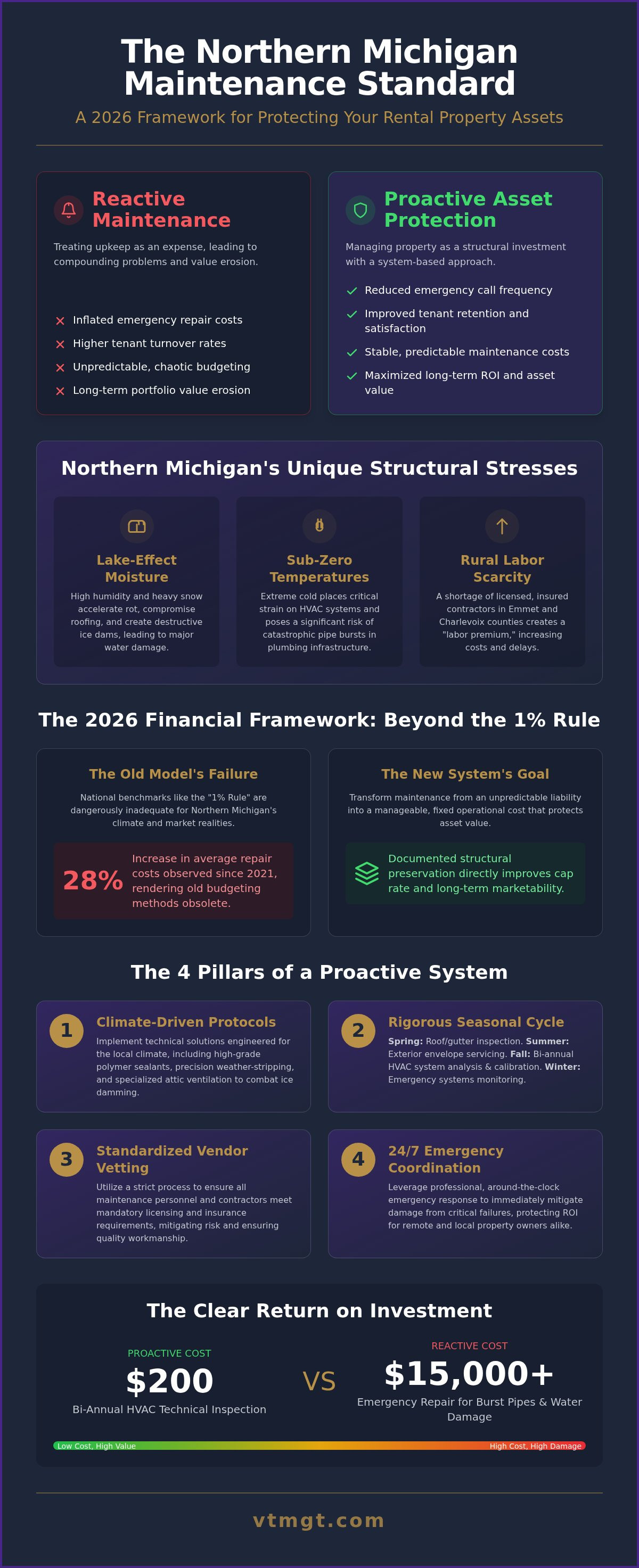
In 2026, the Northern Michigan Maintenance Standard is defined by engineered resilience rather than simple aesthetics. Managing property maintenance in the Emmet and Charlevoix corridor requires a transition from reactive repairs to a structured asset protection system. The primary driver of rental property maintenance costs Northern Michigan remains the relentless cycle of moisture and temperature extremes that degrade building envelopes. Standard property management often fails in rural markets because it lacks the technical foresight and vetted vendor coordination needed to handle 40-degree temperature swings within a single 24-hour period. In remote areas, the absence of a localized, structured maintenance system leads to inflated emergency costs and prolonged vacancy periods.
The Lake Effect Factor on Exterior Durability
The micro-climates of Petoskey and Boyne City create specific stresses on exterior durability. High humidity levels, driven by Lake Michigan, accelerate the degradation of wood siding and compromise roof membranes. We prioritize high-grade polymer sealants and precision weather-stripping to prevent moisture ingress during lake-effect storms. Ice damming occurs when heat escaping through the roof melts snow, which then refreezes at the cold eaves, creating a barrier that forces liquid water under shingles. Without specialized ventilation and proper attic insulation, these dams lead to structural rot and significant interior water damage. Protecting the building envelope requires annual inspections of flashing and drainage systems to ensure they remain clear of debris and ice buildup.
HVAC Demands in a Sub-Zero Climate
In Emmet County, furnace failure represents the most critical risk to property safety. Sub-zero temperatures don't just impact tenant comfort; they threaten the entire plumbing infrastructure with the risk of burst pipes. We mandate bi-annual HVAC inspections to ensure heating systems operate at peak efficiency before the first frost. This technical oversight balances energy costs with the necessity of keeping building interiors above the dew point to prevent condensation. Standard inspections must include heat exchanger analysis and thermostat calibration to prevent mid-winter shutdowns that lead to emergency service premiums. A failed heating system in January isn't just a maintenance issue; it's a liability that can lead to total property loss if pipes freeze and burst while the unit is unoccupied.
Budgeting for Asset Protection: A 2026 Financial Framework
Budgeting for rental property maintenance costs Northern Michigan requires a departure from generic national benchmarks. While many national platforms suggest the 1% rule for annual upkeep, this metric often fails to account for the 28% increase in repair costs observed since 2021. In the rural markets of Emmet and Charlevoix counties, the scarcity of licensed contractors creates a labor premium that reactive owners cannot ignore. We view maintenance as a critical component of property valuation; a documented history of structural preservation directly impacts the cap rate and long-term marketability of the asset. By utilizing standardized systems, we eliminate the emergency markups that typically plague remote owners during peak winter months when demand for service exceeds available supply.
Systematic maintenance isn't just about fixing what is broken; it's a tool for reducing long-term vacancy rates. Tenants in 2026 prioritize reliability, especially regarding heating and insulation. A property that experiences recurring mechanical failures will suffer from high turnover, which is far more expensive than a structured maintenance plan. Standardized management systems allow us to track the lifecycle of every major component, from water heaters to roofing membranes, ensuring that replacements are planned and funded before they become catastrophic failures. This disciplined approach transforms maintenance from an unpredictable burden into a manageable, fixed operational cost.
The ROI of Proactive Inspections
The financial logic is clear. A $200 technical inspection is a nominal expense compared to a $5,000 emergency plumbing failure. These walk-throughs allow us to identify tenant-induced wear before it compromises the building's core systems. We utilize Michigan landlord laws to ensure that every inspection is documented with precision, providing a legal and financial shield for the owner. Integrating MSU Extension home maintenance tips into our workflow ensures that even minor adjustments, like checking sump pumps or cleaning furnace coils, are handled with engineering-level discipline to protect your equity.
Standardized Systems for Commercial Assets
Commercial assets in hubs like Gaylord and Traverse City require a different level of financial oversight. Managing Common Area Maintenance (CAM) charges effectively is essential for maintaining tenant satisfaction and lease compliance. Commercial occupants demand a higher response standard because maintenance failures directly impact their business operations. We focus on long-term capital improvement planning to ensure that major expenses, such as roof replacements or parking lot resurfacing, are amortized over years rather than appearing as sudden shocks to the budget. This level of professional property management ensures that commercial portfolios remain resilient against both economic shifts and the harsh Northern Michigan environment.
The Essential Seasonal Maintenance Cycle for 2026
In the high-latitude environment of Northern Michigan, maintenance is a cyclical discipline dictated by the shifting demands of the building envelope. Effective scheduling throughout these four phases is the only way to contain rental property maintenance costs Northern Michigan while ensuring the long-term habitability of the unit. We operate on a strict calendar that prioritizes structural integrity before aesthetic upgrades, ensuring that every dollar spent contributes to asset preservation. Failing to hit these seasonal windows often results in a 30% premium for emergency labor when weather conditions deteriorate.
Summer maintenance focuses on UV protection and moisture control. We schedule exterior paint and stain touch-ups during the dry months of July and August to prevent wood rot during the subsequent autumn rains. This is also the technical window for AC servicing; ensuring compressors are clear of debris and refrigerant levels are optimal prevents mid-summer failures that frustrate tenants. Winter in Northern Michigan is not a period for passive observation. Snow removal logistics must be finalized by October to ensure that emergency access remains clear and that structural loads on roof systems do not exceed safe engineering tolerances during high-volume lake-effect events.
The Northern Michigan Winterization Protocol
The transition into the heating season requires a technical deep-dive into the property's mechanical and thermal barriers. We mandate the complete shut-off of exterior water lines and the professional blowout of irrigation systems to prevent frost-driven pipe ruptures. Testing heat tape and checking attic insulation levels are non-negotiable steps to prevent the ice dams discussed previously. Property owners must prioritize three critical fall tasks for Petoskey rentals: blowing out irrigation systems, testing heat tape on eaves, and verifying that attic insulation levels prevent thermal bridging. These actions ensure the property remains pressurized and heated even when external temperatures drop below zero for extended periods.
Spring Recovery and Structural Integrity Audits
As the thaw begins in Emmet and Charlevoix counties, our focus shifts to structural recovery. The spring thaw often reveals foundation drainage issues that were masked by frozen ground; we inspect all sump pumps and grading to ensure meltwater moves away from the building. We also conduct specific audits for siding damage caused by heavy snow piles or ice sliding off roof pitches. Scheduling Spring Clean inspections with tenants allows us to assess winter wear and tear internally, ensuring that small leaks or mechanical stresses are identified before they escalate into major 2026 budget overruns. This proactive audit is essential for maintaining the high standard of quality expected in the local professional rental market.
Professional Coordination: Vendor Management and Communication
Securing reliable labor in rural Northern Michigan represents one of the most significant logistical hurdles for property owners in 2026. The scarcity of licensed electricians, plumbers, and HVAC technicians in Emmet County means that uncoordinated owners often face wait times of several weeks for non-emergency repairs. This delay directly inflates rental property maintenance costs Northern Michigan, as minor mechanical or structural issues frequently escalate into major failures while waiting for a service window. We mitigate this risk through a standardized coordination system that prioritizes technical reliability and vetted performance over simple proximity. Our process ensures that every repair is handled by a professional who understands the specific building codes and environmental demands of the region.
Building a Vetted Vendor Network
Developing a robust vendor network requires deep roots in communities like Boyne City and Indian River. We maintain long-term relationships with local contractors who have proven their ability to perform under extreme weather conditions. Every vendor in our system undergoes a rigorous vetting process to ensure they meet the high commercial property management Northern Michigan standards for licensing and insurance. By managing maintenance across a broad portfolio, we leverage volume-based coordination to secure priority scheduling and consistent rates for our clients. This structured approach prevents the price gouging that often occurs during peak seasonal demand when local contractors are stretched thin.
The Tenant’s Role in Maintenance
Effective maintenance coordination begins with clear communication between the management team and the resident. We educate tenants on basic troubleshooting protocols, such as identifying GFI resets or checking thermostat batteries, which significantly reduces the frequency of unnecessary service calls. Our lease agreements utilize precise language to define maintenance responsibilities, ensuring there is no ambiguity regarding property care. Fast, professional response times are the most powerful tool for tenant retention in the 2026 market. When a tenant sees that their repair requests are handled through a structured, efficient system, their confidence in the property increases, leading to lower turnover rates and more stable long-term ROI.
Managing a 24/7 emergency response system is a technical necessity for protecting your equity during lake-effect snowstorms or sub-zero freezes. Our team handles the entire lifecycle of a repair request, from the initial tenant contact to the final inspection of the contractor's work. This allows owners to maintain a professional distance from daily operations while ensuring their assets are protected by a disciplined, quality-focused management framework. To see how our standardized coordination can stabilize your portfolio, explore our maintenance coordination and property management services.
Protecting Your Investment with Van Treese Management
Van Treese Management operates on a foundation of precision and technological readiness. Our maintenance coordination system is designed to remove the volatility from rental property maintenance costs Northern Michigan by implementing standardized protocols across every asset in our portfolio. We don't rely on guesswork; our decisions are driven by localized market research and a deep understanding of the structural requirements for properties in Petoskey and Traverse City. This data-driven approach ensures that capital improvements and recurring repairs are scheduled with clinical accuracy, preventing the financial shocks associated with unmanaged property degradation. Our local expertise allows us to navigate the specific 2026 labor market challenges while maintaining the highest standards of asset preservation.
Transparency remains a core pillar of our financial reporting and accounting services. Every repair is documented with technical detail, providing owners with a clear audit trail for their maintenance expenditures. This level of accounting precision is essential for professional investors who require a structured view of their portfolio's performance. By centralizing all maintenance communication and financial data, we eliminate the fragmentation that typically leads to budget overruns in the rural Northern Michigan market. Our systems ensure that you have full visibility into the lifecycle of your property's mechanical and structural components.
Our Standardized Maintenance System
The transition from the stress of DIY maintenance to professional oversight is a strategic move toward long-term asset preservation. We replace the reactive mentality with a fegyelmezett, proactive system that anticipates the needs of the building envelope. By integrating maintenance with professional property management in Petoskey, MI, owners benefit from a holistic strategy that connects tenant satisfaction with structural health. Our 24/7 emergency response coordination serves as a critical safety feature. It ensures that a professional is always available to manage high-stakes situations like furnace failures or structural leaks during lake-effect snow events, protecting your equity when you cannot be on-site.
Getting Started with Professional Coordination
We begin every partnership with a comprehensive property evaluation in Emmet or Charlevoix County. This initial audit identifies immediate structural risks and establishes a baseline for your 2026 maintenance budget. Our onboarding process for new residential and commercial owners is structured and efficient, ensuring a seamless transfer of vendor relationships and historical data into our management system. This disciplined approach allows you to regain control over your time while we handle the complexities of vendor vetting and emergency response. If you are ready to secure your portfolio against the environmental and logistical challenges of the region, we invite you to protect your Northern Michigan investment with Van Treese.
Securing Your Portfolio's Future in Northern Michigan
Developing a resilient asset protection strategy is the only way to ensure the long-term viability of your investments in Emmet and Charlevoix counties. We've established that reactive repairs are statistically more expensive and technically inferior to a standardized, climate-driven maintenance cycle. By prioritizing structural integrity and leveraging a vetted network of local Northern Michigan contractors, you transform maintenance from an unpredictable liability into a controlled operational cost. This disciplined approach is what separates high-performing portfolios from those struggling with chronic turnover and emergency repair premiums.
Since 2018, we've provided professional oversight for residential and commercial assets in Petoskey, Traverse City, and surrounding areas. Our 24/7 emergency response coordination ensures that your property remains protected during the most severe lake-effect events, effectively stabilizing rental property maintenance costs Northern Michigan. We invite you to move beyond the stress of DIY management and adopt a system built on precision and reliability. Schedule Your Property Maintenance Consultation with Van Treese Management today to secure your property's value for 2026 and beyond.
Frequently Asked Questions
How often should I inspect my rental property in Northern Michigan?
Bi-annual technical inspections are the professional standard for 2026. You should schedule one session in the spring to assess potential winter damage and another in the fall to verify heating system readiness. These intervals allow for proactive adjustments before extreme weather events occur. Frequent walkthroughs help identify tenant-induced wear early, which prevents escalating rental property maintenance costs Northern Michigan by addressing minor issues before they require expensive emergency intervention.
Who is responsible for snow removal at a Northern Michigan rental property?
Responsibility for snow removal is defined within the lease agreement and varies based on the property type. In multi-family or commercial assets, the landlord usually coordinates professional plowing to ensure safety and liability compliance. For single-family residential rentals, the duty often falls to the tenant; however, landlords must ensure that emergency access and structural roof loads are managed according to local ordinances in Emmet and Charlevoix counties.
What is the most common emergency repair in Petoskey during winter?
Furnace failure is the most frequent emergency repair encountered during the winter months in Petoskey. Sub-zero temperatures put immense stress on heating systems; a shutdown can lead to burst pipes within a few hours. Other common issues include ice dams and frozen plumbing lines. We mitigate these risks through bi-annual mechanical inspections and the use of heat tape, ensuring that critical systems remain operational throughout heavy lake-effect snowstorms.
Does a property manager mark up the cost of maintenance repairs?
Fee structures for maintenance coordination vary by company, so owners should review their management agreements for full transparency. Some firms charge a percentage of the repair invoice to cover the logistical costs of vetting vendors, scheduling work, and performing final technical inspections. We prioritize financial transparency, providing detailed accounting that allows owners to track every expenditure. Standardized systems help reduce overall costs by leveraging volume-based relationships with local contractors.
How do I handle emergency repairs if I live out of state?
Remote owners should utilize a professional maintenance coordination system with 24/7 emergency response capabilities. Having a local representative with a vetted network of contractors ensures that critical issues, like a burst pipe or heating failure, are addressed immediately. This professional oversight protects your equity by providing a technical response when you cannot be on-site, ensuring that repairs meet local quality standards and current 2026 building codes.
What maintenance tasks are tenants responsible for in Michigan?
Under Michigan law, tenants are generally responsible for maintaining the property in a clean and sanitary condition. This includes basic tasks like replacing light bulbs, testing smoke detector batteries, and reporting any structural or mechanical issues to the landlord immediately. Clear lease language is essential to define these duties. Tenants should also be educated on basic troubleshooting, such as GFI resets, to help manage rental property maintenance costs Northern Michigan effectively.
How does the Northern Michigan climate affect roofing lifespan?
The harsh climate significantly accelerates the degradation of roofing materials through heavy snow loads and intense freeze-thaw cycles. Ice dams, caused by improper attic ventilation, force moisture under shingles and lead to structural rot. While a standard roof might last 25 years in milder regions, the environmental stresses in Emmet County often necessitate more frequent inspections and earlier replacement. Using high-grade sealants and ensuring proper thermal barriers are critical for extending the roof's operational life.
Is preventive maintenance tax-deductible for Michigan landlords?
Routine maintenance and preventive repairs are generally considered operating expenses and are tax-deductible for the year they occur. This includes costs for HVAC servicing, gutter cleaning, and pest control. However, major capital improvements that add significant value or extend the property's life must typically be depreciated over several years. Landlords should consult with a tax professional to ensure their 2026 financial reporting aligns with current IRS regulations and specific Michigan tax codes.