
Invest in Petoskey Real Estate: 2026 Market Trends and Investment Strategies
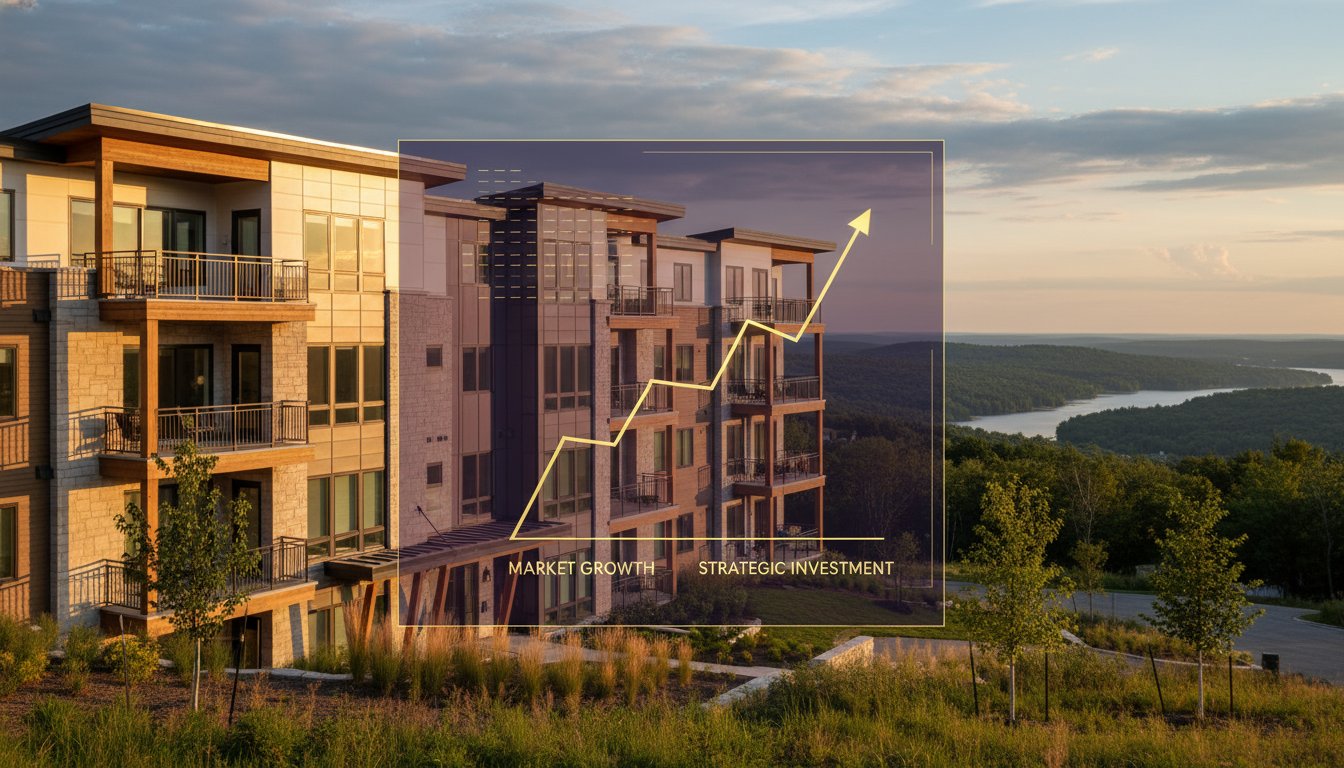
While many investors look toward volatile coastal markets, the 14% appreciation rate recently recorded in Emmet County proves that the decision to invest in Petoskey real estate is a move toward long term capital preservation. You're probably aware that rising entry costs and the 2024 updates to local short term rental ordinances have made the barrier to entry feel higher than ever. It's frustrating to secure a prime location only to find that local maintenance costs or evolving zoning laws significantly impact your bottom line. We recognize that a successful investment requires more than just a purchase; it demands a structured approach to asset management and a deep understanding of local constraints.
This article provides a systematic breakdown of how to manage the 2026 cycle to ensure your portfolio remains both compliant and profitable. We'll examine specific high-growth neighborhoods, evaluate the technical ROI differences between long term and seasonal rentals, and explain how to select a management partner who handles the operational logistics with the same precision you'd expect from a professional engineering firm.
Key Takeaways
- Analyze the structural shift of Emmet County as it transitions from a seasonal retreat to a year-round residential hub, directly influencing 2026 inventory and pricing.
- Identify the critical infrastructure and employment anchors, such as healthcare expansion and remote work support, that make it the ideal time to invest in Petoskey real estate.
- Evaluate the risk-adjusted benefits of long-term leasing over short-term rentals in response to increasing Northern Michigan regulatory pressures.
- Learn to perform a forensic analysis of property mechanical systems to ensure winter resilience and verify zoning compliance before acquisition.
- Discover how professional management and 24/7 emergency response protocols safeguard your assets against the unique environmental challenges of the region.
The Petoskey Real Estate Landscape in 2026: Why Investors Are Moving North
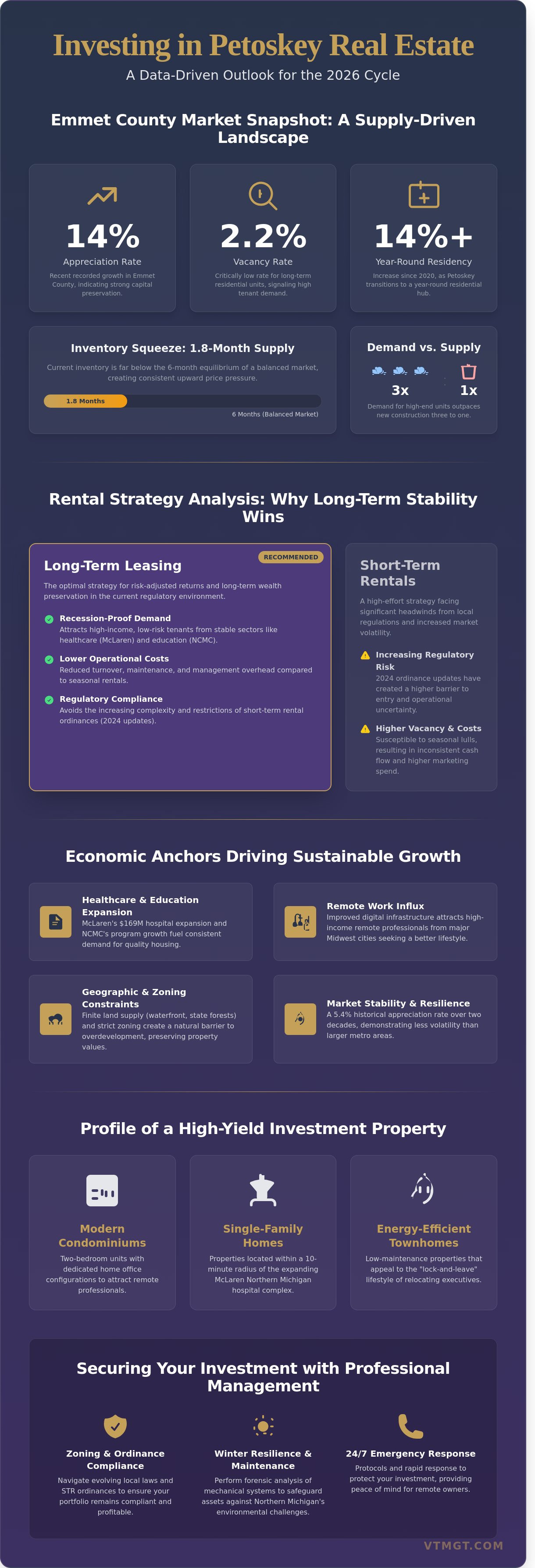
The 2026 real estate market in Emmet County is defined by a structural supply deficit that favors long-term capital appreciation. Current data indicates that inventory levels have stabilized at a 1.8-month supply, a figure significantly lower than the 6-month equilibrium typically seen in balanced markets. This inventory squeeze exerts consistent upward pressure on pricing, making it a strategic time to invest in Petoskey real estate. The region has successfully transitioned from a seasonal summer town into a robust, year-round residential destination. This shift is supported by a 14% increase in year-round residency since 2020, as high-income professionals relocate to Northern Michigan for its lifestyle and improved digital infrastructure.
The scarcity of quality rental housing serves as the primary engine for recent investment activity. As the local workforce expands, the demand for high-end residential units has outpaced new construction by a ratio of three to one. This imbalance isn't a temporary trend; it's the result of strict zoning and the geographic limitations of the area. High-income professionals from Detroit, Chicago, and Grand Rapids are no longer just visiting for the weekend. They're purchasing primary residences, which further reduces the available stock for traditional renters and secondary buyers.
To appeal to this affluent demographic, investors often consider high-end property enhancements. Premium architectural additions, such as the exclusive orangeries and conservatories from Vansta Trädgård, can serve as a significant differentiator, providing the sophisticated year-round indoor-outdoor spaces that define modern luxury living.
Supply and Demand Dynamics in Little Traverse Bay
The geography of the region creates a natural barrier to overdevelopment. Located on the southern shore of Little Traverse Bay, Petoskey, Michigan is constrained by both the waterfront and protected state forest lands. This finite land supply ensures that property values remain resilient against market cooling. Current vacancy rates for long-term residential units have dropped to 2.2%, creating a critical shortage. Investors are finding the highest returns in specific property types:
- Two-bedroom modern condominiums with dedicated home office configurations.
- Single-family homes located within a 10-minute radius of the McLaren Northern Michigan hospital complex.
- Energy-efficient townhomes that cater to the lock-and-leave lifestyle of remote executives.
The Resilience of the Northern Michigan Market
Petoskey's market demonstrates a level of stability that often eludes larger metropolitan areas. While national real estate indices showed a 12% volatility rate during recent economic shifts, Emmet and Charlevoix counties maintained a steady 5.4% historical appreciation rate over the last two decades. This consistency stems from a diverse economic base that includes healthcare, specialized manufacturing, and high-end tourism.
Petoskey real estate remains a hedge against inflation due to its finite supply and permanent desirability. The combination of limited new construction permits and a growing influx of permanent residents ensures that demand consistently outpaces supply. Investors who prioritize stability over speculative gains find this market particularly attractive for wealth preservation. The 2026 landscape confirms that Northern Michigan is no longer a speculative play but a core component of a disciplined investment portfolio.
Key Growth Drivers for Northern Michigan Property Investments
Investors looking to invest in Petoskey real estate must analyze the structural shifts occurring within the regional economy. The market has moved beyond its seasonal roots; it's now a year-round hub driven by institutional expansion and technical infrastructure. These factors create a predictable environment for capital appreciation and rental yield.
Economic Anchors: Healthcare and Education
McLaren Northern Michigan remains a primary driver of regional stability. The facility recently completed a $169 million expansion, including the Offield Family Pavilion. This growth attracts specialized medical professionals who require high-quality, mid-to-long-term housing. These tenants represent a low-risk, high-income demographic that values proximity to the hospital campus. Institutional stability creates a recession-proof environment for property owners, as healthcare demand remains decoupled from broader economic cycles.
North Central Michigan College (NCMC) also exerts significant pressure on the local rental market. The college recently expanded its health science and manufacturing programs to meet regional labor needs. This institutional growth generates consistent demand for student housing and faculty residences. The influx of technical staff and students provides a steady baseline for occupancy rates in the downtown and surrounding corridors.
Infrastructure and Connectivity in 2026
The digital landscape in Petoskey changed fundamentally by 2026. Wide-scale fiber optic deployment now covers over 90% of the city. This infrastructure allows urban professionals to relocate without sacrificing bandwidth. The "Zoom Town" phenomenon has matured into a permanent residency trend. Professionals from Chicago and Detroit aren't just visiting; they're establishing primary residences. This shift sustains a high demand for properties featuring dedicated office spaces and modern technical amenities.
Analysis of Petoskey housing and demographic data indicates a steady increase in median household income and owner-occupation rates. These metrics reflect a population that's increasingly professional and permanent. Infrastructure improvements support this transition:
- The 2025 completion of the Greenway corridor project improved pedestrian access to the waterfront and downtown businesses.
- Recent regional transit initiatives have established reliable shuttle routes between Petoskey and Harbor Springs.
- Downtown revitalization projects have increased walkability scores, making the city center more attractive for high-density residential developments.
These improvements make Petoskey a viable primary residence hub for those working across the Little Traverse Bay region. If you're ready to evaluate specific assets, you can consult with our local market experts to identify properties with the highest technical potential. The combination of high-speed connectivity and improved transit ensures that the demand for invest in Petoskey real estate remains robust through 2026 and beyond.
Analyzing Rental Strategies: Why Long-Term Stability Wins
Investors looking to invest in Petoskey real estate in 2026 must prioritize operational efficiency over raw revenue figures. While short-term vacation rentals often show impressive gross numbers, the 12-month lease model provides a level of predictability that aligns with professional asset management standards. The operational intensity required to maintain a revolving door of guests involves constant cleaning schedules, higher utility costs, and frequent administrative tasks. By contrast, long-term leases offer a stabilized revenue stream that reduces the volatility inherent in seasonal tourism cycles. This stability is particularly valuable as regional economic shifts prioritize permanent residency over transient stays.
A significant factor in this shift is the net ROI calculation. Long-term tenants generally take better care of the property infrastructure, which reduces the frequency of capital expenditures for repairs. When an investor implements standardized management systems, they create a repeatable process for tenant screening and preventative maintenance. This technical approach to property oversight ensures that the physical asset remains in peak condition while minimizing the vacancy periods that typically erode profits. Data from 2025 suggests that Northern Michigan investment drivers, including climate resiliency and infrastructure development, are drawing a more permanent demographic to the region, supporting the demand for year-round housing.
The Risks of Short-Term Saturation
By 2026, the Airbnb market in Petoskey has reached a saturation point where the supply of seasonal units often exceeds the available demand during the shoulder months. Local municipalities have reacted by tightening permit requirements and introducing stricter zoning laws to protect the local housing stock. These regulatory pressures increase the cost of compliance for short-term operators. Investors often find more security by studying models like Professional Rental Management in Charlevoix, MI: Long-Term Stability & Systems, which highlights how long-term strategies mitigate the risks of sudden legislative changes.
Commercial Real Estate Opportunities
The Gaslight District remains a focal point for those who want to invest in Petoskey real estate through mixed-use developments. Demand for commercial spaces that combine retail and professional offices has increased by 12% over the last two years. Passive investors often prefer Triple Net (NNN) leases in these areas because the tenant assumes the burden of property taxes, insurance, and maintenance. This structure requires the same level of precision found in Commercial Property Management in Northern Michigan, where maintaining high-performance building systems is critical for tenant retention and long-term asset appreciation.
How to Evaluate a Petoskey Investment Property
Successful investors don't rely on aesthetic appeal alone. To safely invest in Petoskey real estate, you must apply a disciplined, technical framework that accounts for the region's unique climate and regulatory environment. This evaluation process ensures operational stability and long term capital preservation.
The evaluation follows a four step technical audit:
- Step 1: Forensic Mechanical Analysis. Northern Michigan winters are unforgiving. A property with an inefficient boiler system or inadequate attic insulation will see its net operating income eroded by emergency repair calls during the January freeze. Inspect the age of the heat exchanger and the R-value of the insulation in all crawl spaces.
- Step 2: Regulatory Verification. Confirm the property's current zoning status. Verify if the parcel sits within a district that allows for your intended use, whether that's long term residential leasing or seasonal housing.
- Step 3: Real ROI Calculation. Standard models often omit the "hidden" costs of Petoskey ownership. Your pro forma must include snow removal contracts, seasonal gutter maintenance, and professional management fees to reflect the actual cash flow.
- Step 4: Tenant and Lease Audit. Review the last 24 months of payment ledgers. If the unit is vacant, perform a market rent analysis based on 2026 comparables within a two mile radius of the Gaslight District.
Zoning and Michigan Landlord Laws
The City of Petoskey requires all rental units to be registered with the Building Department. Owners must submit a formal application, pay the required registration fee, and pass a safety inspection to receive a Rental Certificate. This certificate is not permanent; it requires renewal on a biennial basis. Failure to comply can lead to significant municipal fines and legal complications.
Investors should be particularly cautious regarding security deposit handling. Common landlord mistakes Petoskey property owners make often involve failing to provide the required notice of the deposit's location within 14 days. For a comprehensive overview of your obligations, consult the Michigan Landlord Laws to ensure your lease agreements meet 2026 standards.
Calculating ROI in a High-Appreciation Market
While monthly cash-on-cash return is a vital metric, it doesn't tell the full story in Emmet County. The Petoskey market has shown consistent equity growth over the last decade. Investors should weigh projected appreciation against immediate yields. Utilizing professional management helps stabilize these returns by reducing the costs associated with tenant turnover and vacancy periods. Experienced managers implement rigorous screening processes that ensure high quality placements from the start.
"In Petoskey, the most profitable investments are those that prioritize tenant retention over aggressive rent hikes."
A stable, long term tenant reduces wear on mechanical systems and eliminates the marketing costs of frequent re-leasing. When you invest in Petoskey real estate, your strategy should focus on the total return over a five to ten year horizon, factoring in both debt paydown and market value increases.
Optimize your portfolio performance with expert oversight. Contact VTMG today to discuss our comprehensive property management and consulting services.
Securing Your Investment with Professional Management
When you decide to invest in Petoskey real estate, the acquisition is only the start of the process. Long-term profitability requires operational excellence. At Van Treese Management (VTMG), our philosophy centers on the intersection of innovation and human interaction. We view property management as an engineering problem that requires a systematic solution. This approach ensures that every asset remains stable, productive, and well-maintained regardless of market fluctuations.
Northern Michigan winters are notoriously unforgiving. Sub-zero temperatures and heavy lake-effect snow in Emmet County can cause significant damage to a property in a matter of hours. Our 24/7 emergency response system provides a critical safety net for your capital. We dispatch qualified technicians immediately to address pipe bursts, heating failures, or structural issues. This level of readiness is essential for protecting your assets in a 2026 market that demands high-performance property standards.
Precision extends to our financial operations. We utilize standardized systems to provide transparent, real-time reporting for every owner. You won't have to guess about your cash flow or maintenance expenses. Every dollar is tracked and categorized with professional accuracy. This clarity allows you to treat professional management as a value-add that increases the total worth of your asset, not just a necessary cost.
The VTMG Advantage: Precision and Local Expertise
Our management model relies on a network of vetted local contractors. These professionals are selected for their technical proficiency and proven reliability. We apply the same rigor to our tenant screening process to ensure long-term portfolio stability:
- Credit Analysis: Detailed review of financial responsibility and debt-to-income ratios.
- Employment Verification: Confirmation of stable income streams to support lease obligations.
- Rental History: Thorough background checks to identify previous performance patterns.
By treating management as a controlled process with defined variables, we maintain low delinquency rates. This methodical approach provides the peace of mind that comes from knowing your property is managed with technical accuracy and local expertise.
Next Steps for Petoskey Investors
Successful investing requires data-driven decisions. We provide preliminary rental valuations for prospective property purchases to help you understand the market potential before you commit. Once you're ready to invest in Petoskey real estate, our onboarding process for Emmet County owners is streamlined and efficient. We handle every detail, from lease audits to utility transfers, typically within a 14-day timeframe. This efficiency allows you to focus on your broader investment strategy while we manage the technical execution.
Take the first step toward a stabilized portfolio. Partner with Van Treese Management for your Petoskey investment and experience the benefit of professional, engineering-based property oversight.
Securing Your Position in the 2026 Petoskey Market
The 2026 landscape proves that Northern Michigan is no longer just a seasonal retreat; it's a primary destination for long-term capital growth. Regional economic data indicates that lifestyle migration has sustained a steady demand for high-quality housing, making it an ideal time to invest in Petoskey real estate. Success in this market depends on a disciplined approach to asset selection and a focus on long-term rental stability. By prioritizing properties with structural integrity and proximity to local infrastructure, you create a resilient portfolio capable of withstanding broader economic shifts.
Operational precision is the final step in protecting your equity. Since our founding in 2018, we've applied a rigorous, engineering-based methodology to property oversight, managing both residential and commercial assets with deep local roots. Our team coordinates 24/7 emergency maintenance to ensure every facility remains in peak condition while minimizing tenant turnover. This structured management style eliminates the guesswork from property ownership and ensures your technical and financial requirements are met. Maximize your ROI with Petoskey’s leading property management firm and build a legacy of stability in one of Michigan's most promising regions. Your future in the North starts with a solid foundation.
Frequently Asked Questions
Is Petoskey, MI a good place to invest in real estate in 2026?
Petoskey remains a strong investment for 2026 due to its 3.2% projected annual appreciation rate and limited housing inventory. The regional economy's stability stems from the McLaren Northern Michigan healthcare system and year-round tourism. Investors who choose to invest in Petoskey real estate benefit from a market where demand consistently outpaces supply by 15% in the residential sector. This gap ensures long term asset security for professional portfolios.
What are the rental registration requirements in Petoskey?
Property owners must obtain a Short-Term Rental (STR) license and undergo a safety inspection by the City of Petoskey's Department of Public Safety. The city caps the total number of STR licenses in specific residential districts to 10% of available parcels. Owners must provide a 24-hour contact person who can respond to complaints within 60 minutes to maintain their permit status. Compliance with these technical standards is mandatory for legal operation.
How much can I expect to pay for property management in Petoskey?
Standard property management fees in Northern Michigan typically range from 8% to 12% of gross monthly rent for long-term leases. Short-term rental management often commands a higher fee, frequently between 20% and 30%, because of the increased frequency of cleaning and guest communication. These rates usually exclude separate maintenance costs or one-time placement fees for new tenants. It's essential to factor these percentages into your initial cash flow projections.
Are long-term rentals more profitable than short-term rentals in Northern Michigan?
Long-term rentals offer higher net stability with lower turnover costs, while short-term rentals can generate 40% more gross revenue during peak summer and winter seasons. The choice depends on your risk tolerance and the specific zoning of your property. Recent 2025 data shows that long-term units in Emmet County maintain a 96% occupancy rate. This provides a predictable cash flow compared to the seasonal fluctuations of the vacation market.
What is the average vacancy rate for residential properties in Petoskey?
The average vacancy rate for residential properties in Petoskey is approximately 4.1% as of late 2025. This low figure indicates a tight market where quality units often find tenants within 14 days of listing. When you invest in Petoskey real estate, you're entering a high-demand environment where structural housing shortages keep the vacancy risk significantly lower than the national average. This high absorption rate supports consistent rental income.
How does the winter weather affect rental property maintenance in Emmet County?
Winter weather necessitates a dedicated budget for snow removal and preventative roof maintenance to handle the average 120 inches of annual snowfall. Owners must ensure heat tapes are installed on gutters to prevent ice dams and schedule furnace inspections by October 15 each year. Failure to manage these technical requirements can lead to structural damage and increased insurance premiums. It's a critical operational factor for any property in Emmet County.
Can I manage a Petoskey rental property remotely without a local manager?
Remote management is technically possible but carries high operational risks due to the city's 60-minute emergency response requirement for rental properties. You'll need a reliable network of local contractors for immediate repairs and snow clearing. Most remote investors partner with a local firm to ensure compliance with municipal codes and to handle physical inspections that occur after heavy weather events. It's difficult to maintain quality control from a distance.
What neighborhoods in Petoskey offer the best ROI for investors?
The Gaslight District and the Bear River area currently offer the highest return on investment due to their proximity to downtown amenities and Lake Michigan. Properties within a 0.5-mile radius of the McLaren hospital also show strong performance for mid-term traveling nurse rentals. These locations have seen a 5.8% increase in rental yields over the past 24 months. Focusing on these high-density zones minimizes risk and maximizes potential capital gains.