
Managing Rental Property Repairs from Afar: A Systematic Guide for 2026
What if the distance between you and your investment wasn't a liability, but the catalyst for a more efficient, automated maintenance system? Most property owners fear that "out of sight" leads to "out of mind" neglect, resulting in degraded assets and inflated emergency bills. It's a common concern, especially when you consider that maintenance costs for rental properties have increased by up to 25% since 2023. You shouldn't have to struggle with vetting contractors from hundreds of miles away while worrying about whether they'll actually show up or overcharge you for a simple fix. We understand the pressure of protecting a long term asset when you aren't there to walk the halls yourself.
The secret to successfully managing rental property repairs from afar lies in moving away from reactive fixes and toward a standardized engineering framework. You'll discover a professional, systems-based approach to coordinating remote maintenance and repairs without losing control or overpaying for labor. We've designed this guide to help you lower the stress of emergency calls while ensuring your property's value remains secure through disciplined oversight. We will outline how to build a reliable local network, implement rigorous inspection protocols, and utilize modern technology to maintain transparency across every project.
Key Takeaways
- Bridge the "Remote Maintenance Gap" by implementing a three-pillar ecosystem consisting of integrated communication technology, reliable local expertise, and standardized reporting protocols.
- Establish a rigorous "Trust but Verify" framework that utilizes mandatory photo documentation and completion certificates to ensure quality control without physical site visits.
- Implement specialized seasonal protocols for Northern Michigan, focusing on snow load management and comprehensive winterization to mitigate regional climate risks.
- Learn how a structured approach to managing rental property repairs from afar protects your investment's ROI by eliminating the hidden costs of delayed maintenance and unverified invoices.
- Evaluate the transition from a disorganized DIY remote model to a professional maintenance coordination system designed for long-term operational stability and asset protection.
The Challenges of Managing Rental Property Repairs from Afar in 2026
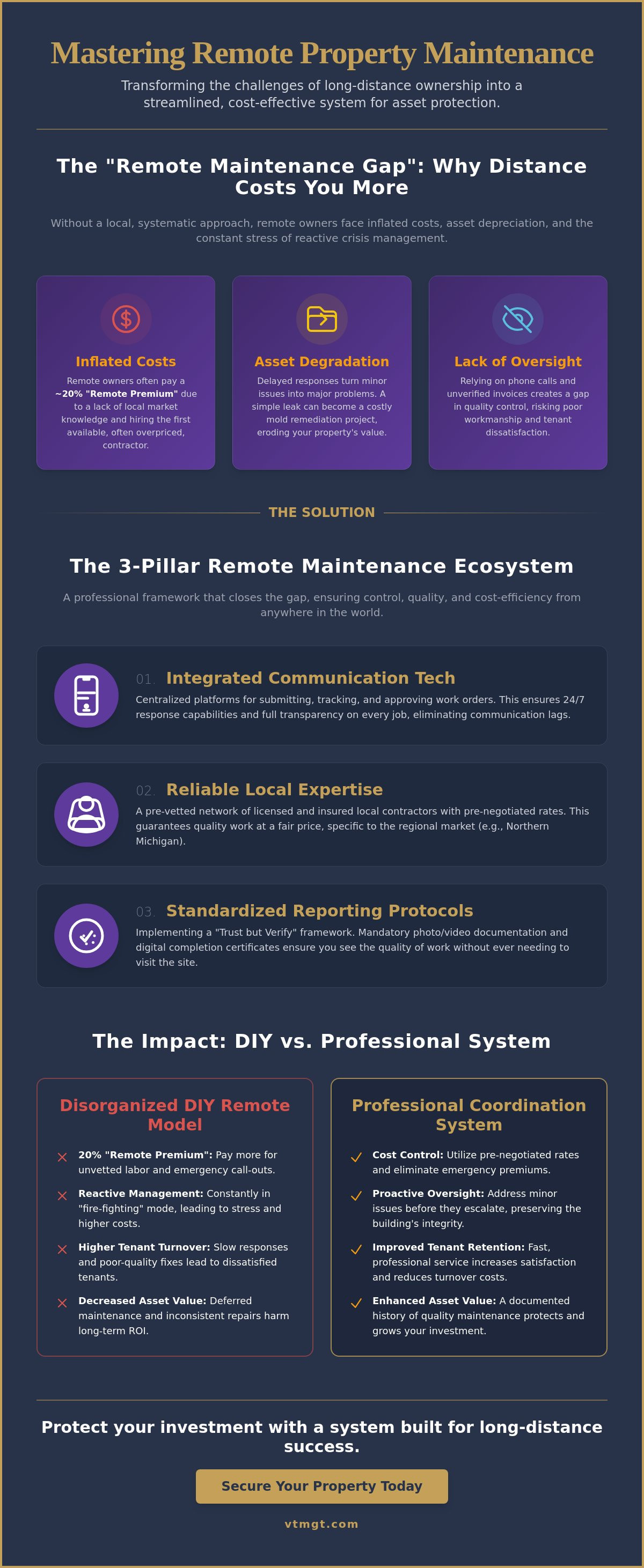
Owners operating from a distance often encounter what we define as the "Remote Maintenance Gap." This is the critical disconnect between a tenant's reported issue and the owner's ability to verify the scope, cost, and quality of the required solution. This gap directly impacts your return on investment through inflated repair costs and accelerated asset depreciation. Successfully managing rental property repairs from afar requires moving past the "neighbor with a ladder" model and adopting a structured engineering framework that prioritizes data over hearsay. Without a standardized system, distance becomes a catalyst for operational friction and financial loss.
The geography of Northern Michigan complicates traditional repair models. In regions like Petoskey or Boyne City, specialized trades are often concentrated in specific hubs, meaning travel time and logistical coordination become significant cost drivers. A lack of local oversight often forces remote owners into a reactive "emergency" mode. This shift from proactive maintenance to crisis management is where most long-distance owners lose control of their budget. Shifting to a proactive system management approach ensures that minor technical issues are resolved before they compromise the building's structural integrity.
The Logistics of Long-Distance Oversight
Relying on "telephone-tag" for maintenance coordination creates dangerous operational lags. When an owner is out of state, a delay in emergency response isn't just an inconvenience; it can be a violation of the legal standards outlined in Landlord-tenant law. These regulations often mandate specific timeframes for restoring essential services like heat or water. Furthermore, sending unvetted contractors into a tenant's home without physical supervision introduces significant liability risks. A professional system replaces these uncertainties with verified credentials and 24/7 response protocols that protect both the tenant and the property owner's legal standing.
Economic Impact of Poor Remote Maintenance
The financial toll of inadequate oversight is rarely limited to the repair bill itself. We observe a "Remote Premium" where DIY remote owners often pay approximately 20% more for repairs compared to those with local coordination systems. This occurs because remote owners lack local market pricing benchmarks and often hire the first available contractor regardless of their rate structure. Consider the following economic factors:
- Compound Failure: A small plumbing leak left unaddressed due to communication delays can evolve into a structural mold remediation project within days.
- Tenant Retention: There's a direct correlation between repair speed and tenant satisfaction. High turnover rates caused by slow maintenance responses significantly degrade long-term ROI.
- Asset Valuation: Consistent, documented maintenance prevents the "deferred maintenance" discount that often plagues properties managed from a distance during eventual resale.
Maintaining a property from a distance doesn't have to mean relinquishing control. By understanding these logistical and economic hurdles, you can begin implementing the systematic oversight necessary to protect your investment's value.
Building a Reliable Remote Maintenance Ecosystem
Success in managing rental property repairs from afar depends on a three-pillar foundation: communication technology, local operational presence, and standardized reporting. Without these components, remote owners often fall victim to scope creep, where a simple gasket replacement unexpectedly balloons into a full plumbing overhaul. Establishing a "Preferred Vendor List" with pre-negotiated rates and clear technical specifications is the first step toward reclaiming control over your maintenance budget. This system ensures every contractor understands the quality standards and pricing benchmarks expected for your specific asset. It eliminates the need for constant negotiation and allows for faster deployment of trades when issues arise.
Sourcing and Vetting Local Contractors
In markets like Petoskey, relying on general handyman solutions for complex remote assets is a high-risk strategy. Professional vetting requires verifying general liability insurance and state-specific licensing before any work order is issued. Since you can't meet on-site, conduct remote interviews focusing on response times and willingness to follow documentation protocols. This structured approach ensures you find a long-term partner who understands your quality standards and reporting requirements.
The Tech Stack for Remote Repair Management
Technology serves as your eyes on the ground. Utilizing cloud-based portals allows for real-time repair tracking, ensuring every stage is documented and timestamped. High-resolution photo and video documentation are now the primary verification tools for remote oversight. Integrating smart home sensors, such as Wi-Fi-enabled leak detectors, provides a proactive defense against environmental damage. Efficient maintenance coordination integrates these tools with human expertise to maintain asset integrity.
Every repair must begin with a standardized work order. This document should define the exact scope of work, the maximum authorized expenditure, and the required completion timeframe. By requiring vendors to sign off on these parameters before starting, you eliminate the ambiguity that often leads to overcharging in remote scenarios. A systematic work order process is the most effective way to maintain financial transparency when managing rental property repairs from afar. This disciplined approach to documentation ensures that the final invoice aligns perfectly with the initial project parameters, preventing unauthorized "add-ons" that drain your ROI. It creates a clear paper trail for financial reporting and future asset assessments.
The Trust but Verify Framework: Documenting Remote Repairs
Managing rental property repairs from afar requires a shift from verbal confirmation to empirical evidence. A "Trust but Verify" framework eliminates the ambiguity of remote maintenance by mandating specific documentation for every work order issued. We require contractors to provide a comprehensive digital trail that includes "Before, During, and After" photography. This isn't just about proof of work; it's about building a technical archive of the property's condition over time. When you can't be on-site to inspect a new roof or a furnace repair, these visual records serve as your primary quality control mechanism. Standardizing this requirement ensures that every vendor knows their work will be scrutinized before an invoice is approved.
The Documentation Standard
High-quality documentation must include metadata such as GPS-tagged site visits and time-stamped photos. This technical data ensures the service provider was physically present at the asset during the reported billing hours. Standardizing these requirements helps maintain strict compliance with Michigan landlord laws, which require owners to prove that habitability issues were addressed within specific timeframes. Using standardized checklists for recurring systems, such as HVAC or plumbing, ensures that no critical inspection points are overlooked. For example, a plumbing repair shouldn't just show a fixed pipe; it should include a photo of the dry area 24 hours later to confirm the leak hasn't returned.
Financial Controls and Auditing
Financial transparency is maintained through "Not-to-Exceed" (NTE) limits on all work orders. This prevents unauthorized scope expansion and forces contractors to request approval before costs escalate beyond the agreed-upon threshold. Auditing these invoices against local market rates in Northern Michigan is essential for cost containment. While the average handyman rate in Michigan is approximately $22.21 per hour as of May 2026, specialized trades like HVAC or electrical work command higher premiums. Linking this documentation directly to your financial reporting ensures that every dollar spent is justified by a verified completion certificate. This prevents the "remote tax" often applied to out-of-town owners who lack local pricing benchmarks.
For high-ticket repairs or complex structural issues, third-party verification adds an extra layer of security. We also recommend conducting remote "walk-throughs" via tenant video calls once a project is finished. This allows you to see the final result in real-time and confirms tenant satisfaction before the final payment is released. This multi-layered verification process ensures that managing rental property repairs from afar remains a controlled, data-driven operation rather than a series of expensive guesses.
Regional Specifics: Seasonal Maintenance in Northern Michigan
Managing rental property repairs from afar in Northern Michigan demands a technical understanding of the region's unique environmental pressures. In locations like Petoskey and Boyne City, the combination of heavy snow loads and aggressive freeze-thaw cycles creates structural risks that standard maintenance plans often overlook. Preventing ice dams requires more than just basic insulation; it necessitates a systematic review of roof ventilation and heat tape performance before the first snowfall. For the remote owner, these aren't just seasonal chores but critical interventions to preserve the asset's structural integrity against Lake Michigan's brutal climate. A failure to address these regional specifics can lead to catastrophic water damage that compromises the entire building envelope.
Winter Readiness Systems
Engineering a winter-ready property starts with professional furnace certifications well before the first frost. We prioritize remote monitoring systems that track pipe temperatures in vacant units, providing real-time data to prevent the expensive reality of burst pipes. Vetting snow removal contractors is equally vital, as reliability and liability insurance are non-negotiable when local snowfall regularly exceeds several feet. A failed plow schedule isn't just a tenant inconvenience; it's a significant liability risk and a potential violation of local municipal ordinances. Implementing these systems ensures that managing rental property repairs from afar remains a controlled process even during the most severe winter storms.
Preventative Maintenance Cycles
Following a comprehensive seasonal maintenance checklist is the only way to ensure nothing is missed across high-latitude portfolios. Spring thaw inspections are mandatory to identify foundation shifts or crawl space humidity issues common in Emmet County. These high-moisture environments require specific drainage solutions and vapor barrier checks to prevent mold growth during the warmer months. Additionally, managing landscaping and curb appeal from a distance ensures the property remains competitive during the summer turnover surge, which is particularly intense in the vacation-heavy areas of Northern Michigan. Catching foundation or drainage issues early in the spring prevents them from becoming major structural repairs in the fall.
Maintaining a property in this climate requires local expertise and a disciplined approach to oversight. If you need professional assistance with your portfolio, consider our Residential Property Management services to ensure your asset remains protected year-round. By integrating regional environmental data into your maintenance schedule, you move from reactive crisis management to a stable, long-term preservation strategy.
Professional Coordination: Why a Local Management System Wins
The transition from a DIY remote model to a professional system marks the difference between reactive crisis management and disciplined asset preservation. Managing rental property repairs from afar without a local infrastructure often results in fragmented communication and inconsistent workmanship. A professional maintenance coordination framework replaces this uncertainty with a structured engineering approach. By implementing standardized protocols, we transform maintenance from a series of stressful, high-cost interruptions into a predictable and manageable business expense. This shift allows you to focus on portfolio growth while we maintain the technical integrity of your existing assets.
Local response capability is a critical component of any remote ownership strategy. In the event of an emergency, the speed of resolution directly determines the extent of potential property damage and the associated repair costs. While a remote owner might spend hours attempting to contact unvetted vendors from a distant zip code, a local management system utilizes established relationships and pre-negotiated service agreements to stabilize the situation. Having a physical presence in Northern Michigan ensures that every repair is verified on-site, providing a level of quality control that a screen or a phone call simply cannot replicate. It's about maintaining a constant, professional watch over your investment's most vital systems.
The Van Treese Advantage
Our methodology is rooted in what we call "Systemized Management." We don't just facilitate repairs; we manage a vetted network of Northern Michigan contractors who have proven their reliability and technical proficiency. Every work order issued through our system follows a rigorous, non-negotiable path from the initial tenant request to the final completion certificate. We provide total transparency through our owner portal, where you can access detailed financial reporting and photographic evidence of all work performed. This data-driven approach ensures you maintain full visibility into your asset's operational health without the logistical burden of daily oversight. We treat your property with the same precision and professional humility that we apply to our own corporate standards.
Next Steps for Remote Owners
If you're currently managing your own remote repairs, we recommend a thorough audit of your current maintenance process. Identify recurring delays, inconsistent vendor pricing, or instances where documentation was insufficient for tax or legal purposes. Transitioning from a self-managed model to professional oversight is a strategic investment in your property's long-term valuation and your own operational stability. Our team is prepared to integrate your portfolio into our proven maintenance and reporting systems. Schedule a consultation with Van Treese Management to discuss how we can bring engineering-grade precision and local accountability to your rental property strategy.
Securing Long-Term Asset Stability Through Systemized Oversight
Successfully managing rental property repairs from afar requires a transition from reactive crisis management to a disciplined, systems-based approach. By implementing a "Trust but Verify" framework and adhering to regional seasonal protocols, you ensure your Northern Michigan assets remain protected regardless of your physical location. We've established that technical documentation and a vetted local presence are the only reliable defenses against rising maintenance costs and environmental risks. Transitioning to professional coordination allows you to treat your property portfolio as a stable, predictable business rather than a source of constant logistical friction.
You don't have to navigate these technical complexities alone. Our team provides the stability and precision required to maintain your portfolio's value through every season. We offer 24/7 emergency response coordination and a vetted network of local Northern Michigan contractors to ensure every work order is executed to high professional standards. With our standardized reporting and photo documentation, you'll have complete transparency into every repair phase without needing to be on-site. Let Van Treese Management handle your Northern Michigan maintenance today and secure the long-term health of your investment with engineering-grade oversight. Your property is a significant asset; it deserves the protection of a dedicated, local partner.
Frequently Asked Questions
How do I find reliable contractors for my rental property when I live out of state?
Finding reliable contractors requires a systematic vetting process through local trade associations and professional directories in Northern Michigan. You should verify general liability insurance and state licensing before authorizing any work order. It's also effective to cross-reference local business bureau ratings to ensure the vendor has an established reputation for technical proficiency and reliability within the specific market.
What is the best way to verify that a repair was actually completed correctly?
The most effective verification method involves mandatory "Before, During, and After" photo documentation with GPS-tagged metadata. This technical data confirms the contractor was physically present at the asset during the reported billing hours. You can also conduct a live video walk-through with the tenant to confirm the fix is operational before releasing the final payment to the vendor.
Should I give my tenants a list of preferred contractors for emergencies?
Providing tenants with a direct contractor list is generally discouraged because it removes your oversight and control over repair costs. Instead, establish a centralized reporting system where you or your manager coordinates the response. This ensures that only vetted trades enter the building and that every work order follows your specific technical and financial protocols to prevent unauthorized expenses.
How much should I set aside for a maintenance reserve for a remote rental?
Industry benchmarks suggest setting aside 1% to 3% of the property's value annually for a maintenance reserve. However, typical maintenance costs increased by up to 25% between 2023 and 2026. This data suggests that remote owners should maintain a more robust reserve to handle the rising labor costs associated with specialized trades like HVAC, plumbing, and electrical work in Northern Michigan.
Can I manage property repairs myself using just smart home technology?
Smart home technology serves as a critical diagnostic tool, but it cannot replace the physical labor required for repairs. While Wi-Fi-enabled sensors detect leaks or furnace failures early, managing rental property repairs from afar still requires a local human partner to execute the physical solution. Technology provides the necessary data, but a local team provides the technical execution and quality control.
What are the most common remote maintenance mistakes landlords make?
The most frequent errors include reactive maintenance and failing to verify contractor credentials. Many landlords also suffer from a lack of documentation because they rely on verbal confirmations rather than photographic evidence. These mistakes lead to compound structural failures and the "Remote Premium," where owners pay significantly more than local market rates for basic services due to a lack of oversight.
Is it cheaper to hire a property manager or manage repairs from afar myself?
Professional management is often more cost-effective when you factor in the 20% "Remote Premium" typically paid by DIY owners. Professional coordination systems utilize volume-based relationships with vetted vendors and prevent scope creep through standardized work orders. This systematic approach ensures managing rental property repairs from afar remains a predictable business expense rather than a series of costly, unverified emergencies.
How do Michigan landlord-tenant laws affect how I handle repairs?
Michigan landlord-tenant laws mandate that landlords address hazardous conditions within specific timeframes, often as little as 48 hours for essential services. Recent legislative updates, such as the 2025 source of income protections, increase the complexity of property oversight. Staying compliant requires a disciplined maintenance system that documents every repair to prove the property meets all habitability standards and legal requirements in the event of a dispute.