
Finding a Property Manager for Small Apartments: 2026 Guide

A small apartment building doesn’t need the biggest property manager. It needs clear systems and accountable attention. When finding a property manager for a small apartment building, ask whether your property will receive consistent oversight and who will handle tenant communication, maintenance coordination, and financial reporting. Get specific answers before handing over day-to-day operations.
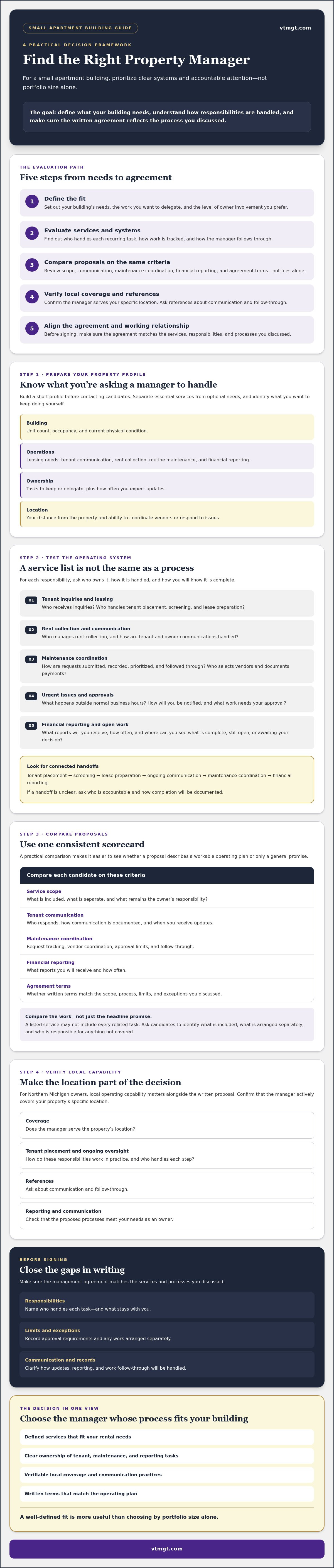
A practical evaluation process can help you compare managers on the same criteria. This guide explains how to identify services that fit your building and ownership goals, review proposals against operational needs, and check how each firm handles routine responsibilities. You’ll also learn what to clarify in the management agreement before signing.
For Northern Michigan owners, local operating capability matters as much as the written proposal. Assess whether a manager covers your property’s location, how tenant placement and ongoing oversight work, and whether the reporting and communication processes meet your needs. The aim is to make an informed decision based on defined services and verifiable processes, not portfolio size alone.
Key Takeaways
- Define your building’s rental needs and the level of owner involvement you want before contacting managers.
- When finding a property manager for a small apartment building, assess how responsibilities are handled in practice, not just what a proposal promises.
- Compare proposals across service scope, tenant communication, maintenance coordination, financial reporting, and agreement terms.
- Confirm that the manager serves your property’s specific location, then ask references about communication and follow-through.
- Before signing, make sure the management agreement matches the services and processes you discussed.
Finding a Property Manager for a Small Apartment Building: Define the Fit
Before comparing managers, define what your building needs and what you want to continue handling yourself. Start with the property’s rental use, the outcomes you value, and the recurring tasks currently taking your time. A general overview of Property management can help frame the range of responsibilities, but your building’s needs should guide the search.
Prepare a short property profile before contacting candidates:
- Building: Unit count, occupancy, and current physical condition.
- Operations: Leasing needs, tenant communication, rent collection, routine maintenance, and financial reporting.
- Ownership: Tasks you want to keep or delegate, and how often you expect updates.
- Location: Your distance from the property and your ability to coordinate vendors or respond to issues.
Separate essential services from optional ones. You may need ongoing tenant communication and financial reporting, but only need tenant placement when a unit becomes vacant. Maintenance coordination may be important if you don’t have established vendors, or less central if you already manage that process. Ask managers to identify what’s included, what’s available separately, and which responsibilities remain yours. For regional context, see the Petoskey property management guide.
What does a small apartment building need from a manager?
Map each recurring task to a person and a process. Who receives tenant inquiries? Who manages leasing and rent collection? How are maintenance requests recorded, prioritized, and followed through? What financial reports will you receive, and how often? Even a smaller property benefits from defined workflows. Consistent records and communication make it easier to see what’s complete, what remains open, and where you need to make a decision.
Is a property manager the right fit for your building?
Compare the time you can reliably give the property with its recurring workload, including vacancy coordination, tenant communication, and maintenance follow-up. Consider how far you live from the building, whether you’re comfortable coordinating vendors, and what the manager does when an urgent issue arises outside normal business hours. Don’t assume a building is too small to qualify. Ask how prospective managers assess fit, which services they can provide, and whether they actively cover your property’s location.
How to Evaluate a Small-Building Property Manager’s Services and Systems
Once you’ve defined your building’s needs, evaluate each candidate in the same order: confirm the service scope, learn how work is handled, verify local coverage, and then compare written proposals. This helps distinguish a detailed operating plan from a general promise of management. Look for clear accountability, documented communication, and processes suited to your building. The National Association of REALTORS® provides broader context on property management issues, but a manager’s proposed procedures should address your property specifically.
Ask who handles tenant inquiries, leasing, rent collection, routine maintenance, and urgent issues outside regular business hours. Clarify how tenants submit requests, how the manager tracks open work, and when an issue is referred to you. Don’t assume that a listed service includes every related task. Maintenance coordination, for example, may cover arranging work, while approval limits, vendor selection, and payment documentation may be addressed separately in the agreement.
Which management services should the proposal spell out?
Separate ongoing oversight from one-time tenant placement and leasing. Confirm whether tenant screening, lease preparation, and rent collection are included, and who is responsible for each step. Ask whether maintenance coordination and vendor oversight are part of the proposed scope or arranged separately. For emergencies, clarify the response process, how you’ll be notified, and which work requires your approval. Record any limits or exceptions so you can compare candidates accurately.
Look for connected steps, not just a list of services. Tenant placement, screening, lease preparation, ongoing communication, maintenance coordination, and financial reporting should have clear handoffs. If the proposal leaves a gap, ask who is accountable for that task and how its completion will be documented.
How can owners assess communication and reporting?
Ask how often you’ll receive updates, where owner statements and expense records will be available, and how supporting documents are organized. Identify your primary contact and the process for escalating an unresolved issue. If available, request a sample report with confidential information removed. Check whether it clearly shows income, expenses, and outstanding items. Ask how the manager addresses discrepancies and follows up on incomplete work.
Use the answers to compare proposals on equal terms, including scope, procedures, reporting, local coverage, and agreement details. You can then review Van Treese Management's residential management services and assess whether the stated scope aligns with your building’s needs. Verify current service-area coverage and confirm all included services in the management agreement before signing.
Compare Property Management Proposals Without Focusing Only on Fees
A quoted management fee is difficult to assess until you know what work it covers. When finding a property manager for a small apartment building, compare proposals line by line. Two firms may use similar fee structures but assign leasing, maintenance coordination, or owner approvals differently. Put each proposal into the same framework, and treat anything unclear as a question rather than assuming it’s included.
What should a property management comparison table include?
Create a column for each candidate and use rows for the operating details that affect your building. Record who performs each task, how it’s handled, and what the owner must do. A simple comparison might look like this:
| Criteria | Manager A | Manager B |
|---|---|---|
| Leasing and tenant placement | Included tasks and owner role | Included tasks and owner role |
| Screening, lease preparation, and rent collection | Process and responsibility | Process and responsibility |
| Tenant communication | Contact route and update process | Contact route and update process |
| Maintenance and emergencies | Coordination, approvals, escalation | Coordination, approvals, escalation |
| Reporting and agreement | Statements, records, term, termination | Statements, records, term, termination |
Include owner responsibilities, too. Note which decisions require your approval, what records you’re expected to provide, and who verifies information before the agreement begins. This can expose gaps that a broad service label might conceal.
How do you compare management fees fairly?
First confirm how each proposal bills and what work is included. Then ask for written clarification of additional charges, including pass-through costs and tenant-placement or leasing charges. Don’t assume each firm handles these costs the same way. For maintenance, establish how estimates are shared, when your approval is needed, and what documentation you’ll receive after work is completed.
Evaluate the operating process alongside the fee: how requests are tracked, how owners are updated, and how expenses are documented. A lower quoted amount may leave more tasks or costs with you. A higher one may include services your building doesn’t need. Compare equivalent scopes rather than headline figures, and don’t rely on unsupported savings claims. Before deciding, reconcile every written answer with the proposed agreement, especially service exclusions, approval thresholds, agreement duration, and termination provisions.
Verify Local Coverage, References, and Michigan Management Practices
A general service-area list doesn’t confirm that your specific property receives active operational coverage. Ask who would coordinate work at the building’s address, how vendors are sourced in that community, and how the firm handles issues that need attention outside routine operations. If your property is in Grand Rapids, confirm coverage directly instead of relying on a directory listing or a broad statement about serving Michigan.
Which local questions matter in Northern Michigan?
Ask how maintenance vendors are coordinated in your property’s community and who communicates with them when work is needed. Discuss seasonal responsibilities that may apply to the building, such as preparing exterior areas for winter or addressing weather-related maintenance. Don’t assume these tasks are included. Ask which responsibilities fall within the proposed scope, how urgent concerns are escalated, and what updates you’ll receive.
Confirm coverage for the exact property address and ask the manager to describe the practical response process. A firm may serve multiple communities, but you still need to know how work is assigned, who your point of contact is, and how completion is documented. Review the Michigan landlord laws guide for separate background, and verify current legal requirements with authoritative sources or qualified counsel before relying on them.
How should owners check references and operating claims?
Request references from owners with relevant rental management needs, then ask each person the same questions. Was communication consistent? Were financial reports understandable? How were unresolved issues handled, and did the manager follow through as described? Specific examples can help you assess whether a firm’s stated procedures match an owner’s experience.
Verify credentials, insurance, and other operating claims directly. Ask for written evidence where applicable, and confirm that the name and scope of any claimed designation match the information provided. Don’t infer qualifications or protections from a directory profile. Compare the manager’s answers with the written proposal, management agreement, and documented procedures. If those materials describe different responsibilities, request clarification before signing.
For a property in Grand Rapids or another Michigan community, contact Van Treese Management to discuss residential property management and confirm whether your property’s location and needs fit its current service scope.
Choose a Manager and Set Up a Clear Working Relationship
The final step in finding a property manager for a small apartment building is turning the selected proposal into a clear, workable agreement. Choose the manager whose documented services and communication practices fit your priorities, not simply the one who made the strongest general assurances. Before signing, compare the agreement with the proposal and resolve any differences in writing. Pay particular attention to included and excluded services, billing terms, termination provisions, and responsibilities that remain yours.
What should be settled before signing the agreement?
Confirm who can authorize maintenance, how owner approvals are requested, and how urgent situations are handled and reported. Set expectations for financial statements, routine updates, and the contact responsible for unresolved issues. The written agreement should explain how tenant records and financial documents will be managed. If a term is unclear or conflicts with what you discussed, request a revision or written clarification before signing.
Document the operating basics so both parties can refer to the same expectations:
- Reporting: What you’ll receive, how often, and how supporting records are provided.
- Approvals: Which decisions require your authorization and how requests are sent.
- Contacts: Your primary contact and the procedure for escalating unresolved matters.
- Responsibilities: Tasks assigned to the manager and tasks you’ll continue to handle.
How can owners make the management handoff orderly?
Set a start date and agree on how records will be transferred and stored. Prepare current leases, tenant contact information, vendor details, maintenance history, and property documents. Share sensitive records through a method agreed with the manager, and confirm who will have access. Coordinate tenant communications so residents know when management responsibilities change and where to direct future questions.
Schedule an initial review after the handoff to confirm that records are complete, responsibilities are understood, and reporting arrangements are in place. Use that check-in to identify missing maintenance information, upcoming work, or open tenant matters before they are overlooked. Keep a written record of decisions and outstanding items, with a named person responsible for each follow-up.
Owners evaluating a Grand Rapids property can contact Van Treese Management to discuss whether the firm’s residential management services fit the property’s location and needs. Confirm current coverage and the exact scope in the management agreement before moving forward.
Choose a Management Partner with Clear Processes
Finding a property manager for a small apartment building is easier when you judge the fit by documented responsibilities and accountable operating systems, not portfolio size alone. Define what you want to delegate, check how tenant communication, maintenance coordination, and financial reporting are handled, and compare proposals only after confirming that their service scopes align.
Before signing, reconcile the proposal with the management agreement. Confirm approval procedures, reporting expectations, owner responsibilities, and the handoff of leases and property records. Clear terms help establish a working relationship with fewer unanswered questions.
Van Treese Management is privately owned and operated by the Van Treese family and was founded in 2018. Its residential services include tenant placement, maintenance coordination, and financial reporting. Owners can discuss residential management for their building with Van Treese Management and confirm whether the firm’s current coverage and services fit their property.
Compare managers on the work they’ll handle, the procedures they’ll follow, and the responsibilities you’ll retain. To discuss residential property management for your building, contact Van Treese Management and confirm whether its current coverage and services fit your property.
Frequently Asked Questions
How do I find a property manager for a small apartment building?
Start by defining the building’s needs, then compare managers using the same written criteria. Confirm the proposed service scope, ask how tenant communication, leasing, rent collection, maintenance coordination, and reporting work, and verify coverage for your property’s location. Request references and compare each proposal with its management agreement. This helps you assess whether the manager’s operating systems fit your building instead of choosing based on portfolio size or a general service description.
Is a small apartment building worth hiring a property manager for?
It can be, if the recurring work takes more time or attention than you want to provide. Consider how often you handle tenant questions, leasing, rent collection, maintenance coordination, and financial records, along with your distance from the property and comfort coordinating vendors. Compare the management scope and cost with the responsibilities you’d delegate. A building’s size alone doesn’t determine fit, so ask managers how they assess whether their services suit your property.
What should I ask a property manager before hiring them?
Ask who handles tenant inquiries, tenant screening and placement, lease preparation, rent collection, maintenance coordination, and financial reporting. Find out how maintenance requests are tracked, how owner approvals work, and how urgent issues outside regular business hours are escalated. Clarify your primary contact, reporting frequency, supporting records, and which responsibilities remain yours. Ask for written explanations and, if available, a sample financial report with confidential information removed.
How do I compare property management companies for a small building?
Use a side-by-side comparison of service scope, communication, reporting, maintenance procedures, and agreement terms. Record whether each proposal includes leasing, screening, rent collection, maintenance coordination, and financial reporting, then note owner responsibilities and exclusions. Compare fees only after confirming what each quoted amount covers and how it’s billed. Request written clarification of additional charges, approval procedures, termination terms, and any costs passed through to the owner.
Do property managers handle maintenance and emergency repairs?
Some coordinate maintenance, but exact responsibilities vary by agreement. Confirm who receives requests, selects or coordinates vendors, communicates updates, documents completed work, and seeks owner approval. Ask separately how urgent issues are escalated, what coverage is available outside regular business hours, and who can authorize work if you’re unavailable. Don’t assume coordination includes repair costs or around-the-clock response. Make sure the agreed process and any limits are stated in writing.
What should a property management agreement include?
The agreement should clearly state the services included and excluded, each party’s responsibilities, billing terms, reporting expectations, and termination provisions. It should also explain maintenance coordination, owner approval procedures, urgent-issue escalation, tenant communication, and access to financial records. Check that the signed terms match the proposal and any written clarifications. If legal language or Michigan requirements are unclear, consult a qualified professional or authoritative source before signing.
Can a property manager serve my apartment building in Northern Michigan?
Confirm service for the property’s specific address instead of relying only on a broad regional claim. Van Treese Management lists service in Petoskey, Boyne City, Indian River, Gaylord, Traverse City, and Grand Rapids. Ask whether your location is currently covered and how maintenance coordination and communication operate there. Coverage can depend on the property and service scope, so confirm both directly before relying on them in a management agreement.
What documents should I prepare when changing property managers?
Organize current leases, tenant contact records, vendor details, maintenance history, and relevant property information for a secure handoff. Include open maintenance requests and unresolved tenant matters so the new manager can identify what needs follow-up. Agree on a start date, how records will be transferred, and who will notify tenants about updated management contacts. Schedule an initial review to confirm the documents arrived and responsibilities and reporting expectations are understood.