
Analyzing Rental Properties in Petoskey: The Investor’s Guide to Northern Michigan ROI
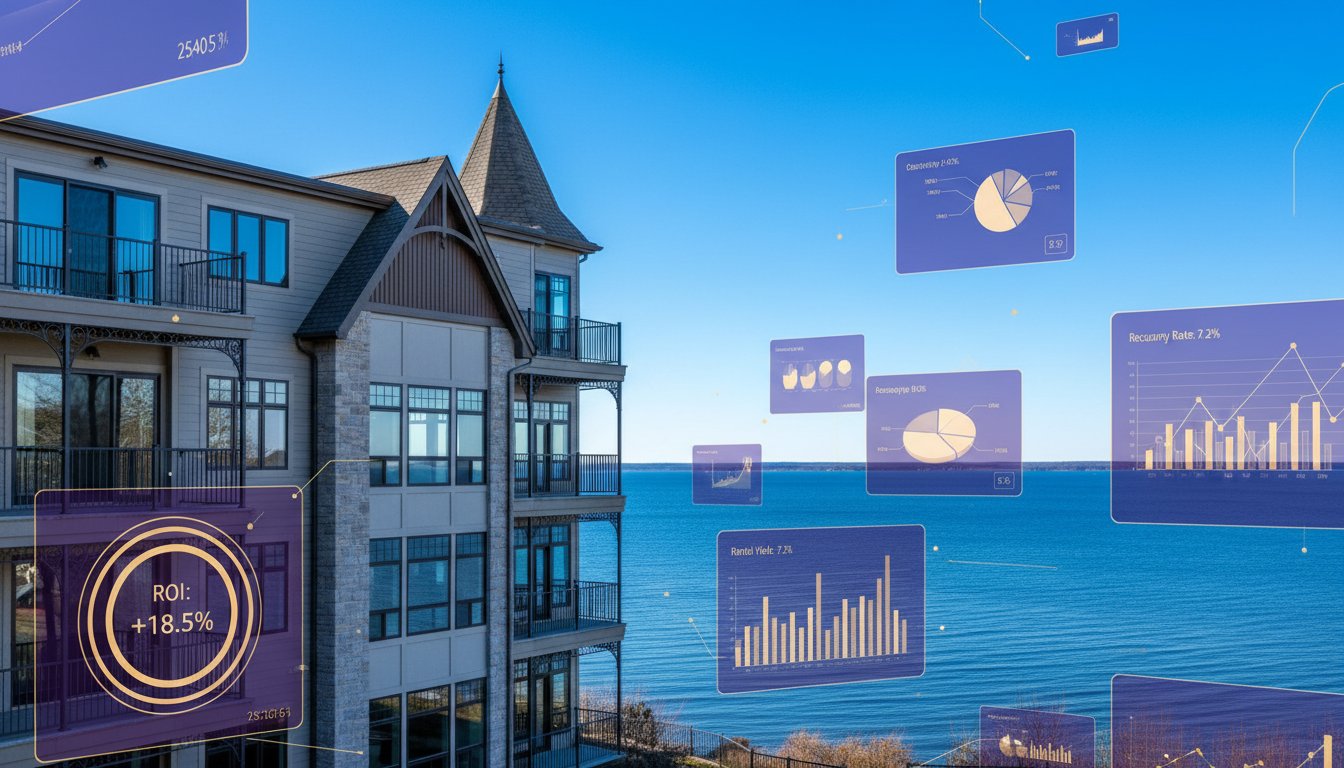
A 45% seasonal variance in occupancy rates can turn a seemingly profitable Northern Michigan asset into a liability before the first snowfall hits Emmet County. You've likely realized that Petoskey represents a unique intersection of high demand and complex regulatory constraints. It's a market where a standard pro-forma often fails to account for the 140 inches of annual snowfall or the 2024 updates to local zoning ordinances. Successfully analyzing rental properties Petoskey requires a level of technical scrutiny that goes beyond simple cap rates.
We'll provide the specific metrics needed to calculate a reliable ROI, accounting for the maintenance overhead of a harsh climate and the current caps on short term rental licenses. This analysis examines the data driven shift between long term stability and seasonal peaks to ensure your next acquisition stands on a foundation of precision rather than mere projection. We'll break down the numbers to give you the confidence required for high stakes decision making in the Emmet County market.
Key Takeaways
- Master the technical metrics for analyzing rental properties Petoskey investors rely on to accurately forecast ROI in the 2026 market.
- Discover how to calculate a specialized "Maintenance Buffer" to account for the unique operational demands and costs of Northern Michigan winters.
- Evaluate the financial trade-offs between the high revenue of vacation rentals and the operational stability of long-term residential leases.
- Implement a localized analysis framework that utilizes Comparative Market Analysis to replace generic investment rules that often fail in Emmet County.
- Learn how professional management systems and vetted vendor networks reduce overhead while transforming properties into scalable assets.
The Landscape of Rental Property Analysis in Petoskey
The 2026 rental market in Northern Michigan operates with a level of complexity that national data aggregators often fail to capture. While broad platforms might suggest a uniform trend across the Midwest, Petoskey, Michigan functions as a micro-market driven by specific geographic constraints and high-demand historic districts. Current inventory levels sit at a lean 2.4 months of supply, which sustains a 4.8% year over year appreciation rate. Investors who rely on "ballpark" figures from national websites risk overlooking the 15% valuation premium associated with proximity to the Gaslight District or the seasonal restrictions inherent to the Bay View association areas.
Effective property acquisition requires a granular understanding of county lines. Emmet County and Charlevoix County present distinct tax structures and zoning ordinances that directly impact net operating income. For instance, a property located just five miles south of downtown Petoskey might fall into a different millage rate category, altering the long term yield by as much as 200 basis points. When analyzing rental properties Petoskey, we prioritize localized data over regional averages to ensure that every projection aligns with the physical and legal realities of the lot.
Market Drivers in Northern Michigan
The local economy has transitioned from a purely seasonal tourism model to a robust, year round ecosystem. McLaren Northern Michigan remains a primary catalyst; it employs over 1,700 healthcare professionals who require stable, high quality housing within a 15 minute commute. Similarly, the Northmen school district continues to attract families, sustaining a 96% occupancy rate for multi bedroom long term rentals. Recent data from 2025 indicates that 35% of properties previously categorized as "seasonal" have shifted to primary residences, reflecting a permanent demographic migration to the region.
The Role of Precision in Property Valuation
In a high tax environment, "close enough" is a recipe for a failed investment. Our VTMG approach treats real estate acquisition with the same rigor as precision CNC machining. We apply standardized systems to market research, removing the emotional variables that often lead to overpayment in scenic areas. Analyzing rental properties Petoskey involves calculating the exact "tolerance" of an investment, from non-homestead tax implications to specific maintenance reserves required for the harsh Michigan winters. We move away from speculative buying, focusing instead on metric driven acquisitions where the numbers dictate the strategy. This disciplined framework ensures that every property in a portfolio functions as a high performing asset rather than a liability disguised by a lakeside view.
Success in this market depends on the ability to distinguish between a property's aesthetic appeal and its functional financial performance. The historic charm of Victorian architecture in the region often masks significant capital expenditure requirements. By applying a structured, engineering-first mentality to the analysis, we identify which assets possess the structural and economic integrity to provide long term stability. We don't guess; we calculate. This commitment to technical accuracy is what separates a profitable Northern Michigan portfolio from a collection of underperforming real estate.
Core Metrics for Analyzing Petoskey Rental Performance
Successful investment requires a transition from emotional appeal to technical precision. When analyzing rental properties Petoskey, we distinguish between Gross Rental Yield and Net Operating Income (NOI) to establish a baseline for performance. Gross yield offers a preliminary snapshot by dividing annual rent by the purchase price; however, it fails to account for the operational complexities of Northern Michigan. Our focus remains on the NOI, which subtracts all operating expenses from the total income. This figure represents the true engine of the asset, providing the data necessary to determine if a property meets our 6.5% minimum yield threshold for the 49770 zip code.
The "Petoskey Maintenance Buffer" is a specialized calculation we use to mitigate the risks of 110 inches of average annual snowfall. Standard pro-formas often allocate 5% for repairs, but Petoskey assets require a 12% to 15% buffer to handle heavy snow loads, ice dam prevention, and furnace cycles that run from October through May. We also evaluate Capitalization Rates (Cap Rates) to understand market sentiment. In Petoskey's boutique market, cap rates for stabilized residential units currently fluctuate between 5.2% and 6.8%. While these rates are lower than in larger metro areas, they reflect the long term stability and low supply of the region.
For leveraged investors, the Cash-on-Cash return is the primary metric for measuring the efficiency of deployed capital. It's not enough to see a positive NOI; we must ensure the pre-tax cash flow relative to the initial down payment and closing costs exceeds 8% to justify the risk of the local seasonality. Tracking these metrics ensures that every acquisition is treated as a controlled engineering project rather than a speculative venture.
Operating Expenses: The Hidden ROI Killers
Precision in expense forecasting prevents capital erosion. In Emmet County, the Principal Residence Exemption (PRE) is a critical variable. If a property doesn't qualify as a primary residence, the tax bill increases by approximately 18 mills, which can add $2,400 to the annual overhead of a $300,000 property. We also standardize snow removal costs at $75 per plow visit in our models to ensure winter operations don't surprise the balance sheet. For a comprehensive list of deductible expenses and compliance standards, investors should consult IRS Publication 527 to align their financial reporting with federal requirements. Proper insurance is equally vital, as Northern Michigan rentals require specific riders for windstorm and heavy snow damage that typically increase premiums by 14% compared to southern Michigan markets.
Vacancy and Turnover Assumptions
Our data indicates that realistic vacancy rates for Petoskey residential units stay within the 5% to 8% range, provided the asset is maintained to modern standards. Tenant placement involves fixed costs that must be amortized over the lease term, including a $45 screening fee per applicant and marketing expenses that average $250 per turnover. Economic vacancy in Petoskey represents the delta between gross potential rent and actual cash collected, specifically accounting for the 15% revenue dip often seen during the shoulder months of April and November when tenant transitions are most frequent. By maintaining a structured approach to asset management, owners can minimize these gaps and stabilize their annual cash flow. We prioritize rigorous screening to ensure that the 5% vacancy target is a reality rather than a projection.
Long-Term Residential vs. Short-Term Vacation Rentals
Investors often face a choice between the high-yield potential of vacation rentals and the structural stability of traditional leases. In Petoskey, the math isn't as simple as comparing a $300 nightly rate to a $2,200 monthly rent. Success in analyzing rental properties Petoskey requires a granular look at operational overhead. While a vacation rental might gross $45,000 annually, the net profit often mirrors a long-term rental once you subtract 25% management fees, $400 monthly utility bills, and frequent turnover cleanings. VTMG prioritizes the long-term model because it treats real estate as a high-precision asset rather than a volatile hospitality business.
Operational complexity remains the primary differentiator. A short-term rental (STR) requires constant monitoring, guest communication, and immediate maintenance response. In contrast, a long-term lease provides a fixed schedule. This stability allows for better financial forecasting and reduced wear on the property's mechanical systems. We've seen that high-frequency turnovers accelerate the depreciation of flooring and appliances, adding hidden costs that many first-time investors overlook during their initial projections.
The Short-Term Rental Trap
The 39% average occupancy rate for Petoskey STRs highlights a significant risk for investors relying on peak summer traffic. Outside of July and August, many units sit vacant, yet fixed costs like insurance and property taxes remain constant. Furnishing a three-bedroom home for the vacation market typically requires an upfront investment of $15,000 to $25,000. This capital is at risk if local zoning laws shift. For instance, Petoskey and Boyne City have implemented strict licensing caps and "buffer zones" to limit STR density. In 2024, these regulatory hurdles make the STR market a moving target. If a license isn't renewed or a cap is reached, an investor could be left with a specialized asset that no longer meets its highest and best use.
Residential Stability: The Case for Long-Term Leases
Long-term residential properties offer a predictable cash flow that isn't dependent on snow conditions or summer tourism trends. By securing a 12-month or 24-month lease, owners eliminate the "vacancy anxiety" common in the hospitality sector. This approach also integrates the property into the local community. It provides housing for the workforce that keeps Northern Michigan's economy moving. When analyzing rental properties Petoskey, savvy investors should also examine Housing Choice Voucher program data to understand the baseline for market rents and the breadth of the local tenant pool. This data serves as a safety net, ensuring the property remains viable even during broader economic shifts.
VTMG’s tenant placement system is designed to secure high-quality residents who treat the property with respect. Our process involves rigorous background checks and income verification to ensure a 98% rent collection rate. We focus on these metrics because they lead to "Peace of Mind" management. You don't have to worry about a noisy guest at 2:00 AM or a sudden cancellation in October. Instead, you receive a steady, automated deposit. This methodical approach to management mirrors the precision of industrial engineering; we remove the variables to ensure the final output is consistent and reliable.
- Lower Management Fees: Residential management typically costs 8-10%, compared to 20-30% for vacation rentals.
- Utility Savings: Tenants usually pay for heat, electricity, and water in long-term scenarios.
- Reduced Liability: Fewer people entering the property reduces the risk of accidental damage or insurance claims.

Step-by-Step Framework for a Petoskey Rental Analysis
Success in the Emmet County real estate market requires a technical approach that prioritizes data over intuition. When analyzing rental properties Petoskey investors must follow a rigid sequence to filter out high-risk assets. We begin with a Comparative Market Analysis (CMA) focused on the last 180 days of closed sales within a 2-mile radius. This provides a baseline for acquisition costs. You'll quickly find the "1% Rule" is largely inapplicable here. With median home prices in Petoskey reaching $465,000 in early 2024, a property would need to generate $4,650 monthly to meet this threshold. Most long-term rentals in the area peak at $2,800 to $3,200; therefore, your analysis must focus on total return and equity growth rather than immediate cash-on-cash yield.
Neighborhood-Specific Analysis
Location dictates the rent-to-price ratio. Properties in Downtown Petoskey command a 22% premium in rental rates compared to Bear Creek Township, though higher property taxes often offset these gains. We see significant spillover into Charlevoix County, specifically Boyne City, where entry prices are 12% lower but demand remains high due to the proximity to Lake Charlevoix. For properties near Little Traverse Bay, a direct water view can justify a 15% increase in seasonal nightly rates, provided the asset meets luxury finishing standards.
- Step 3: Technical Inspection: Focus on the building envelope. In Northern Michigan, a roof with a pitch of less than 4:12 requires specific ice-and-water shield membranes to prevent internal leaks.
- Step 4: 12-Month Forecasting: Your budget must include $300 to $500 monthly for professional snow removal between November and April. Neglecting this leads to liability and tenant turnover.
- Step 5: Stress-Testing: Model your ROI against a 1.5% increase in interest rates and a 10% vacancy factor. This ensures the investment remains viable even during economic contractions or shifts in local short-term rental ordinances.
Standardizing the Inspection Process
The harsh climate of the 45th parallel demands a rigorous mechanical audit. We evaluate HVAC systems based on AFUE (Annual Fuel Utilization Efficiency) ratings; anything below 92% is an immediate candidate for replacement to manage utility costs. Roof health is the primary concern, as poor attic ventilation leads to ice damming which can destroy drywall and insulation in a single season. "In the Petoskey market, deferred maintenance isn't just a budget line item; it's a structural liability that compounds with every freeze-thaw cycle."
A disciplined framework ensures that every acquisition aligns with long-term portfolio stability. By quantifying these variables, you move from speculation to professional asset management. To optimize your portfolio performance, view our property management solutions for Northern Michigan investors.
Maximizing ROI with Professional Management Systems
Successful property ownership requires more than just a purchase; it demands a systematic approach to analyzing rental properties Petoskey markets provide. Many investors find that self-management quickly evolves from a passive income stream into a demanding full-time job. Transitioning to a professional management system transforms the property into a true financial asset. This shift allows the owner to focus on portfolio growth while we handle the technical and operational complexities of the Emmet County housing market.
We replace the unpredictability of DIY maintenance with standardized coordination. Van Treese Management leverages a network of 42 vetted vendors who understand the specific architectural and climatic demands of Northern Michigan. By utilizing these established relationships, we often secure labor rates 15% lower than standard retail quotes. This volume-based pricing directly improves your net operating income and ensures that repairs meet professional engineering standards rather than temporary fixes.
Cold weather infrastructure requires constant vigilance. In a remote market like Petoskey, a furnace failure in January isn't just an inconvenience; it's a threat to the building's integrity. Our 24/7 emergency response system acts as an insurance policy for your physical capital. We maintain a 60-minute response target for critical issues, preventing minor leaks from becoming $10,000 restoration projects. This level of oversight is essential for owners who don't reside in the immediate area year-round.
Moving beyond basic spreadsheets is the final step in professionalizing your investment. We provide rigorous financial reporting that tracks every dollar with precision. Our systems generate monthly cash flow statements, annual tax preparation packages, and 1099 reporting automatically. When you're analyzing rental properties Petoskey investors should look at net cash flow after professional management fees to see the true value of reclaimed time and mitigated risk.
The Van Treese Management Advantage
Our local expertise is rooted in the Petoskey community. We don't manage from a distance; we're on the ground in Emmet and Charlevoix counties every day. This proximity allows us to monitor market shifts in real-time. In 2023, we saw a 9% increase in demand for high-end long-term rentals, and our team adjusted our clients' portfolios accordingly to capture that growth.
Innovation drives our leasing and screening processes. We use a multi-point verification system that includes credit history, criminal background checks, and employment verification to ensure a 99% tenant retention rate. We believe that professional management is a blend of high-tech systems and human interaction. Our commitment to the region means we treat every property as a vital piece of the local infrastructure.
Next Steps for Petoskey Investors
Taking the next step in your investment journey requires accurate data and a clear strategy. We provide the tools necessary to move from speculation to calculated growth. To begin optimizing your portfolio, consider these actions:
- Request a professional rental valuation to determine your property's current market position.
- Schedule a consultation to discuss acquisition strategies within the specific sub-markets of Emmet and Charlevoix counties.
- Review your current maintenance expenses against our standardized vendor rates to identify potential savings.
- Contact Van Treese Management for a comprehensive rental analysis to see how our systems can increase your annual yield.
Our team is ready to apply industrial-grade precision to your residential or commercial rental assets. By integrating professional management today, you secure the long-term viability of your Northern Michigan investments.
Securing Your Investment Performance in Northern Michigan
Success in the Emmet and Charlevoix County real estate markets depends on technical precision rather than intuition. Since 2018, Van Treese Management has implemented standardized systems to evaluate residential and commercial assets with engineering-level accuracy. Effectively analyzing rental properties Petoskey requires a deep understanding of local seasonal fluctuations and specific zoning ordinances that impact long-term ROI. Our data indicates that properties utilizing structured management systems maintain higher occupancy rates and more predictable cash flows. We operate directly from our headquarters at 218 Park Ave, Petoskey, MI 49770, providing the local oversight necessary for complex asset maintenance and tenant relations. You don't have to navigate these financial metrics alone. Our team applies rigorous quality standards to every portfolio we oversee; we ensure your capital works as hard as possible. We're ready to help you convert market data into a high-performing investment strategy that stands the test of time.
Get a Professional Rental Analysis from Van Treese Management
We look forward to building a stable and profitable partnership with you in the Petoskey region.
Frequently Asked Questions
Is Petoskey a good place to invest in rental property in 2026?
Petoskey remains a stable investment environment for 2026 because of a projected 4.2% annual property value appreciation and a consistent 92% occupancy rate across the Emmet County corridor. The regional demand for workforce housing continues to outpace supply by approximately 15% annually. This supply-demand gap ensures that analyzing rental properties Petoskey investors prioritize will yield competitive internal rates of return.
What is the average rent for a 3-bedroom home in Petoskey, MI?
The average monthly rent for a 3-bedroom single-family home in Petoskey currently sits at $2,450 as of early 2026. This figure represents a 6.5% increase from 2024 data provided by local market trackers. Properties located within two miles of the downtown Gaslight District often command a premium of $300 to $500 above this baseline due to proximity to employment hubs.
How do short-term rental regulations in Petoskey affect investors?
Short-term rental (STR) regulations in Petoskey limit non-owner occupied permits to just 2% of the city's total housing stock under the 2024 zoning updates. Investors must secure a valid license before operating; the city enforces a strict zero-tolerance policy for unregistered units with fines starting at $500 per day. These constraints make analyzing rental properties Petoskey for long-term lease potential a more predictable strategy for risk-averse portfolios.
What are the typical property management fees in Northern Michigan?
Property management fees in Northern Michigan typically range between 8% and 12% of the gross monthly rent collected. Most professional firms also charge a one-time lease-up fee of $250 to $500 to cover marketing, tenant screening, and document preparation. These costs scale based on the complexity of the asset and the volume of units under management within a specific portfolio.
How much should I budget for snow removal at a Petoskey rental?
Investors should budget between $1,200 and $1,800 per season for professional snow removal services in Petoskey. Since the region averages 160 inches of snowfall annually, per-plow contracts are often more expensive than fixed seasonal rates. Maintaining clear driveways and walkways isn't just a courtesy; it's a legal requirement under local municipal codes to prevent liability issues.
Do I need a local property manager if I live in Grand Rapids or Traverse City?
Hiring a local manager is highly recommended because the 180-mile round trip from Grand Rapids makes emergency response impossible during winter months. Even from Traverse City, a 75-minute drive can stretch to three hours during a lake-effect snow event. Local experts provide a 60-minute response window for critical failures, which protects your mechanical systems from freezing during power outages.
What is the difference between PRE and Non-PRE property taxes in Michigan?
The Principal Residence Exemption (PRE) allows owner-occupants to exempt their home from the 18 mills of school operating taxes. Rental properties are classified as Non-PRE, meaning investors pay the full millage rate, which typically results in a tax bill roughly 40% higher than an identical owner-occupied home. You'll need to use the 100% Non-PRE rate when calculating your net operating income to ensure accuracy.
How does VTMG handle emergency repairs in Charlevoix County?
VTMG operates a 24/7 maintenance dispatch system that guarantees a technician will be on-site within 120 minutes for critical emergencies in Charlevoix County. Our team utilizes a pre-authorized repair limit of $500 to resolve immediate threats like burst pipes or furnace failures without delaying for owner approval. This structured approach ensures technical precision and minimizes long-term structural damage to the asset through rapid intervention.